0
The US Supreme Court has upheld birthright citizenship, which provides nearly all people born in the country with citizenship, ruling against a central piece of Donald Trump’s anti-immigrant agenda.
“Children born in the United States to parents unlawfully or temporarily present are ‘subject to the jurisdiction’ of the United States and are citizens at birth under the Fourteenth Amendment’s Citizenship Clause,” the ruling says.
Chief Justice John Roberts delivered the opinion. He was joined by liberal justices Sonia Sotomayor, Elena Kagan and Ketanji Brown Jackson, and conservative Justice Amy Coney Barrett. Conservative Justice Brett Kavanaugh concurred with the judgment but dissented in part. Clarence Thomas, Samuel Alito and Neil Gorsuch filed dissenting opinions. The court’s writings in the ruling span 194 pages, nearly 90 of which were written by Thomas in dissent.

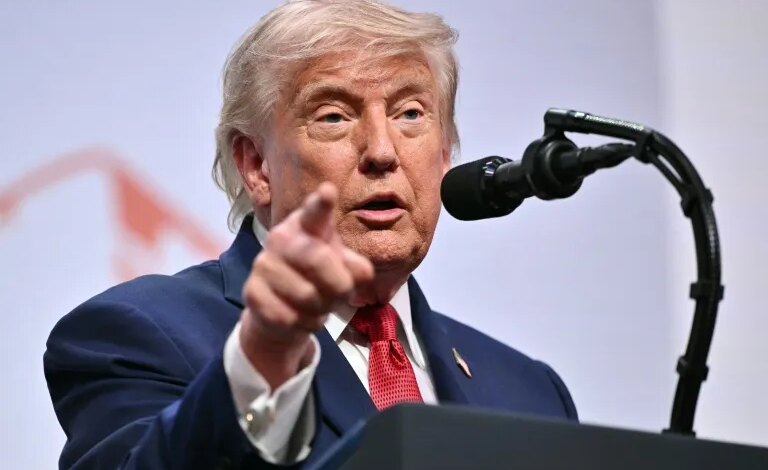
The president had issued an executive order on the first day of his second term that sought to undo birthright citizenship. The order would override the US constitution, which it cannot do, though his administration has argued the order instead interprets the constitution correctly.
Trump’s order immediately drew lawsuits, including from the Democratic state attorneys general and the American Civil Liberties Union. The ACLU argued in front of the US Supreme Court on the case during oral arguments in April for Trump v Barbara, a class action challenge to the order, brought by parents of children who would be affected by the change.
Cecillia Wang, arguing before the court for the ACLU, told the justices that Americans’ understanding of the country’s citizenship rule is that everyone born here is a US citizen.
“The 14th amendment’s fixed bright line rule has contributed to the growth and thriving of our nation,” Wang said. “It comes from text and history. It is workable and it prevents manipulation.”
The Supreme Court’s Dred Scott decision in 1857 had ruled Black people were not US citizens, but “a separate class of persons”. But the 14th amendment which reversed the Dred Scott decision, was adopted in 1868 during the reconstruction era after the US civil war, to codify the rights of Black Americans – and confer citizenship to “all persons born or naturalised in the United States, and subject to the jurisdiction thereof”.
The Trump administration argued the phrase “subject to the jurisdiction thereof” means babies born in the US to people who are not lawfully present in the country are not citizens. The executive order says this includes when neither of a person’s parents were US citizens or lawful permanent residents, or if a parent has legal, but temporary, status. It sought to apply this meaning starting on February 19, 2025, which would affect hundreds of thousands of babies annually.
D John Sauer, the solicitor general who argued on behalf of the Trump administration, emphasised the concept of “domicile”, saying those who are here unlawfully or temporarily do not have “domicile” in the US or allegiance to the country, unlike the formerly enslaved people the 14th amendment’s citizenship clause applied to.
“Unrestricted birthright citizenship contradicts the practice of the overwhelming majority of modern nations,” Sauer said then. “It demeans the priceless and profound gift of American citizenship.”
Domicile weighed heavily into the Trump administration’s claims, though the word is not included in the 14th amendment. The landmark decision on birthright citizenship, United States v Wong Kim Ark, said that a child born to parents of Chinese descent who had permanent “domicile” in the US would be a US citizen at the time of birth under the 14th amendment. The Trump administration argued “domicile”, meaning a permanent residence, is a critical part of the interpretation.