0
…Public-Private Synergy Key To Nigeria’s Aviation Boom — CEO
LAGOS – Nigeria’s aviation industry is once again grappling with a question it has struggled to answer for decades: why does Nigeria, Africa’s largest economy and one of its most populous nations, still lack an airline capable of competing effectively on the global stage?
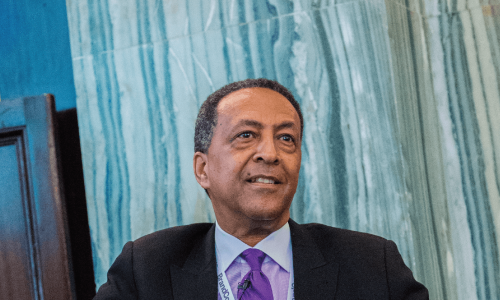
The debate resurfaced after Zemedeneh Negatu, Global Chairman of the Washington-based Fairfax Africa Fund, criticised what he described as the “unsustainable” ownership model of Nigerian airlines.


Writing on X, Negatu argued that the industry’s dependence on sole proprietorship – airlines established, financed and controlled by a single individual – is fundamentally at odds with the realities of the capital-intensive aviation business.
“Nigeria, Africa’s 2nd largest economy and most populous country, needs (deserves) a new national airline, fully or partly state-owned, that’s large, well capitalised and sustainably profitable so that it can compete globally and make 240 million Nigerians proud,” he wrote.
He added that virtually none of the country’s airlines could compete profitably even within Africa despite charging some of the highest airfares in the world.
Negatu, who played a leading role in the now-abandoned Nigeria Air project before it collapsed in 2023 following legal challenges from domestic operators, said Nigerian carriers were undercapitalised, operating with limited resources and ill-equipped for an industry characterised by high fixed costs and razor-thin margins.
He cited Emirates, Ethiopian Airlines, Singapore Airlines, Turkish Airlines and Qatar Airways – all fully or partly state-owned – as examples of airlines whose long-term success has been underpinned by strong government backing rather than the wealth of individual investors.
One remark, in particular, has resonated across the industry: “Nigeria has more private jets than commercial aircraft.”
Even so, Negatu stressed that subsidies alone would not solve the problem.
“Federal government subsidies will not save these airlines (it’s been tried before) and converting any of them to a national carrier won’t work either. Running an airline is a capex-heavy, ultra-thin-margin, heavily regulated, extremely competitive, serious business,” he said.
His comments revive a debate rooted in Nigeria’s aviation history. The nation’s flag carrier, Nigeria Airways, began operations in 1958 as WAAC Nigeria, with the Federal Government holding a majority stake alongside Elder Dempster Lines and the British Overseas Airways Corporation.
At its peak in 1984, the airline operated a fleet of 32 aircraft, serving destinations including London, New York, Jeddah and Rome from Lagos and Kano. By October 2000, however, years of mismanagement, mounting debt and allegations of large-scale looting – investigators later examined the disappearance of more than $400 million from its accounts between 1983 and 1999 – had reduced the fleet to just three aircraft.
Former President Olusegun Obasanjo eventually liquidated the airline in 2003, leaving it with only a single Boeing 737- 200. More than two decades later, no state-backed replacement has succeeded.
The most recent attempt, Nigeria Air, was halted by a Federal High Court order in 2023 after the Airline Operators of Nigeria (AON) challenged the arrangement, arguing that a venture in which Ethiopian Airlines held 49 percent while the Nigerian government retained only a nominal stake could hardly be described as a genuine national carrier.
Retired Group Captain John Ojikutu, former Commandant of Lagos’ Murtala Muhammed International Airport, dismissed Negatu’s suggestion that the lawsuit deprived Nigerians of a world-class airline.
“The man has no idea what he’s talking about. Where is the aircraft? Does it belong to us?” Ojikutu asked.
Between the collapse of Nigeria Airways and the failed Nigeria Air project, dozens of privately owned airlines have emerged, struggled and eventually disappeared. Many were single-owner businesses, reinforcing Negatu’s concerns.
Industry estimates frequently cited by stakeholders suggest that more than 70 domestic airlines have ceased operations since deregulation in the 1980s, giving Nigeria one of the highest airline failure rates in global aviation.
Dr. Alex Nwuba, President of the Aircraft Owners and Pilots Association of Nigeria (AOPA) and former Managing Director of Associated Airlines, agrees with parts of Negatu’s assessment but believes the issue runs much deeper.
“I agree with some of Zemedeneh’s comments because even the Nigerian airlines themselves admit the terrain is impossible, mostly due to the operating environment and debt,” Nwuba said. “However, I do not believe that the only solution is a national carrier – which looks a lot like him just selling his own goods.”
Having participated in earlier debates surrounding Nigeria Air, Nwuba believes the industry’s biggest challenge is not ownership but governance.
“I am personally troubled by a situation where one airline says the industry is barely surviving, while another says the sun is looking extremely bright, publicly showing the king without robes,” he said. He argues that the ownership debate merely masks a deeper governance crisis.
Speaking at an earlier forum, Nwuba compared the industry’s structure to “a football team that insists on fielding one player and calling it a squad.”
“Governance is treated as a formality, not a foundation. Boards are often filled with friends, loyalists and unqualified family members, leaving no real oversight, no strategic depth and no accountability.”
According to him, aviation requires “the equivalent of a full eleven-man team – finance, operations, engineering, safety, risk, strategy and governance all working together” rather than simply changing ownership labels.
His verdict on Negatu’s proposal is clear.
“What is consistent across all parties is that capitalisation is a major problem. Why we have a malignant, contagious disease that nobody wants to deal with is the real problem here. Waving a flag or changing the ownership structure doesn’t fix a fundamentally broken ecosystem.”
Nwuba is among several industry voices shifting the conversation away from the simplistic choice between state ownership and private ownership.
As Vice-President of the Aviation Safety Round Table (ASRT), he has suggested that aviation should draw lessons from Nigeria’s banking sector recapitalisation – not as a blueprint for mergers, but as an example of firm regulatory action.
At one ASRTI quarterly meeting, he observed that even Air Peace, Nigeria’s largest and most internationally recognised airline, remains “highly centralised” and “founder-centric”, leaving it “structurally exposed to regulatory headwinds” despite its size.
He also noted that smaller operators such as United Nigeria Airlines and ValueJet are expanding into West African markets, but warned that “their long-term survival hinges entirely on transitioning from owner-managed entities into institutionalised, publicly listed corporations before the regulatory axe falls.”
At another industry roundtable, Nwuba said he would support “whatever policy the government comes up with, provided it serves the best interest of Nigerians”, while insisting that reforms must strengthen domestic airlines rather than simply reshuffle ownership structures.
The international airlines Negatu cited as examples did not thrive solely because governments owned stakes in them. Their success stems from a combination of strong capitalisation, professional management and long-term strategic planning.
Ethiopian Airlines, wholly owned by the Ethiopian government, has become Africa’s most profitable carrier through stable technocratic leadership and minimal political interference.
Emirates, owned by Dubai’s Investment Corporation, benefited from substantial state investment but operates as a commercially driven airline under independent executive management.
Singapore Airlines, majority-owned by Temasek Holdings, combines state ownership with strong corporate governance and one of the industry’s healthiest balance sheets.
Turkish Airlines, jointly owned by the Turkey Wealth Fund and public investors, has transformed Istanbul into one of the world’s leading aviation hubs through strategic expansion and Star Alliance membership.
Qatar Airways, wholly state-owned, has pursued global growth by investing in international airlines, including British Airways’ parent company, IAG, and Cathay Pacific.
Stakeholders argue that the common denominator among these airlines is not government ownership itself, but the separation of ownership from day-to-day management, access to long-term capital and integration into global airline networks – precisely the foundations Nwuba believes Nigeria’s airlines still lack, regardless of who owns them.
For now, neither government subsidies, a revived national carrier nor changes in ownership structures appear capable of curing what Nwuba describes as Nigeria’s “malignant, contagious disease”.
With jet fuel prices remaining volatile, maintenance costs rising amid foreign exchange pressures and industry stakeholders sharply divided over the sector’s true condition, the debate reignited by Negatu may ultimately have less to do with who owns Nigeria’s airlines than whether the country is prepared to build the governance, capital base and regulatory stability needed for any airline to survive and thrive.
Sanusi Seeks Stronger FG, Private Sector Partnership To Boost Nigeria’s Aviation Industry
Meanwhile, the Chief Executive Officer of Aero Contractors, Captain Ado Sanusi, has called for stronger collaboration between the Federal Government and private sector operators in Nigeria’s aviation industry, saying such partnerships are essential to unlocking the sector’s full potential, stimulating economic growth and driving national development.
Sanusi made the call during a visit by the Special Adviser to the President on Policy Coordination and Head of the Central Results Delivery Coordination Unit (CRDCU), Hadiza Bala Usman, to Aero Contractors’ facilities, where she undertook an extensive tour of the airline’s operations, including its maintenance, repair and overhaul (MRO) centre.
The visit provided an opportunity for the presidential adviser to gain first-hand insight into the airline’s operations and assess areas where government policies and support could strengthen private sector participation in the aviation industry.
A major highlight of the visit was the inspection of Aero Contractors’ MRO facility, widely regarded as one of Nigeria’s most strategic aviation engineering assets.
During the tour, Bala Usman expressed keen interest in understanding how government could better support indigenous aviation companies to expand their operations, enhance technical capacity and increase the sector’s contribution to Nigeria’s Gross Domestic Product (GDP).
Speaking after the visit, Sanusi described the engagement as both productive and encouraging, commending the presidential aide for demonstrating a deep understanding of policy implementation and institutional development despite not being an aviation professional.
He said it was a privilege to host Bala Usman and showcase Aero Contractors’ operations, particularly the MRO facility, which has become a critical aviation infrastructure supporting airlines across Nigeria as well as operators in West and Central Africa.
According to him, what stood out during the visit was her genuine curiosity, the quality of her questions and her determination to identify practical ways through which government could create an enabling environment for the aviation industry to flourish.
Sanusi said her performance-oriented approach reflected the mandate of the Central Results Delivery Coordination Unit, adding that such direct engagement between policymakers and industry stakeholders was crucial for sustainable sectoral development.
He stressed that constructive collaboration between public institutions and private investors would encourage business growth, improve operational efficiency and enable the aviation industry to contribute more significantly to Nigeria’s economic development.
“When public servants engage directly with stakeholders, ask the right questions and focus on practical solutions, they help create the environment in which businesses thrive and contribute even more to national development,” he said.