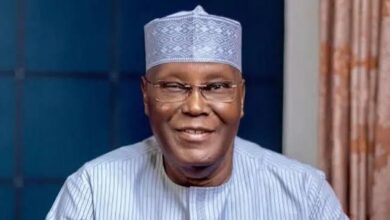
Communication expert and founder of PRNigeria, Malam Yushau Shuaib, has canvassed for an end to what he termed “institutional bullying” of innocent Nigerians across the country, in line with the provisions of Nigeria’s Constitution.
He said that the fundamental rights of Nigerians to free speech, movement and association must be protected by corporate bodies in the interest of justice and fairness to the citizenry.
His plea on Monday against institutional bullying, harassment and unjust intimidation was against the backdrop of his experience at the National Institute for Policy and Strategic Studies (NIPSS), where he was allegedly withdrawn from the Senior Executive Course (SEC) 47 over a media publication by his media outfit, from which he had resigned and which he did not author or approve.
The publisher lamented that his harrowing experience at NIPSS over issues relating to institutional bullying, gross abuse of freedom of expression, violations of due process, violations of digital privacy, prohibition of association and the responsibilities of leadership institutions was a sad story of the 21st century.

He denied breaking any rule of the institute, adding that vicarious liability was visited on him for a publication by his media organisation that had nothing to do with NIPSS and its objectives.
Worse still, Shuaib explained that compulsory apologies were fraudulently obtained by the institute in writing as part of a ploy to be used in court to secure an undeserved advantage.
Although he lost his court action against the unlawful withdrawal from the Senior Executive Course, the publisher vowed to pursue the matter to the Court of Appeal until justice is done.
Shuaib was last year withdrawn from the Senior Executive Course (SEC 47) of the National Institute for Policy and Strategic Studies (NIPSS) over issues relating to institutional discipline, freedom of expression, due process, digital privacy and the responsibilities of leadership institutions.
Recalling his travail at the institute, the founder of PRNigeria stressed the need for institutions to respect the fundamental rights of individuals, including course participants.
At the media briefing, Shuaib unveiled his memoir on the experience he passed through while at NIPSS.
“The memoir chronicles my experience at the National Institute for Policy and Strategic Studies (NIPSS), detailing events that culminated in my withdrawal from the Senior Executive Course (SEC 47).
“It recounts my perspective on issues surrounding institutional discipline, freedom of expression, due process, digital privacy and the responsibilities of leadership institutions.
“Among the issues discussed are my allegation that private email correspondence belonging to my media organisation was unlawfully accessed during disciplinary proceedings; the attribution to me of authorship of a publication I maintain I neither wrote nor endorsed; and my contention that expressions of institutional regret were misconstrued as admissions of misconduct.
“The memoir also examines the role played by the Nigerian Institute of Public Relations (NIPR), including the termination of its Memorandum of Understanding with IMPR following the controversy.
“The memoir also chronicles my efforts to seek legal and regulatory redress. Most regrettably, despite formally petitioning both the Nigeria Police Force and the Nigeria Data Protection Commission (NDPC) over the alleged cybercrime involving the interception of my private email, no action has been taken against the named suspects more than a year after the petitions were submitted,” he said.
While observing that the experience reflects a broader concern about institutional accountability, Shuaib stated that it mirrors two other unresolved matters he had pursued through the courts for over three years: the alleged unlawful freezing of IMPR’s corporate account by Access Bank and his defamation suit against Mr Terrence Kuanum over the publication of an article falsely portraying him as a “mastermind” and “on the payroll of terrorists.”
He disclosed that in each case, he reported the matters to the appropriate authorities and sought judicial redress, yet meaningful resolution has remained elusive.
“These experiences have reinforced my conviction that justice delayed not only affects individuals but can also erode public confidence in institutions established to uphold the rule of law,” he added.