2027: Campaigns Should Focus On Nigeria’s Development Challenges, Not Character Attacks – Prof Agbaje

A Professor of Political Economy and immediate past Dean of the Faculty of Social Sciences, Osun State University, Osogbo, Prof. Elijah Agbaje, has urged political parties and candidates preparing for the 2027 general elections to focus their campaigns on Nigeria’s development challenges and policy alternatives rather than character attacks.
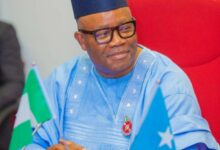

Agbaje, in an exclusive interview with LEADERSHIP, described Nigeria as a promising developing country with significant prospects for rapid development if its political leadership remains committed to addressing the fundamental challenges confronting the post-colonial and heterogeneous state.
“For me, Nigeria is a promising developing country with great hope for rapid development if leaders will faithfully address themselves in line with fundamentals of a promising postcolonial and heterogeneous state,” he said.
The university don said campaign discourse should address issues affecting Nigerians, including the rising cost of living, unemployment, insecurity and corruption, while recognising that such challenges are not peculiar to Nigeria.
“Campaigns should concede that in spite of the identified shortcomings , increasing cost of living, unemployment, insecurity, opaque and corrupt tendencies, and their attendant implications for continued underdevelopment , it should be understood that no nation, even the most developed, are immune from these challenges as we presently observe across the globe,” he said.
Agbaje also said democracy was gradually becoming sustainable in Nigeria, despite the challenges confronting the country.
Assessing the policies of the current administration, he said Nigerians had experienced some hardship as a result of what he described as deliberate but inevitable policy choices.
He, however, credited the administration with the courage to undertake socioeconomic reforms that previous leaders might have avoided because of their potential impact on political support.
“While it appears there has been a bit of hardship resulting from deliberate, but inevitable policy choices of the current administration, the leadership should be credited with the courage to undertake desirable socioeconomic reforms that many politicians, as observed by Milani, would gladly avoid for fear of losing political support,” he said.
According to him, economic fundamentals such as the exchange rate, inflation, interest rates and local content in production were becoming more prominent in national policy discussions.
He noted that although the reforms had contributed to increased living costs, efforts to improve wages and introduce poverty-mitigation interventions were also becoming more feasible.
The professor said the 2027 campaigns should provide concrete answers to issues of equitable political representation, balanced distribution of national development interventions and the concentration of national institutions in particular regions.
He also called for greater investment in critical infrastructure, particularly roads and electricity, and deliberate efforts to develop rural communities to reduce pressure from rural-to-urban migration.
On migration, Agbaje advocated the use of diplomatic channels to create opportunities for Nigerians to supply labour to developed economies facing ageing populations and labour shortages.
He said such an approach could provide a more structured alternative to the uncoordinated migration popularly known as the “japa” syndrome.
On security, he urged political parties to develop a national consensus on tackling insurgency, banditry and kidnapping, while calling for stronger regulatory and security institutions.
He specifically advocated the reinvigoration of the police, Independent Corrupt Practices and Other Related Offences Commission (ICPC), Economic and Financial Crimes Commission (EFCC), paramilitary organisations and intelligence agencies.
According to him, stronger institutions are necessary to create a secure environment for economic activity and national development.
Agbaje further challenged political leaders to develop policies capable of restoring Nigeria’s productive capacity and creating an environment where businesses and industries can operate continuously.