0
…Say It Will Negatively Impact Campaigns By Some Parties
…Seek End To Factors Contracting The Democratic Space
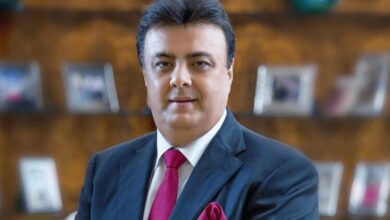
LAGOS – Barrister Olalekan Festus Ojo has reacted to the new charges for political billboards recently announced by the Abia State government, describing it as uncalled for.
Apart from Abia State, other states and the Federal Capital Territory (FCT) have fixed high prices for political billboards, which vary from state to state.
Speaking with Sunday Independent, Barrister Ojo, a Lagos-based human rights lawyer and a strong advocate of social justice.
He said the imposition of high billboard advertisement rates raises fundamental questions about democratic equity, freedom of expression, and the right of every political party and candidate to meaningfully participate in electoral campaigns regardless of financial capacity.
Barrister Ojo, the Managing Partner, Platinum & Taylor Hill LP, one of Nigeria’s leading law firms, was speaking against the backdrop of the recent prices announced by Ndubuisi Nwaogwugwu, the Head of Department, Strategy, Innovation and Design (ABSSAA), Abia State.
According to Nwaogwugwu, “Presidential candidates will pay N200 million, Governorship candidates will pay N150 million, Senatorial candidates will pay N100 million, House of Representatives and Assembly candidate will pay N50 and N20 million respectively.
Nwaogwugwu, who spoke on behalf of the Abia State government, said that every political party’s presidential candidate intending to campaign through billboards and posters would pay N200 million to obtain campaign advertising permit.
The Abia State Structures for Signage and Advertising Agency (ABSSAA), stated this in Aba, during a “Stakeholders Forum on Political Campaign”.
Ojo, in his reaction, stated: “The immediate and most damaging consequence is the further entrenchment of Nigeria’s already troubling financial barrier to democratic participation.
“When billboard advertising becomes prohibitively expensive, only candidates and parties with access to enormous financial resources, largely the ruling party and well-funded establishment politicians, can afford widespread outdoor campaign visibility.
“Smaller parties, independent-minded candidates, and genuine grassroots movements are effectively silenced not by law, but by economics. This is democracy by financial exclusion, and it is constitutionally corrosive.
“Section 92 of the Electoral Act 2026 already prescribes campaign expenditure limits precisely to prevent the monetisation of political competition.
“Exorbitant state-imposed billboard rates effectively circumvent this legislative intent by pricing legitimate political expression beyond the reach of most candidates.
DIGITAL SILVER LINING
“However, there is a democratic silver lining. Digital platforms, social media, podcasts, YouTube, and online news platforms, remain relatively accessible and increasingly influential, particularly among Nigeria’s enormous and politically engaged youth population.
“Candidates priced out of billboard advertising can and must pivot aggressively to digital campaigning, direct community engagement, town halls, and grassroots mobilisation strategies that arguably connect more authentically with voters than expensive billboards ever could.
“INEC and the National Human Rights Commission must engage state governments on rationalising these rates to ensure that the physical campaign space does not become the exclusive preserve of the financially privileged.
“Democratic competition must remain accessible to all, not merely to those who can afford it.”
Barrister Kenneth Udeze, the National Chairman of Action Alliance (AA), said the high cost of billboard adverts in Abia, Lagos and other states will deepen inequality in the 2027 campaigns.
According to him, “Big parties and wealthy candidates will dominate public spaces, while smaller parties like Action Alliance (AA) and grassroots aspirants will be priced out. This limits voter education and reduces visibility outside digital platforms.
“It also risks pushing campaigns underground into vote-buying and other illegal funding, just to stay visible. Democracy suffers when access to public communication depends on money, not ideas.
“INEC and state agencies should regulate billboard fees and create free/low-cost spaces to ensure a level playing field for all parties.”
Jegede Kehinde, the African Action Congress (AAC) State Secretary in Lagos and the party’s House of Representatives candidate for Somolu Federal Constituency, described the cost of placing political adverts on billboards as outrageous.
Speaking with Sunday Independent, he stated: “The outrageous cost of political billboard advertisements poses a direct threat to democratic fairness ahead of the 2027 general elections.
“It is uncalled for. It is only going to favour wealthy political parties and candidates, while shutting out smaller parties, grassroots movements with genuine ideas but limited resources.
“Democracy should never be auctioned to the highest bidder. Electoral competition must be based on vision, competence, and public support, not financial muscle.
“Governments, regulatory authorities should not have regulated political advertising, to guarantee equal access to campaign platforms.
“Democracy belongs to the people, not highest spender. Equal political opportunity strengthens participation, accountability, and credible elections.”
CAMPAIGNS MUST GO ON
Professor John Ebhomien, a chieftain of the All Progressives Congress (APC), stated: “The high cost of billboard adverts in Abia, Lagos, and other states will reshape how 2027 campaigns are run.
“Billboards are the most visible form of outdoor politics in Nigeria. If rates keep climbing, only well-funded parties, incumbents, and ‘big-money’ candidates will afford prime locations in Aba, Umuahia, Lagos Island, Ikeja, etc.
“Newer parties and grassroots candidates risk being invisible on major roads.
“It is expected that campaigns will double down on radio, WhatsApp, TikTok, Facebook, town halls, and ward-to-ward mobilisation.
“Digital ads give better targeting per naira and can be micro-targeted by LGA. We will likely see more branded keke, buses, and rallies as substitutes.
“However, smaller parties may have to share billboard space or form alliances to split costs. Incumbents with state resources will still dominate outdoor visibility.
“With fewer billboards, message quality matters. One strong, memorable design in 10 locations beats 50 weak ones. Parties that master storytelling and viral digital content will offset the outdoor disadvantage.
“The bottom line is that the high billboard costs will not stop campaigns but they will widen the gap between rich and lean campaigns, and push 2027 towards a ground game and digital-first election. Parties that adapt early will get more reach for less money.”
Bishop Herbert Ekechukwu, an economist and public affairs analyst, said the high cost of billboards will definitely reshape how campaigns for 2027 general elections are run in Nigeria.
According to Dr Ekechukwu, outdoor advertising is getting more expensive and more regulated.
He said: “In Lagos state, prime digital LED billboards go for N5million to N20million per month. In the 2027 general elections, we are going to see fewer billboards that are more strategically positioned. Quality over quantity will become the rule.
“There is likely to be a shift to cheaper digital alternatives, especially for smaller parties and parties that do not have a sitting governor.
“Expect a digital war on social media namely, WhatsApp and Tok. Radio, local TV, town halls, and door-to-door will feature more. These are more cost effective for grassroots mobilisation, especially outside Lagos and Abuja.
“Strategic early campaign planning will result in capturing prime time than others because boards are booked months ahead, parties will have to prepare budget early. Late entrants will find no space available in prime areas.”
Julius Adegunna, a media executive, stated: “I don’t think it is a fair policy. The reason behind this is possibly to weaken opposition and financially disadvantaged parties.
“It may affect campaigns in a way, as it may affect those who depend on billboards for visibility.
“However, the world has immensely changed from the analogue to digital age.
“Without expensive billboards, parties can still use many alternative campaign tools that are relatively cheaper than billboards.
“These are through radio and TV, internet and online choices, as well as one on one community campaigns. Parties can go for the alternatives that suit their campaign purpose.”
Hon. Charles C Anike, National President of Eastern Union (EU), stated: “This madness by state governments for the outrageous fees for placing political advertisements on billboards must stop.
“It is really shameful that most Nigerian leaders at their different levels have always expressed fears and shown intolerance to opposition.
“Funny enough most of them got to power through opposition platforms.
A SPREADING VIRUS
“The madness started with Governor Chukwuma Soludo of Anambra State and now it has infested other governors.
“For God’s sake, if you had lived up to expectations of the people, why all these lack of the spirit of sportsmanship by our political leaders?
“Nyesom Wike, the Minister of the FCT, as expected and as a brutal man, has followed suit. Nevertheless, no matter what they do, the good news is that the Nigerian voters are now wise, knowledgeable and well informed.
“So, whether billboards or not, we know our preferred candidates. Good products do not require much advertisements.
“The 2027 elections will go in the direction and according to the choice of the Nigerian Masses.”
Tola Oresanwo, Director, Administration and Programmes, Centre for Anti-Corruption and Open Leadership (CACOL), stated: “I think the high cost of political billboard advertisements will significantly influence the nature of campaigns ahead of the 2027 general elections.
“While states have the right to regulate outdoor advertising and generate revenue, excessive charges could make it difficult for smaller political parties, women, young candidates, and independent aspirants to compete fairly.
“Elections should be about ideas, competence and public acceptance, not financial muscle.
“As a result, we are likely to see greater reliance on social media, community engagement, town hall meetings, and door-to-door campaigns.
“Ultimately, policies like this should strike a balance between revenue generation and preserving a level playing field that strengthens Nigeria’s democratic process.”
Findings indicate that political campaign charges for billboards in Nigeria vary significantly by state, office level, and local signage agency regulations.
Generally, billboard advertising in Nigeria costs between ₦200,000 and ₦15,000,000+ per month, primarily depending on the city, traffic density, and billboard type. Lagos and Abuja serve as the most expensive advertising markets due to their high consumer reach and business density
Recent state permit fees for the upcoming general elections range from ₦50 million to ₦200 million for top-tier candidates, alongside standard media space leasing costs.
LAGOS
Investigations showed that in Lagos State, political billboards and campaign materials are regulated and charged by the Lagos State Signage and Advertisement Agency (LASAA).
Charges depend on standard out-of-home advertising tariffs, location zones (such as normal, restrictive, high street, or airport zones), and the specific size of the billboard structure.
Charges for political adverts on billboards in Lagos depend on the board type, location, and duration, typically ranging from ₦500,000 to over ₦5,000,000 per month.
These campaigns require regulatory approval from agencies like the Lagos State Signage and Advertisement Agency (LASAA) alongside standard advertising.
The Lagos State Signage and Advertisement Agency (LASAA) charges a non-refundable application fee of ₦500,000 per application for outdoor billboard advertisements exceeding 15 square meters.
An additional ₦10,000 site inspection fee must accompany this submission.
Also, First-Party Small Business Processing Fee: ₦5,000 to ₦10,000 (Applies strictly to smaller, on-premise signs for single or multi-tenanted premises rather than third-party billboards).
FCT
In the Federal Capital Territory (FCT), outdoor political advertisements and general commercial billboards are regulated by the Department of Outdoor Advertisement and Signage (DOAS).
Recent viral social media claims alleging that the FCT Minister approved a mandatory ₦750 million presidential campaign permit fee have been officially debunked and dismissed by the administration as false/ disinformation.
KANO
Charges for political billboards in Kano are regulated by the Kano State Government Signage Registration Guidelines via the Kano State Advertisement and Signage Agency (KASA). Permit fees depend on the location density and structure type, with urban unipole billboard permits costing up to ₦3,000,000 alongside baseline processing and site inspection levies.