Every August 12, the world marks International Youth Day, and, like clockwork, Nigerian leaders remind us that young people are “the leaders of tomorrow” and the nation’s future. But talk is cheap, and Nigerian governments have spent years proving that promises to young people are even cheaper.
Since 2016, Nigerian governments have announced major programmes aimed at helping young people get jobs, start businesses, learn new skills and even get a seat at the political table. Some of these promises were funded with billions of naira, but only a few have produced actual results.
Here’s where each one stands.
When Former President Buhari signed the Not-Too-Young-To-Run Act in 2018, young Nigerians celebrated as though they had just won the World Cup. The law reduced the presidential age limit to 35 and the House of Representatives’ limit to 25.

It worked, but just a little; two candidates under 29 won National Assembly seats in 2023, the first direct beneficiaries of the law.
The problem is that opening the door doesn’t mean everyone can afford to walk through it.
Instead of rising, youth candidacy fell from 34% in 2019 to 28.6% in 2023, even though young people made up 37.7% of registered voters.
Why? Because major political parties were still selling Expression of Interest and Nomination forms for an arm and a leg. The All Progressive Congress (APC), for instance, capped its presidential forms at ₦100 million.
To make matters worse, the amended Electoral Act of 2026 allow candidates to spend up to ₦10 billion on a single presidential campaign. If your bank account is not smiling, your political ambition might just be a hobby.
The Big Daily is your weekday shortcut to the biggest news shaping Nigeria. We cut through the noise, connect the dots, and explain why the news actually matters, all in one quick read.
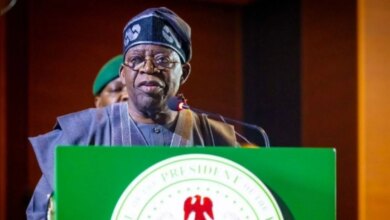
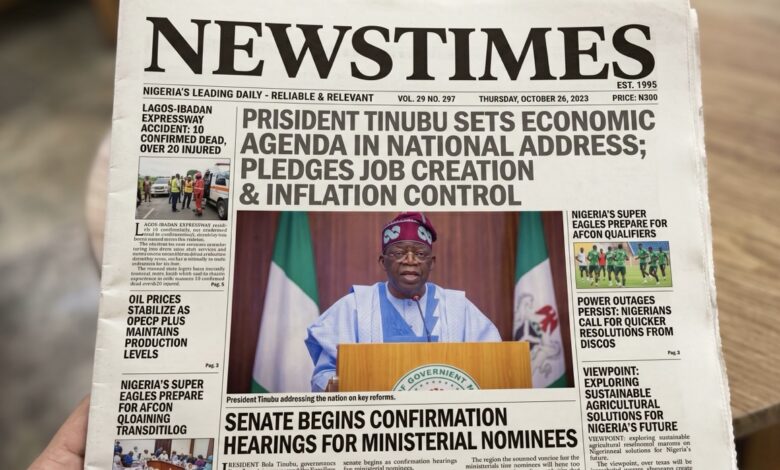
During his inauguration on May 29, 2023, President Bola Tinubu gave Nigerian youths the ultimate tech-bro dream, promising one million digital economy jobs and a fancy “Jobs and Prosperity Bill.”
According to the Nigeria Economic Summit Group (NESG) “From Hustle to Decent Work” report, 93% of Nigeria’s workforce operates within the informal “hustle economy,” with 81% concentrated in agriculture and retail.
The report warns that to prevent unemployment and underemployment from doubling to 30%, Nigeria must create 27 million new formal jobs, or roughly 4.55 million annually, by focusing on sectors like manufacturing and IT, the same field that Tinubu promised those jobs.
So yes, people are working, but a large number are working outside the kind of formal, stable employment that the promise of one million digital jobs promised.
We are now deep into 2026, and there’s still no data on whether those one million jobs have materialised. That doesn’t necessarily mean the promise failed. It just means young Nigerians still can’t see the receipt.
Tinubu’s Minister of Communications, Innovation and Digital Economy, Bosun Tijani, launched the 3 Million Technical Talent (3MTT) programme in October 2023, promising to train three million Nigerians to become tech bros and babes by 2027.
By April 2024, more than 7,000 3MTT fellows were working on a Nigerian AI language model, which is at least proof that the programme wasn’t just a launch-day hashtag.
But three million is a lot of people. Seven thousand fellows working on one project is a promising start, but it’s still a tiny fraction of the target. The real test will be whether those skills eventually translate into jobs, businesses and better incomes for the young Nigerians being trained.
Former President Muhammadu Buhari launched N-Power in 2016 under the National Social Investment Programme (NSIP), promising young Nigerians paid work experience, training and monthly stipends in teaching, agriculture, health and software development.
Fast forward to October 2023, the government suspended the scheme, claiming it needed to conduct a forensic audit, while leaving thousands of youth stranded without their monthly alerts.
By July 2025, the Senate said the government owed about ₦81 billion in unpaid N-Power allowances dating back to 2022 and 2023, with the Deputy President of the Senate, Senator Barau Jibrin, promising to settle the debt through the 2025 budget.
It seems like N-Power was just temporary pocket money, because there’s no publicly available evidence of how many participants moved from N-Power into stable jobs or sustainable careers.
If you thought N-Power was a wild ride, wait until you look at what else the Buhari administration cooked up to “help” Nigerian youth.
In 2020, the government rolled out the Special Public Works Programme (SPWP), boldly promising 1,000 jobs per Local Government Area (LGA). If you do the math, that comes to a whopping total of 774,000 jobs, designed to soften the blow of the COVID-19 pandemic.
But because this is Nigeria and our own is always different, by November 2021, the House of Representatives said something fishy was going on.
It launched an official investigation because politicians were allegedly fighting dirty behind the scenes over who got to share the job slots like party jollof.
There has still been no clear public report that shows the full picture of who worked, who was paid, and what happened after the temporary jobs ended.
The National Youth Investment Fund (NYIF), launched in 2020 under President Buhari, promised loans to help young entrepreneurs start or grow their businesses.
The idea made sense. Young people were struggling to access capital, and providing them with funding could create jobs and give them a way to earn outside traditional employment.
In 2024, the government announced it would inject an additional ₦110 billion capital into the fund and said nearly 147,000 young people had benefited from related training programmes. But training young people and giving them capital are two different things, and the government’s own numbers do not tell us how many of those 147,000 people actually received NYIF loans, kept their businesses running or created jobs for anyone else.
Looking at these programmes, it’s hard to say Nigerian governments have done absolutely nothing for young people. Some put money in people’s pockets, created jobs or opened doors that were previously closed.
But there’s a familiar pattern. Governments are quick to announce big projects and pump billions into them, but much slower to show what came of them.
And for a generation that’s been told for years that we’re the future, we’ve been waiting far too long for one that actually looks like it.
The Naira Life Conference is returning on August 22, 2026, in Lagos! Come learn from finance experts and industry leaders, and partake in unfiltered conversations about building wealth and diversifying your income stream in a country like Nigeria. Real stories, expert advice you can actually use, and a community ready to build wealth together. Secure your spot here.
What do you think about this?
Drop your opinion in the comment section.
FOLLOW US & Share this with someone who needs to see this.