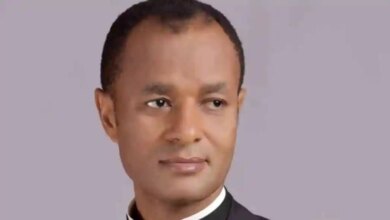
Former vice president and presidential candidate of the African Democratic Congress (ADC), Atiku Abubakar, has criticised the presidency over its response to the Catholic Church and Cardinal John Onaiyekan, describing the remarks as indicative of what he called the Tinubu administration’s growing intolerance of dissenting voices.
Atiku, in a statement on Sunday in Abuja by his Senior Special Assistant on Public Communication, Phrank Shaibu, said the presidency should have reflected on the concerns raised by the Catholic bishops instead of responding with criticism.
According to him, the Catholic Church has historically played a significant role in speaking on issues affecting the poor, vulnerable and the broader Nigerian society, irrespective of the government in power.


He commended the Catholic bishops for what he described as their willingness to raise concerns about the country’s challenges, urging religious leaders across different faiths to continue speaking on issues of public interest whenever necessary.
Atiku also defended Cardinal John Onaiyekan, describing him as a respected national figure whose comments, he said, sought to clarify the position of the Catholic bishops following their engagement with President Bola Tinubu.
The former vice president alleged that the presidency attempted to shape public perception of the meeting by presenting what he described as a selective narrative of the discussions, adding that Cardinal Onaiyekan’s subsequent remarks were intended to provide additional context.
He further argued that governments in democratic societies should welcome constructive criticism rather than respond with personal attacks, maintaining that open engagement with differing opinions strengthens democratic governance.
Atiku said religious institutions have a moral responsibility to speak on issues affecting citizens and should not be expected to endorse government policies uncritically.
He maintained that public concerns over economic hardship, insecurity, unemployment and the rising cost of living remain issues that deserve attention, regardless of criticism directed at those who raise them.