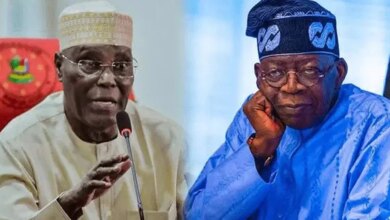
The push to unite opposition parties ahead of the 2027 presidential election has received mixed reactions from political camps, with supporters of former Vice President Atiku Abubakar and Nigerian Democratic Congress (NDC) presidential candidate Peter Obi expressing support for cooperation while remaining cautious about the proposed single-candidate arrangement.
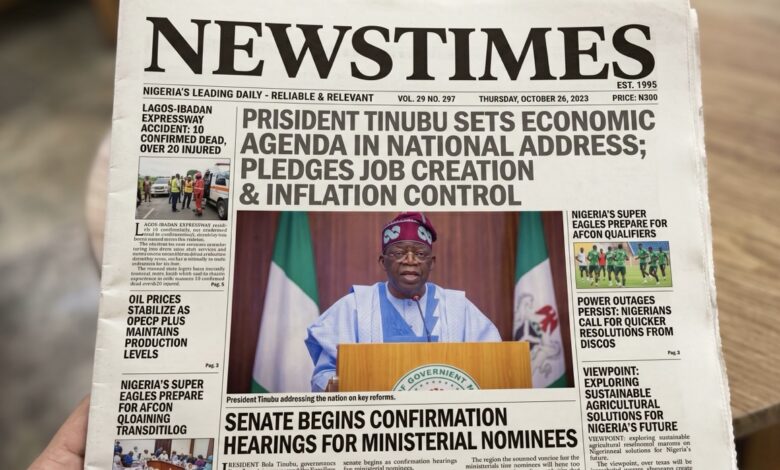
The development followed a fresh call by the Group of 100 Nigerians, led by former All Progressives Congress (APC) chieftain Salisu Lukman, for opposition leaders and presidential candidates to put aside individual interests and work towards presenting a common candidate against President Bola Tinubu in 2027.
The group specifically urged Atiku, who is now the African Democratic Congress (ADC) presidential candidate, Obi and other opposition figures, including former Kano State Governor Rabiu Kwankwaso, to consider a political arrangement capable of preventing the opposition vote from being divided.
The G-100 believes that opposition parties could struggle to defeat the ruling APC if they enter the 2027 election separately, arguing that a single presidential candidate would provide a stronger platform for consolidating votes.

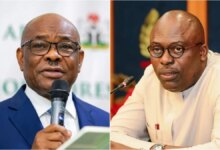
As part of efforts to advance the proposal, Lukman announced that the group would convene an opposition summit in Abuja on August 18.
However, reactions from the political camps show that while there is broad interest in opposition cooperation, there is no clear agreement yet on whether the parties should adopt a single candidate or which platform should lead such an arrangement.
Speaking on the proposed summit, Phrank Shaibu, Senior Special Assistant on Public Communication to Atiku, said the former vice president was open to genuine efforts aimed at strengthening the opposition.
He said, “His Excellency Atiku Abubakar welcomes every genuine initiative aimed at strengthening democratic opposition and providing Nigerians with a credible alternative to the Tinubu administration.”
Shaibu, however, stopped short of confirming Atiku’s attendance at the August 18 meeting, saying the former vice president’s participation would be communicated after his schedule had been finalised.
“His attendance at the August 18 summit will, however, be communicated once his schedule and participation are finalised,” he said.
According to him, Atiku believes that opposition leaders should be willing to place the national interest above personal and partisan considerations.
“His Excellency has consistently maintained that the challenges confronting Nigeria require opposition parties, leaders and citizens of goodwill to put the national interest above individual or partisan considerations. There is considerable merit in building the broadest possible democratic coalition ahead of 2027,” Shaibu said.
He added that any attempt to establish a coalition must be transparent and inclusive, stressing that the process should ultimately produce a candidate capable of winning the confidence of Nigerians.
“What is most important is that any process towards achieving that objective must be transparent, inclusive and democratic, and ultimately produce a candidate capable of earning the confidence of Nigerians,” he said.
On whether Atiku had already agreed to support a single opposition candidate, Shaibu said the former vice president was consulting political leaders and other stakeholders.
He said Atiku was “in consultation with political leaders and stakeholders across the opposition.”
According to him, such consultations were necessary because the objective should be broader than the political ambition of any individual.
“Such engagements are normal and necessary at this stage. The objective is bigger than any individual: to strengthen the opposition, protect our democracy and present Nigerians with a credible alternative to an administration that has failed to meet their expectations,” Shaibu said.
He added, “At the appropriate time, the outcome of these consultations will be made public.”
On Obi’s side, the Obidient Movement confirmed that an invitation had been extended to the former Anambra State governor to attend the proposed opposition summit.
The National Coordinator of the movement, Tanko Yunusa, said Obi would have to decide whether he wanted to participate in the meeting.
“An invitation has been sent to him. We will see whether he will attend or not. It is left for him to decide on whether to go to such a meeting,” Yunusa said.
Despite the uncertainty surrounding Obi’s attendance, Yunusa expressed support for the broader idea of opposition parties working together ahead of the election.
“We agree that it is very good for everyone in the opposition to come together under one umbrella,” he said.
Yunusa, however, said he could not confirm whether Atiku had personally contacted Obi regarding the proposed summit.
The Labour Party also expressed support for opposition collaboration but argued that any coalition should take advantage of the party’s existing structure rather than create an entirely new platform.
The party’s National Publicity Secretary, Ken Asogwa, said the Labour Party recognised “the need for broad-based collaboration among opposition forces to democratically unseat the ruling All Progressives Congress.”
However, he maintained that the Labour Party already possessed a nationwide structure that made it a strong vehicle for any opposition presidential campaign.
Asogwa said, “The Labour Party is unique among all political parties because the NLC and the TUC are its institutional members.”
He argued that the relationship between the party and the organised labour movement gives it access to a wide network across the country.
“By implication, every serving and retired civil servant across the country is naturally connected to the LP family through these labour institutions,” Asogwa said.
According to him, the party’s structure extends across the national, state, local government, ward and polling-unit levels, making it difficult to justify abandoning the platform in the name of creating another coalition structure.
He therefore urged groups seeking to unite the opposition to consider strengthening the Labour Party instead.
“It is against this backdrop that the Labour Party respectfully calls on all individuals, groups and political movements seeking to build a formidable opposition coalition to collapse their structures into the Labour Party,” he said.

Asogwa further described the Labour Party as having an “energised membership base” and a credible presidential candidate capable of providing an alternative to the APC.
“The task before the opposition is not to reinvent the wheel but to unite behind the most viable platform. That platform is the Labour Party,” he said.
The Democratic Leadership Alliance, meanwhile, adopted a more cautious position on the proposal.
The party’s Deputy National Publicity Secretary, Judith Aguenu, said the DLA supported cooperation among opposition forces but was not currently negotiating with the G-100 or another political party over the adoption of a single presidential candidate.
“The Democratic Leadership Alliance appreciates the call by the G-100 and other stakeholders for opposition forces to close ranks ahead of the 2027 general elections,” Aguenu said.
She added, “However, at this stage, the DLA is not in talks with the G-100 or any other political party or group regarding the adoption or nomination of a single presidential candidate.”
According to Aguenu, the immediate concern of the DLA was to strengthen its own political platform while remaining open to discussions with other opposition parties and groups.
She said the issue should not be limited to finding one presidential candidate but should also involve developing a clear programme for governing the country.
“For us, the conversation should go beyond merely producing a single candidate. It must be about building a credible political platform, agreeing on a clear vision for Nigeria, and presenting Nigerians with a leadership alternative they can trust,” she said.
The Coalition of United Political Parties, however, expressed stronger support for the proposed summit and the possibility of a consensus opposition candidate.
Its spokesperson, Agu Bryan, said the coalition had consistently supported efforts to bring opposition parties together and would support the success of the August 18 meeting.
“The CUPP acknowledges and appreciates the initiative of the G-100 in convening an opposition summit aimed at fostering greater unity and strategic cooperation among opposition political forces ahead of the 2027 general elections,” Bryan said.
He said the group had demonstrated commitment to the search for accountable governance and democratic consolidation.
“CUPP has consistently advocated, from its inception, for the possibility of a single, formidable opposition presidential candidate where practicable,” he said.
Bryan added that the coalition would support a consensus candidate if major opposition contenders, including Atiku and Obi, were able to reach an agreement.
“We believe that a united opposition, anchored on a credible candidacy and a coherent alternative policy platform, stands a stronger chance of providing Nigerians with a viable democratic alternative to the Tinubu-led administration,” he said.
He added, “Accordingly, CUPP is prepared to support and work for the success of a consensus opposition candidate, should the major opposition contenders, including Peter Obi, Atiku Abubakar and others, arrive at a mutually acceptable arrangement in the overriding national interest.”
Bryan also stressed that opposition unity alone would not be sufficient, arguing that political parties must continue to demand credible elections.
“Opposition unity must go hand-in-hand with a sustained demand for free, fair, transparent and credible elections. A credible electoral process is the foundation of legitimate governance and the essential pathway to ensuring that the will of Nigerian voters is freely expressed and respected,” he said.