Bayelsa State Governor Douye Diri, on Tuesday, launched a scathing attack on the Federal Government’s centralised control of Nigeria’s natural resources, accusing Abuja of operating a system that has deepened insecurity, entrenched injustice and left resource-producing communities trapped in poverty and underdevelopment.
Speaking at the 2026 Democracy Dialogue organised by the Goodluck Jonathan Foundation in Bauchi, Diri argued that the country’s current resource management framework had become a major source of instability, particularly in states where valuable mineral and petroleum resources are located.
The governor said the concentration of control over mineral and petroleum resources in the hands of the Federal Government had encouraged exploitation without corresponding development of host communities, insisting that many of Nigeria’s security challenges could be traced to the inequities embedded in the existing structure.
“Resources are expropriated. Today, there is gold in Zamfara and other places, and what do we experience? Insecurity,” Diri said.

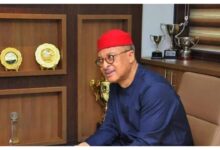
“Most of the insecurity is also traced to the discovery of gold in Zamfara.”
According to him, Nigeria cannot continue to expect peace and stability when communities that generate enormous national wealth remain neglected and disconnected from the benefits of the resources extracted from their lands.
Diri maintained that the present governance structure had weakened the fundamental principles of democracy and replaced them with a system driven by injustice and unfairness.
“I believe that we have missed the road of democracy in Nigeria long ago,” he said.
“Democracy is about the rule of law, and it is built on three pillars: justice, ethics and fairness.”
The governor pointed to Oloibiri, the Bayelsa community where commercial oil was first discovered in Nigeria, as a stark example of what he described as the failure of the Federal Government’s resource control policy.
“There is no justice where Oloibiri, that gave this country commercial oil production, is Today a shadow of itself,” he said.
“And then all of us come to Abuja at the end of the month to share oil money. I don’t believe that that is what democracy is all about.”
He lamented what he described as structural inequalities in the allocation of local government areas and federal resources, noting that Bayelsa, despite its huge contribution to the national economy through crude oil production, has only eight local government areas.
“To my mind, there is total injustice where I have just eight local government areas, some other states have 40 local government areas and above, and the resources from my state are used to share to those local government areas,” he said.
“There is injustice. And whether I become president, the injustice continues. The unfairness continues.”
The governor also recalled that residents of Southern Ijaw Local Government Area lacked road access to the council headquarters for decades, describing the situation as another illustration of the neglect suffered by communities that contribute significantly to the nation’s wealth.
“The local government that brings so much money to Nigeria, Southern Ijaw Local Government, where I invited President Obasanjo, who graciously came, for 60 years they had no access to the headquarters of that local government,” he said.
“It is only recently that I concluded a 630-metre long bridge to the headquarters of that local government.”
Diri insisted that Nigeria’s economic and security crises were symptoms of a deeper structural defect, arguing that only genuine federalism would allow states to harness their resources, reduce dependence on federal allocations and address long-standing grievances.
“My dear leaders, my conclusion is that for democracy to thrive in Nigeria, there must be true federalism,” he declared.
“I delivered a lecture at the University of Nigeria, Nsukka, about a year ago on true federalism. And until Nigeria begins to practice federalism, we will have some pseudo-democratic, pseudo-autocratic, and sometimes even a tyrannical government in this country.”
He urged the Federal Government and political leaders to pursue constitutional reforms that would guarantee fairness, resource justice and balanced development across the federation, warning that democracy could not flourish under a system that concentrates power and wealth at the centre while leaving resource-producing communities impoverished and vulnerable.
Diri, however, commended former President Goodluck Jonathan for sustaining the annual democracy dialogue, describing it as an important platform for national reflection and democratic renewal.
“We must continue to join hands so that, at the end of the day, the country will be better for us all,” he added.