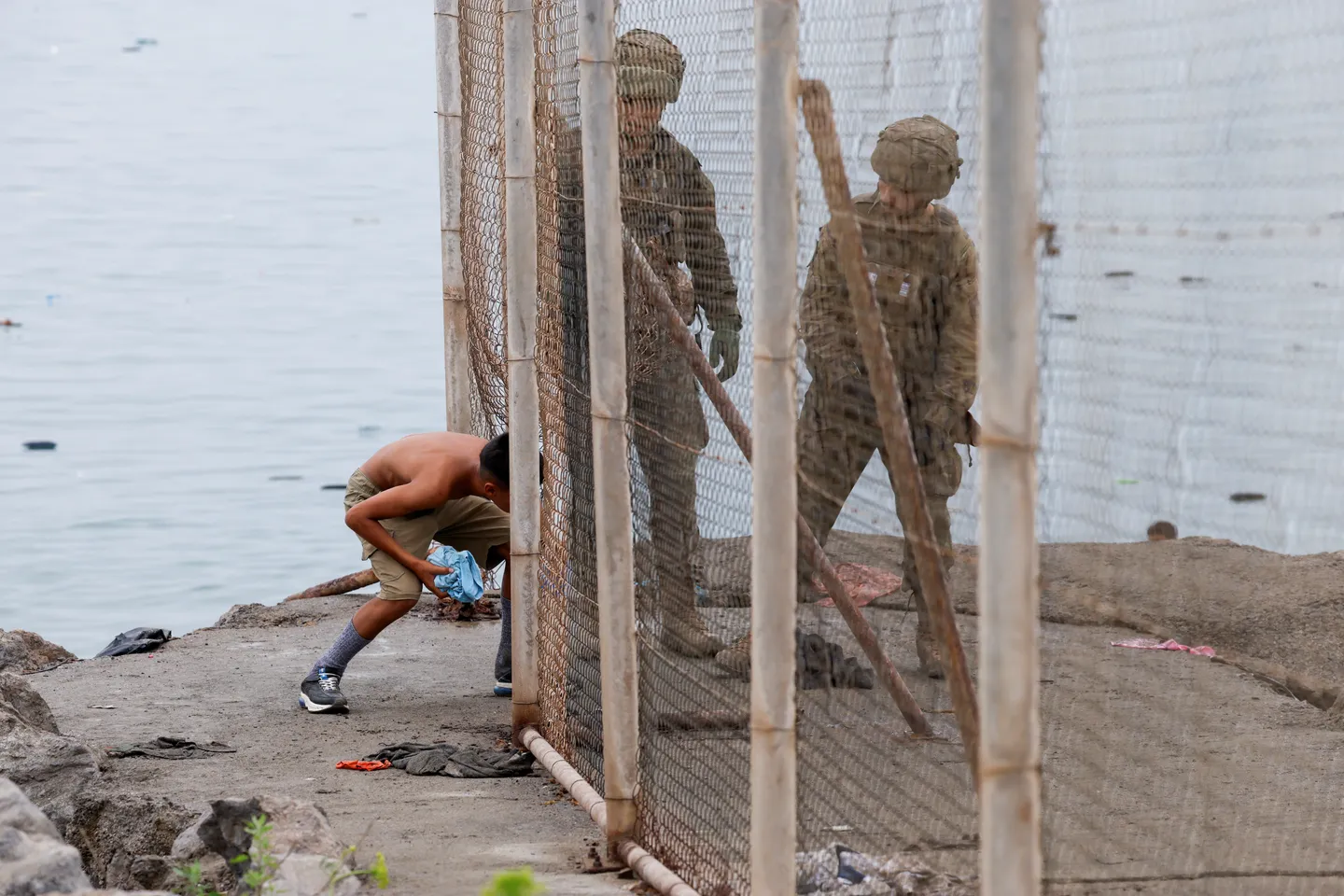
THE FACTS: In this most recent crisis, which dwarfs the one five years prior, the first response by Spanish officials was to say that Moroccan counterparts were working alongside them to stop the rush.
Whatever those efforts were, they proved ineffective as migrants kept steadily coming from all over Morocco to the border, with thousands breaching the frontier on Thursday and Friday.
Eventually, Moroccan security forces stepped up, employing tear gas, batons and water cannons to disperse large groups of migrants reaching the border on Friday.


Morocco’s ambassador to Spain expressed hope that those who crossed from Morocco into the Spanish territory would return, saying the situation had unfolded against Rabat’s wishes.
Morocco has never officially recognised Ceuta and its sister Spanish enclave, Melilla, as European territory even though they have been under Spanish control for centuries.
CLAIM: Spain and Morocco don’t share an actual border, so this can’t really be called a “border crisis”
THE FACTS: Geography helps explain the connection.
Spain’s southern coast lies only about nine miles from Morocco across the Strait of Gibraltar. Closer still are the Spanish enclaves of Ceuta and Melilla, both bordering Morocco on the North African coast.
Ceuta, which has been under Spanish control since 1580, occupies a peninsula jutting into the Mediterranean, while Melilla lies farther east.
Although Ceuta and Melilla are part of the European Union and covered by Schengen rules, Spain enforces additional border checks on travel from the enclaves to the mainland.
That prevents undocumented migrants from moving freely into the rest of Europe, with asylum applications instead handled within the enclaves themselves.
CLAIM: Those who crossed will end up in mainland Europe.
THE FACTS: The Ceuta crossings have led political leaders both in Italy and France to take measures that appear aimed at stopping people from entering their countries.
Italy has suspended its open-border Schengen agreement with Spain even though Italy doesn’t share a border with Spain and is also an entry point for tens of thousands of migrants crossing the Mediterranean each year.
French Interior Minister Laurent Nunez said France would also strengthen border checks with Spain.
While the influx is clearly unmanageable for the city of Ceuta, the impact of the crossing will mostly be limited to the Spanish territory and have limited impact on mainland Spain.
Spain said it had struck a deal with Morocco to return those who entered the country illegally.
More than half of the people who crossed had already returned to Morocco voluntarily by Friday afternoon, and those who will remain in Ceuta will either be sent back eventually or face a long period of legal limbo and possibly spells in government-run centres.


