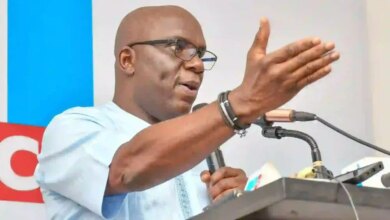
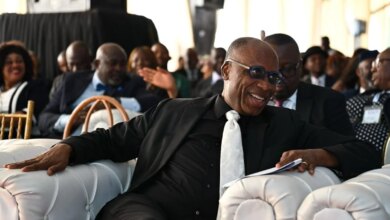
Fresh details have emerged on the renewed efforts to unite former Vice President Atiku Abubakar and former Anambra State Governor Peter Obi in a single opposition platform ahead of the 2027 presidential election.
The initiative, being championed by the G-100, a coalition of opposition politicians, is aimed at bringing major opposition parties together to present a stronger challenge to President Bola Tinubu and the ruling All Progressives Congress (APC).
However, discussions around a single presidential candidate have reportedly become difficult as supporters of Atiku and Obi remain unwilling to give up their respective presidential ambitions.
The disagreement is expected to be one of the major issues at the August 31 Summit of Opposition Parties being organised by the G-100, where opposition leaders are expected to discuss the possibility of forming a common front ahead of the 2027 election.
The group has been engaging several opposition parties, including the African Democratic Congress (ADC), Nigeria Democratic Congress (NDC), Allied Peoples Movement (APM), Social Democratic Party (SDP), Peoples Redemption Party (PRP) and the Peoples Democratic Party (PDP) faction led by Tanimu Turaki.
The G-100 is pushing for the parties to work together and, if possible, support a single candidate in order to prevent the opposition vote from being divided.
The group had also met with the Minority Caucus in the House of Representatives as part of efforts to build support for the proposed arrangement.
But sources familiar with the discussions said the biggest challenge remains the question of who should receive the presidential ticket if the parties eventually agree to a single-candidate arrangement.
Obi, who contested the 2023 presidential election on the Labour Party platform, left Atiku in the ADC to the NDC months ago.
The disagreement has also brought the issue of zoning into the negotiations.
Some opposition figures reportedly believe that Obi has a stronger argument for the ticket under an arrangement based on rotational principles, while supporters of Atiku have resisted such a position.

The development has created a difficult situation for the G-100, which is attempting to persuade the opposition parties to prioritise defeating the APC over individual presidential ambitions.
The challenge is made more complicated by the fact that the affected parties have already concluded their nomination processes and are either preparing for campaigns or have commenced activities ahead of the election timetable issued by the Independent National Electoral Commission (INEC).
Despite the disagreement, opposition figures involved in the discussions insist that the possibility of cooperation has not been completely abandoned.
A source in one of the opposition parties said the parties were still open to broader discussions. The source said that “are not opposed to a Conference of the Opposition.”
The source suggested that cooperation could still take place even if the parties fail to immediately agree on a single presidential candidate.
Meanwhile, he spokesman of the Turaki-led PDP, Ini Ememobong, also expressed optimism that the opposition could eventually find common ground.
“Nothing is impossible in politics. If everyone has agreed that anyone but Tinubu, which means that every other person will sacrifice to achieve success,” Ememobong told Daily Sun in a telephone interview.
The G-100 has also acknowledged the difficulties surrounding its proposal but said it would continue pushing for discussions among the opposition parties.
One of the group’s conveners, Sergius Ogun, said the effort was worthwhile despite the obstacles confronting the initiative.
“In my place, they say if you don’t put your leg inside the stream, you won’t know how deep it is. We don’t lose anything by trying,” Ogun said.
He explained that the immediate objective was to bring the various opposition interests to the negotiating table and make them understand the need to combine their strengths.
“The first is to get them to talk, let them see what is ahead of them, because this party, the party in government today, has introduced money politics. The opposition will not have that big pocket to challenge them,” he said.
Ogun added that opposition parties needed to combine their resources and political goodwill if they wanted to mount a serious challenge.
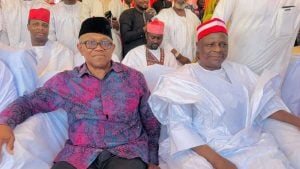
“So, the earlier you put your resources together, I’m not necessarily talking about money, human, material, and then harness the goodwill that the individual political parties’ leaders have, the earlier you do that to present a formidable front, the better,” he said.
The ADC has also indicated that it remains receptive to efforts aimed at strengthening cooperation among opposition parties.
Its National Publicity Secretary, Bolaji Abdullahi, said the party supported initiatives designed to bring opposition politicians together.
Asked whether the proposed alliance was coming too late because the parties had already completed their nomination processes, Abdullahi said the political process still offered room for further negotiations.
“In politics, only a few things can be considered too late,” he said.
The positions of the Atiku and Obi camps, however, remain crucial to whether the proposed single-candidate arrangement can succeed.
Atiku’s camp has previously made it clear that the former vice president is focused on presenting his political and policy agenda to Nigerians rather than entering an arrangement that automatically requires him to withdraw from the race.
Atiku’s Senior Special Assistant on Public Communication, Phrank Shaibu, had said the former vice president had moved beyond discussions about simply organising an opposition summit.
“We have moved beyond this conversation. Atiku has brought to the table the policy alternatives, including what he would do with petroleum subsidy if elected. His policies are about the people and they are not hidden. Come January 2027, Nigerians will make their choice. This is where we are today,” Shaibu said.
He argued that voters should ultimately decide between the presidential candidates based on their policies and preparedness.
Obi’s camp has similarly maintained that the former Anambra governor has the political credentials and support necessary to challenge Tinubu.
While the NDC has welcomed the G-100 initiative, the party has rejected the argument that all opposition parties must necessarily present one candidate before the APC can be defeated.
NDC National Publicity Secretary, Osa Director, said the group deserved recognition for attempting to unite opposition forces but pointed to Nigeria’s political history to argue that an incumbent could be defeated without every opposition party supporting one candidate.
“Under a multi-party democracy, it is possible for one of the parties to defeat a sitting president. It happened in 2015 and it was only fragments of the All Progressive Grand Alliance and the Peoples Democratic Party that teamed up to form an alliance with the All Progressives Congress and they were able to defeat President Goodluck Jonathan,” Director said.
He said the NDC would not approach the 2027 election from the position that defeating the APC was impossible without a complete opposition merger.
“So, the NDC is not going into the 2027 election with that self-defeatist approach that the opposition cannot defeat the APC unless all the parties come together,” he added.
However, the NDC has also made clear who it would prefer to lead any coalition that eventually emerges.
On the issue of a consensus presidential candidate, Director said, “We have made the point clear that we should choose the best candidate in the opposition and we in the NDC believe that Peter Obi is the best if he is allowed to lead the coalition. This is our position.”