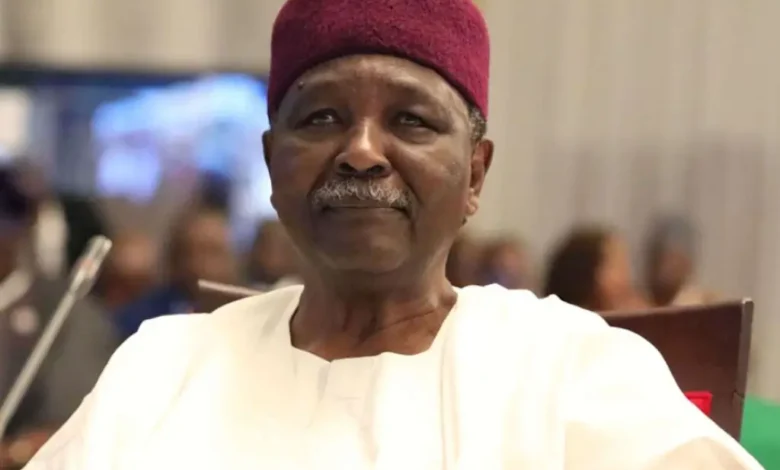
Former Head of State, Gen. Yakubu Gowon, has said Igbo people who had verifiable deposits in Nigerian banks before the civil war received their money in full, together with accrued interest, after the conflict ended.
Gowon also rejected the persistent criticism of the late Chief Obafemi Awolowo over …-war policy that limited payments to former Biafran adults to £20, irrespective of the amount of Biafran currency they possessed.
He said the policy was a collective decision of the Federal Executive Council and not a personal action taken by Awolowo, who served as Federal Commissioner for Finance during the war.
The former military ruler made the clarification in his memoir, My Life of Duty and Allegiance.

The Nigerian Civil War lasted from 1967 to 1970. Following the conflict, Gowon announced the policy of “no victor, no vanquished” and introduced programmes of reconciliation, reconstruction and rehabilitation.
He said his administration changed the country’s currency partly because of large-scale looting at Central Bank facilities in Benin and Enugu.
According to him, much of the currency accumulated during the war consequently ceased to be legal tender in Nigeria.
Gowon added that the Biafran pound could not be freely exchanged internationally and was not recognised as legal tender by the Federal Government.
“That left the Federal Executive Council with the question of what to do to alleviate the suffering of returnees. Council diligently evaluated all suggestions that were proposed,” he wrote.
Gowon said the Central Bank established a panel to assess the possible conversion of Biafran currency after the war.
He explained that the government rejected a direct exchange at the same value because the quantity of Biafran notes in circulation could not be accurately determined and such a move risked destabilising the economy.
“Due to the large number of Biafran pounds in circulation, the Federal Government decided it could not afford to exchange them all at par with the Nigerian currency without risking economic collapse,” he said.
“Economic experts recommended that the Federal Government limit the payout to approximately 20 Nigerian pounds for each Biafran adult, irrespective of the amount of Biafran currency being returned.”
Gowon said the government adopted the recommendation because it lacked reliable information about the printing and circulation of the Biafran notes.
The former head of state, however, distinguished Biafran currency from funds deposited in recognised Nigerian banks before the war.
“However, all who fled Nigeria but had proof of having money in Nigerian banks received full value for their money plus the interest that it earned in the Nigerian currency,” he said.
“It would have been unwise to take a different course of action.”
Gowon maintained that businessmen and other depositors with valid records were not restricted to the £20 payment.
The former military leader lamented that Awolowo had continued to receive personal blame for the policy despite it being approved collectively by the government.
“This is far from the truth. The final decision was not Chief Awolowo’s, even though he was the Finance Commissioner. It was done in the overall national interest,” Gowon said.
He argued that the administration could not disregard the advice of economic experts without risking the collapse of an economy already weakened by a 30-month war.
“We certainly could not have ignored the recommendations of our economic advisers without collapsing the economy,” he said.
“Thus, the government made a collective and tough decision to save Nigeria’s economy, which struggled to stabilise after a 30-month war fought without external borrowing.”
Gowon said his administration allocated a substantial portion of the national budget to rebuilding the former East Central State and other areas affected by the war.
He said the measures were intended to promote reconciliation, restore economic activity and accelerate recovery in the region.
The former head of state added that the commencement of the Second National Development Plan was shifted from April to October 1970 to give the East Central State time to participate meaningfully.
According to him, the adjustment formed part of broader efforts to reintegrate the region and support its post-war reconstruction.