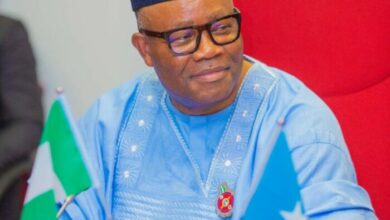
Jigawa State governor, Malam Umar Namadi, has paid tribute to the founding fathers, past leaders and people of the state as Jigawa marks its 35th anniversary of creation.
LEADERSHIP reports Jigawa State was created on August 27, 1991, by the Federal Military Government under the leadership of former military president, General Ibrahim Badamasi Babangida, as part of a restructuring of the federation. It was carved out of the old Kano State, with Dutse as its capital.


In a statement marking the anniversary on Thursday, August 27, 2026, Namadi described the occasion as a moment of “thanksgiving, reflection, remembrance and renewed commitment.”
The governor said the anniversary provided an opportunity to honour those whose contributions made the creation and development of the state possible.
“This anniversary is a solemn moment of thanksgiving, remembrance, renewed hope and commitment,” he said.
“It offers an opportunity to salute the patriots whose vision, advocacy, sacrifice and public service made the birth and consolidation of Jigawa State possible.”
Namadi paid special tribute to the founding fathers, elder statesmen, community leaders, public servants, professionals, women and youth leaders, civil society organisations, development partners and other citizens who contributed to the state’s growth.
He also acknowledged the services of successive leaders of the state, including the pioneer military administrator, Major-General Olayinka Sule, the first elected civilian governor, Alhaji Ali Sa’ad Birnin-Kudu; Brigadier General Ibrahim Aliyu; Colonel Rasheed Alade Shekoni; Lieutenant Colonel Abubakar Zakariya Maimalari; Alhaji Ibrahim Saminu Turaki; Alhaji Dr Sule Lamido, and Alhaji Muhammad Badaru Abubakar.
The governor also recognised the contributions of former deputy governors, legislators, judges, commissioners, heads of service, permanent secretaries, local government leaders and civil servants.
He extended the tribute to traditional institutions and royal fathers across the emirates of Hadejia, Kazaure, Gumel, Ringim and Dutse, as well as district, village and ward heads, ulamas and community leaders.
According to Namadi, these institutions have remained “custodians of heritage, guardians of peace, and bridges between government and the people.”
The governor said the progress recorded by Jigawa since its creation had been driven by the collective efforts of its people, including farmers, traders, teachers, health workers, artisans, scholars, entrepreneurs, security personnel, religious leaders and public officers.
“As governor, I recognise that the greatest tribute we can pay to our founding fathers and past leaders is not merely to remember their names, but to keep faith with their ideals and exemplary leadership,” he said.
He said those ideals included preserving peace, strengthening justice, expanding opportunities, caring for vulnerable people, protecting public resources, respecting elders, investing in young people and building institutions that would outlive the current generation.
Namadi described the 35th anniversary as a time to “honour yesterday, serve today and prepare for tomorrow,” while urging citizens to renew their commitment to building a better Jigawa.
He said the administration remained committed to building a state that is “peaceful, prosperous, inclusive, disciplined, knowledge-driven” and anchored in values that have sustained its people over the years.
The governor appealed to residents to continue to support the government’s transformative agenda, which he said was focused on sustainable development, socio-economic well-being, peace and prosperity for all.
He prayed for Almighty Allah to reward those who served the state, forgive those who had died and continue to bless Jigawa State and Nigeria.
“Long live Jigawa State. Long live the Federal Republic of Nigeria,” the governor said.