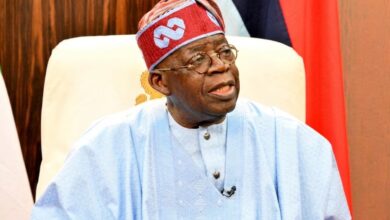
The push to unite Nigeria’s opposition ahead of the 2027 presidential election has moved closer to a formal political discussion, with former Vice-President Atiku Abubakar and allies of Oyo State Governor Seyi Makinde signalling support for an August 18 summit convened to explore a common front.
The development contrasts sharply with the position of supporters of President Bola Tinubu, who have dismissed the opposition realignment as incapable of threatening the President’s bid for a second term.
The competing positions emerged on Monday as the G100, a coalition of concerned Nigerians, disclosed that it had completed an initial round of consultations with leaders of six opposition parties and was preparing a broader summit in Abuja.
READ RELATED NEWS UPDATES
The coalition said its consultations had involved the leadership of the African Democratic Congress (ADC), Nigeria Democratic Congress (NDC), Peoples Democratic Party (PDP), Peoples Redemption Party (PRP), Social Democratic Party (SDP) and Allied Peoples Movement (APM), among others.

According to the G100, the discussions included engagements with national chairmen, presidential candidates and running mates and were aimed at exploring the possibility of building a more coordinated opposition ahead of the 2027 election.
It said the August 18 summit would provide a structured platform for opposition parties to examine the practical challenges of cooperation, including political accommodation, sacrifice and collective action.
The group said it had deliberately kept its consultations away from public scrutiny to allow political leaders to speak freely on issues it described as sensitive.
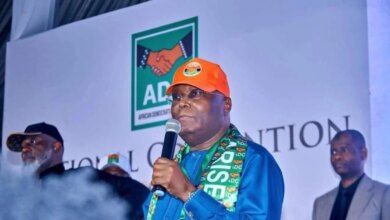
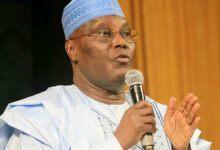
Atiku, the ADC presidential candidate, indicated that he was favourably disposed to the proposed summit, although his attendance would depend on his schedule and the final arrangements.
His Senior Special Assistant on Public Communication, Phrank Shaibu, said Atiku had consistently advocated cooperation among opposition forces, arguing that the challenge confronting them was larger than any individual politician or party.
“Atiku Abubakar has consistently maintained that the challenge before the opposition is bigger than any individual or political party,” Shaibu said.
He said Atiku considered any sincere effort to strengthen opposition unity and offer Nigerians a credible alternative worthy of support.
Makinde’s camp also welcomed the initiative. The Chairman of the Oyo State Advisory Council, Chief Bolaji Ayorinde, SAN, said there was nothing unlawful or undemocratic about political leaders consulting on a possible alliance.
He said democratic politics permitted negotiations, alliances and realignment, provided such efforts were guided by national interest and democratic principles.
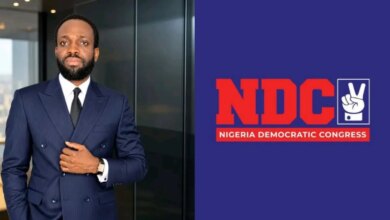
The Nigeria Democratic Congress (NDC), however, signalled that any eventual coalition should take account of the relative strength of the parties and their presidential candidates.
Its National Publicity Secretary, Osa Director, said the party was not opposed to opposition parties joining forces but argued that the “strongest and most popular” presidential candidate should lead any proposed alliance.
The emerging opposition discussions have drawn a dismissive response from Tinubu’s supporters.
Speaking at the inauguration of the Renewed Hope Project 2027 in Abuja, the Chairman of its Board of Trustees, Maj. Gen. Abdulmalik Jibril (retd.), described the proposed opposition alliance as an “exercise in futility”.
“All put together is an exercise in futility. We have seen them before; they have done nothing and they are not going to do anything again,” Jibril said.
Secretary to the Government of the Federation, Senator George Akume, who serves as Grand Patron of the group, also endorsed the mobilisation of support for Tinubu’s re-election.
Represented by his Senior Special Assistant, Technical, Prof. Babatunde Bernard, Akume said the Renewed Hope Project would continue to highlight what he described as verifiable achievements of the administration.
He cited local government autonomy and digital reforms as examples of policies he said were addressing structural problems and improving governance.
The G100, meanwhile, said it was not seeking to determine who should emerge from the opposition negotiations.
“The G100 does not presume to dictate the outcome of these conversations,” the coalition said.
It added that its role was to facilitate dialogue and create room for the parties to consider difficult questions surrounding cooperation and collective political action.
The August 18 meeting is therefore set to provide an early test of whether the growing calls for opposition unity can move beyond individual endorsements and produce a workable political arrangement ahead of 2027.