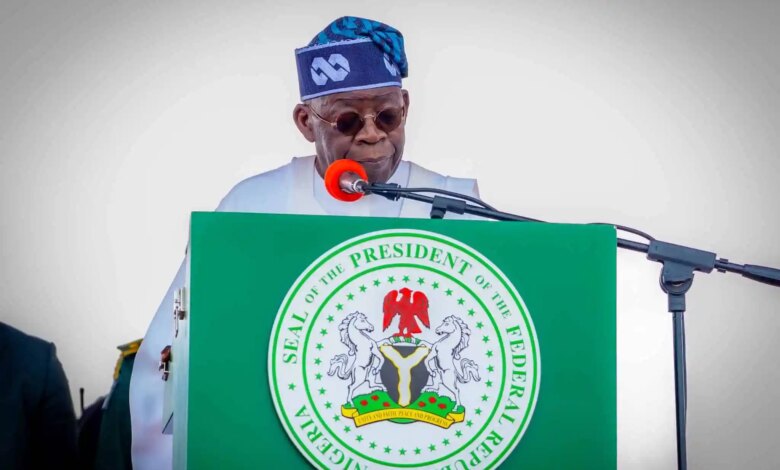
Human rights lawyers have criticised President Bola Tinubu’s directive to the Economic and Financial Crimes Commission (EFCC) to unfreeze accounts belonging to the Osun State Government, warning that the intervention could undermine the anti-graft agency’s independence.
Reacting to the development, human rights lawyer, Inibehe Effiong, in an interview with Daily Trust, said the President’s directive raised questions about political interference in the commission’s statutory responsibilities.
Effiong said, “Whatever decision the EFCC takes, they may have taken it as an independent arm of government. The President cannot be directing the unfreezing or freezing of accounts.
“Even though the EFCC is an agency of the executive arm of government, it is created as an independent agency under the law.”

Effiong argued that the EFCC Establishment Act did not give the President supervisory authority over the commission’s investigative and enforcement functions.
According to him, allowing the President to determine when accounts should be frozen or released could weaken public confidence in the agency.
“What this does is undermine the independence and integrity of the EFCC, and it speaks to political interference,” he said.
Effiong also questioned whether similar presidential interventions might have occurred in other investigations without becoming public.
He asked, “If the President is now giving directives in respect of the Osun matter, how many other cases has he given such directives that the public does not know about?
“We cannot simply trust the President to do what is right when he has a clear partisan interest in matters.”
Lawyer Urges Presidential Neutrality
Another lawyer, Victoria Adaji, said the President should demonstrate impartiality by allowing relevant institutions and the courts to discharge their responsibilities without interference.
“The President should prove to Nigerians that he is neutral by ensuring justice is served in matters that require so in the country,” Adaji said.
She maintained that the statutory independence of the EFCC should have been respected throughout the dispute.
“The EFCC is an independent institution, and the President should have understood that better rather than interfering in the matter,” she added.
Human rights lawyer, Udochukwu Onoh, also questioned the President’s authority to direct the EFCC on the matter, while raising concerns about the legal process through which the state government’s accounts were initially frozen.
Onoh argued that the Osun State Government should have been given an opportunity to present its case before the restriction was imposed.
He asked, “When we view it from the angle of infringement on fundamental human rights, how could a court grant such a motion without a fair hearing on both sides?
“The Osun State Government should have been invited to court and granted a fair hearing.”
Onoh further warned that restricting access to a state government’s accounts, even temporarily, could disrupt public administration and the provision of essential services.
He said such action could affect the payment of salaries, execution of projects and other statutory obligations of government.
The lawyer nevertheless described Tinubu’s intervention as political interference, insisting that questions over the legality of the freezing order should be resolved through established judicial procedures.
He urged the Federal Government to allow the EFCC and the courts to perform their duties without external pressure, while ensuring that affected parties are given adequate opportunity to seek legal redress.