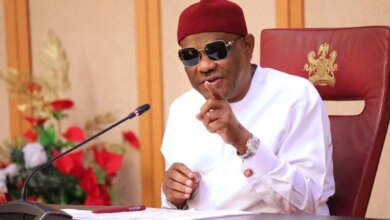
The House of Representatives ad hoc committee investigating the controversial Presidential Foreign Investment Promotion Council (PFIPC) has come under renewed criticism over its failure to invite the Chief of Staff to the President, Femi Gbajabiamila, and other key figures mentioned in allegations surrounding the purported agency.
The committee, chaired by the lawmaker representing Kanke/Kanam/Pankshin Federal Constituency of Plateau State, Yusuf Gagdi, is expected to conclude its assignment within weeks before presenting its report to the House.
However, a member of the House, civil society organisations and public affairs analysts have questioned the scope, independence and credibility of the investigation conducted so far.
They argued that the panel should not close its proceedings without examining the alleged ₦400m transaction, the reported death of an intermediary and the roles played by senior public officials and institutions.


A member of the House, who spoke to The PUNCH on condition of anonymity, questioned the decision to appoint Gagdi as chairman of the panel after he moved the motion that led to the investigation.
“Where have you seen this before that the member who brought an issue for investigation will be made the chair of the committee set up to probe the issues raised in that motion?” the lawmaker asked.
“I am not saying it is in our Rules Book, but it is definitely not a convention. This is where I think the Speaker missed it.”
He also queried why Gbajabiamila had not been invited to testify, despite letters reportedly written by the Chief of Staff to the police concerning the alleged promoter of the PFIPC, Adeniyi Adeyemi.
“If the Chief of Staff to the President, Femi Gbajabiamila, wrote to the police in October 2025 concerning the man now in detention, why not invite him to come and adopt those letters?” he asked.
The lawmaker also faulted the committee’s conclusion that the signature on the purported appointment letter issued to Adeyemi differed from signatures on other correspondence linked to Gbajabiamila.
He argued that some public figures use more than one signature and said the committee should not rely solely on visual comparisons.
“Is this the first time some important personalities will have two or more different signatures?” he asked.
The lawmaker accused the panel of conducting a one-sided investigation and questioned why the committee had relied on anti-graft agencies to handle the criminal aspect without independently hearing from all parties.
“Does that stop the committee from inviting Femi for questioning?” he asked.
He also alleged that Gagdi dominated one of the committee’s proceedings and prevented a member from asking what appeared to be an important question.
A former Secretary-General of the Arewa Consultative Forum and chieftain of the All Progressives Congress (APC), Anthony Sani, urged the panel to examine every aspect of the controversy.
“The public expects the probe to be thorough and dispel any misconceptions. The death of the alleged intermediary, Dolapo Tanimola, should be of concern to the probe panel,” he said.
“I suggest that all circumstances which can lead to the truth should not be left unturned.”
Sani said the circumstances surrounding Tanimola’s death should form part of the committee’s investigation.
The Executive Director of the Civil Society Legislative Advocacy Centre, Ibrahim Rafsanjani, said the scandal raised serious concerns about Nigeria’s public institutions, budgeting system, security agencies and presidential bureaucracy.
He said CISLAC was not satisfied with the depth and independence of the investigation.
“A legislative investigation of this magnitude must go beyond establishing whether an appointment letter was forged or whether the disputed agency had a lawful basis,” Rafsanjani said.
“It must determine how the entity penetrated multiple layers of government, who facilitated its operations, who failed in their responsibilities, whether public funds were released or expended, and whether politically exposed persons or senior public officials played any direct or indirect role.”
He criticised the committee for allegedly failing to question police officials thoroughly about Tanimola’s death.
Tanimola was alleged to have acted as an intermediary through whom Adeyemi claimed he paid ₦400m intended for Gbajabiamila.
The Chief of Staff has previously denied involvement in the alleged transaction.
Rafsanjani said the committee should demand information about the date, location and cause of Tanimola’s death, as well as any autopsy, forensic examination or coroner’s inquiry conducted.
He also said the panel should establish who last contacted the deceased and whether his death affected the preservation of evidence.
“A credible investigation cannot simply avoid a controversial death connected to a central allegation,” he said.
“Failure to interrogate this aspect creates suspicion, weakens public confidence and leaves a potentially important evidentiary trail unexplored.”
Rafsanjani said inviting Gbajabiamila would not amount to declaring him guilty but would allow him to clarify the allegations and demonstrate that no individual was beyond legislative scrutiny.
He also urged the panel to trace the alleged ₦400m through bank statements, withdrawal records, payment instructions, telephone records and financial intelligence reports.
“Without following the money, the investigation risks becoming an examination of forged paperwork rather than a comprehensive inquiry into possible fraud, bribery, influence-peddling or abuse of office,” he said.
CISLAC warned the committee against presenting the alleged forgery of official documents as a complete explanation of how the council secured access to government institutions.
“Forgery may explain the initial entry point, but it cannot by itself explain failures across several government institutions,” Rafsanjani said.
CISLAC urged the House not to end the investigation merely to meet an administrative deadline.
The organisation said the panel’s mandate should be extended if key questions remained unanswered.
It recommended that every principal actor be invited to give evidence under oath, while the police should submit a comprehensive report on Tanimola’s death.
The organisation also called for the tracing of the alleged ₦400m and a forensic audit of all accounts associated with the disputed council.
Public affairs analyst Jackson Ojo also said the alleged payment should have been treated as a major evidentiary issue.
“If the allegations are true, the transaction itself would constitute a critical piece of evidence,” he said.
“It would serve as an exhibit and a material fact in establishing what transpired. Unfortunately, that evidence appears to have been overlooked.”
Ojo argued that a credible investigation required testimony from those making allegations and those accused.
“For any probe to be fair, transparent and comprehensive, investigators must hear directly from the individuals involved and examine all available documentary evidence,” he said.
“Without this, questions will inevitably remain about the thoroughness and credibility of the process.”
During three weeks of hearings, the 12-member committee questioned several senior government officials.
They included the Head of the Civil Service of the Federation, Didi Walson-Jack; Director of Banking Services at the Central Bank of Nigeria, Hamisu Abdullahi; Director-General of the Budget Office of the Federation, Tanimu Yakubu; Director of the Federal Project Finance Department, Joshua Luka; and police officers representing the Inspector-General of Police, Olatunji Disu.
The committee, however, did not invite Gbajabiamila to appear over Adeyemi’s allegation that the Chief of Staff received ₦400m through Tanimola.
Tanimola reportedly died in a fire incident at Kachi Hotel in Utako, Abuja, where the money was allegedly exchanged.
Reports also claimed the hotel was later demolished by armed persons, allegedly preventing investigators from retrieving closed-circuit television footage.
The circumstances surrounding the death and demolition have not been independently established.
Adeyemi, through his lawyer, Festus Akhigbe, asked the committee to provide the administrative clearance required for him to appear and testify.
“We formally request that the panel issue the necessary administrative clearance to allow our client, Prince Adeniyi Adeyemi Matthew, to appear in person and testify,” the statement read.
His legal team warned that a final report issued without hearing directly from him would be incomplete and could violate his right to fair hearing.
Adeyemi also alleged that he was being made a scapegoat in the investigation.
Adeyemi’s lawyers had alleged that the Economic and Financial Crimes Commission allocated a property to the council, demanded ₦300m as processing consideration and presented a plaque of recognition to its leadership.
Responding, a senior EFCC official, who spoke anonymously, said forfeited properties belonged to the Federal Government and could only be transferred to public institutions on the directive of the Presidency.
“All properties are forfeited to the government. Any property that the EFCC is giving to a government agency is usually on the instruction of the Presidency,” the official said.
The source added that payments for outright purchases or leases were made directly into Central Bank of Nigeria accounts.
“There is nothing hidden there,” the official said.
The EFCC maintained that it did not privately dispose of forfeited assets or collect unofficial payments.