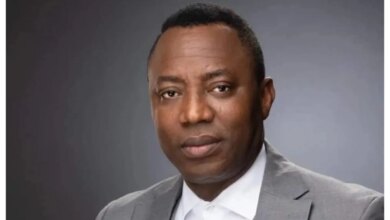
Veteran Nollywood actor Taiwo Hassan, widely known as Ogogo, has died at the age of 66 after battling stage-four cancer, bringing to an end a screen career that stretched across more than four decades. His daughter, Kira Taiwo, confirmed his death on Sunday, 23 August 2026, days after the family publicly appealed for specialist medical help.
Ogogo became one of the best-known faces in Yoruba-language cinema, building a career as an actor, producer and filmmaker and remaining relevant as Nollywood moved from stage productions and home videos to cinema and streaming platforms.
His death came after a difficult week for his family, during which an earlier false report that he had died was publicly denied.
Here are eight key things to know about Taiwo Hassan’s death, health, early life, career and achievements.

1. Ogogo died at 66
Taiwo Hassan died on Sunday, 23 August 2026, aged 66.
His daughter Kira confirmed the news during an Instagram live session, bringing an end to several days of uncertainty surrounding his health. Nigerian media organisations including Vanguard and Peoples Gazette subsequently reported his death.
Hassan was born on 31 October 1959 in Ilaro, Ogun State. He would have turned 67 later this year.
Related news:
BREAKING: Nollywood mourns as Taiwo Hassan ‘Ogogo’ dies at 66
Ogogo’s Daughter Declines Favours for Movie Roles
Kwara organizes workshop to boost entrepreneurs; access to credit
2. His family revealed he had stage-four cancer
Just days before his death, Ogogo’s family disclosed that he had been diagnosed with stage-four cancer.
His daughter Kira said the family had learnt about the seriousness of his condition only about three weeks earlier and that the illness had affected his abdomen. The family did not publicly identify the specific type of cancer.
Stage-four cancer generally means a cancer has reached an advanced stage and spread beyond where it originally developed. Treatment depends on the type of cancer, the organs affected and the patient’s overall condition.
His family said some medical institutions had advised that chemotherapy could no longer be given. That should not be interpreted as proof that hospitals had simply abandoned him; treatment decisions in advanced cancer cases depend on whether further therapy is medically appropriate.
3. His daughters appealed for medical help, not money
Ogogo’s health became public on 17 August when his daughters appealed for help finding specialists or hospitals that could consider further treatment.
Kira made clear that the family was not primarily asking the public for money. She said they wanted recommendations from medical professionals who might be able to review his case and suggest further options.
Actors including Femi Adebayo, Muyiwa Ademola and Bimbo Oshin joined the appeal, asking doctors, hospitals and cancer specialists to contact the family.
Veteran actor Jide Kosoko later said hundreds of people had suggested medical, traditional and spiritual interventions, but moving Ogogo repeatedly while he was receiving hospital care was not straightforward.
4. A false report of his death circulated days earlier
Ogogo’s actual death on Sunday came five days after his family was forced to deny an earlier death rumour.
On 18 August, social media posts falsely claimed that the actor had died while he was still undergoing treatment.
His daughter Lima responded strongly, describing the claim as fake and asking people to stop spreading the report.
That makes the timeline important: the reports circulating on 18 August were false, while his death on 23 August was later confirmed by his family.
5. Ogogo worked as a mechanic before becoming a full-time actor
Long before audiences knew him as Ogogo, Hassan trained in automobile engineering at the Federal Technical College in Akoka, Lagos.
He later worked for the Lagos State Water Corporation, where he spent about 13 years while developing his acting career at the same time.
He performed during his free time and eventually decided that combining both careers was becoming increasingly difficult.
Hassan resigned from the water corporation and committed himself fully to acting as Nigeria’s home-video industry was beginning to expand.
It proved to be the decision that transformed his life.
6. ‘Owo Blow’ turned him into a household name
Hassan had already worked on stage and screen, but his performance in Tade Ogidan’s acclaimed film Owo Blow became a defining moment in his career.
He played Owolabi in the Yoruba drama, delivering a performance that attracted national attention.
His role earned him the Best Actor award at The Movie Awards in 1997, according to a Guardian profile marking his 60th birthday.
After Owo Blow, Ogogo became one of the most recognisable male actors in Yoruba cinema, appearing in films dealing with family, romance, crime, tradition and social conflict.
7. His career crossed generations of Nollywood
Ogogo’s career lasted for more than four decades and covered several phases of Nigerian film production.
He began with stage performances before becoming prominent during the Yoruba home-video era. He later appeared in cinema and streaming productions, allowing a younger generation to discover his work.
Among his known films were Owo Blow, Ekun Ayo, Legal Wife, Omin and several other Yoruba productions.
One of his best-known recent appearances was in Kunle Afolayan’s Aníkúlápó, in which he played Alaafin Ademuyiwa.
The role showed that Ogogo could remain relevant decades after his breakthrough, working alongside a new generation of Nollywood stars.
8. ‘Aníkúlápó’ brought him major recognition late in his career
Ogogo’s contribution to Aníkúlápó earned him a nomination for Best Supporting Actor at the 2023 Africa Magic Viewers’ Choice Awards.
He was nominated alongside actors including Yinka Quadri and O.C. Ukeje.
The nomination came more than 40 years after he began performing and underlined the longevity of his career.
Beyond awards, Hassan’s wider achievement was his ability to remain a familiar figure in Yoruba cinema for decades. He worked as an actor and producer and was part of a generation that helped move Yoruba filmmaking from traditional theatre into Nigeria’s modern film industry.
His performances also helped preserve Yoruba language, expressions and cultural storytelling on screen.
A career that helped shape Yoruba cinema
Ogogo’s journey was not built on instant fame.
He moved from technical training and government employment into theatre before establishing himself in film. By the time Owo Blow made him a household name, he had already spent years learning the profession.
That longevity became one of the defining features of his career.
In a 2019 interview marking his 60th birthday, Hassan said his ambition was to use his talent to contribute positively to society and help others.
His death is therefore not only the loss of a popular actor but the passing of one of the performers who helped shape the growth of Yoruba-language Nollywood.
Funeral arrangements had not been fully announced by the family at the time initial reports of his death were published.
What readers should know: Taiwo Hassan, known to generations of viewers as Ogogo, died at 66 after his family revealed he was battling stage-four cancer. While his illness dominated his final days, his wider story is one of more than four decades in Nigerian entertainment — from working at the Lagos State Water Corporation to becoming an award-winning actor whose performances in Owo Blow, Aníkúlápó and numerous Yoruba films made him one of the enduring faces of Nollywood.