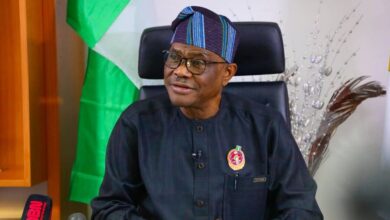
Minister of the Federal Capital Territory (FCT), Nyesom Wike, has cautioned Catholic bishops against making broad allegations that the Independent National Electoral Commission (INEC) is biased, warning that such statements could erode public confidence in Nigeria’s electoral process.
Wike gave the warning on Tuesday during his monthly media chat in Abuja while reacting to remarks by Catholic bishops on the credibility of elections in the country.
The former Rivers State governor said influential institutions, particularly religious bodies, should exercise restraint when commenting on sensitive national issues, noting that sweeping conclusions about electoral institutions could negatively shape public perception.
According to him, describing INEC as biased without presenting specific evidence could undermine Nigerians’ trust in the country’s democratic process.
“If you come to general conclusions and say INEC is biased, you are sending a signal to the public because they will think, ‘For the entire Catholic bishop to say INEC is biased, then something is wrong,’” Wike said.
He stressed that religious leaders wield significant influence and should be mindful of the implications of their public statements.
“We must be very careful about it, and that’s why President Bola Tinubu said, ‘No, no, you can’t say they are biased,’” he added.
Wike’s remarks come amid continuing national debate over the credibility of elections in Nigeria, with various groups expressing concerns about the conduct of polls and the performance of the electoral umpire.
The FCT minister maintained that while citizens and organisations have the right to criticise the electoral process, such criticism should focus on specific shortcomings rather than making blanket allegations that could weaken confidence in democratic institutions.
He reiterated that concerns about elections should be raised responsibly, warning that labelling INEC as biased without clear justification could send the wrong signal to Nigerians and diminish public trust in the electoral system.