0
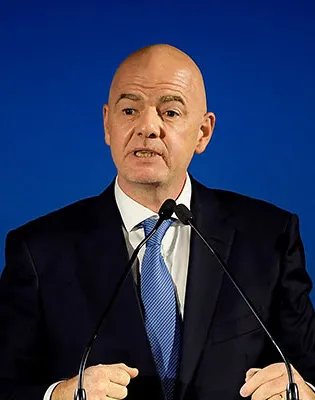
Fédération Internationale de Football Association (FIFA) has officially abandoned President Gianni Infantino’s controversial plan to sell a stake in the commercial rights of the FIFA World Cup following intense opposition from football federations, regional confederations and political leaders across the globe.
The dramatic climbdown represents a major setback for Infantino, whose proposal had triggered a widening governance storm within world football.
The plan aimed to transfer FIFA’s commercial assets, including the World Cup, into a new business entity valued at about $20 billion, with private investors expected to acquire a 20 per cent stake estimated at $4.2 billion.

The proposed transaction was reportedly being pursued with support from investment interests linked to Joshua Kushner’s Thrive Eternal, while JPMorgan had been lined up to play a key role in structuring the deal.
However, growing resistance from major football stakeholders ultimately forced FIFA to abandon the project before it could be implemented.
Announcing the decision on Friday, Infantino acknowledged that the proposal had generated serious divisions within world football.
He said, “It has become clear that this proposal has caused division, and unity in football must come first.”
The strongest backlash came from UEFA, whose 55 member associations threatened to boycott future FIFA competitions if the plan proceeded.
European football leaders insisted that the World Cup is a shared global sporting asset that should not be opened to private ownership or investor control.
UEFA, which led the opposition, stated that the tournament should not be treated as a commercial asset for investors.
According to the European body, “The FIFA World Cup is not for sale. It is a global sporting competition that belongs to the football community.”
The backlash soon spread beyond Europe. The Asian Football Confederation (AFC) and Football Australia welcomed FIFA’s climbdown and stressed that any major commercial change affecting world football must be preceded by broad consultation and transparency.
Football Australia said the decision demonstrated the need for proper consultation before major reforms are introduced, adding that “Any significant commercial restructuring affecting the global game must be transparent, properly consulted upon and in the best interests of football.”
Pressure on Infantino also intensified from within FIFA. Former FIFA vice-president and senior adviser Carlos Cordeiro resigned in protest, while reports said FIFA Chief Operating Officer Kevin Lamour criticised the lack of transparency surrounding the proposal.
The controversy also drew political attention. UK Prime Minister Andy Burnham publicly called for Infantino to be replaced, arguing that the attempt to commercialise the World Cup threatened the integrity of the sport.
The abandoned project, known internally as FIFA Forward Enterprise, (FFE) had been promoted by Infantino as a mechanism that could unlock billions of dollars for football development worldwide.
Critics, however, feared that private investors would gain undue influence over the governance and commercial direction of the tournament.
The stake-sale plan had been one of the most ambitious commercial restructuring proposals in FIFA’s modern history.
Supporters argued that it could provide additional funding for grassroots football, infrastructure and development programmes, particularly in emerging football nations. Opponents countered that the World Cup’s revenues should remain under the control of football authorities rather than external investors.
Although FIFA has now shelved the proposal, analysts say the episode could have lasting consequences for Infantino’s leadership ahead of the next FIFA presidential election in 2027.
The failed initiative has also reignited debate over transparency, governance and the growing influence of private capital in global sport.
For now, the FIFA World Cup remains fully under the control of world football’s governing body, but the collapse of the stake-sale plan has left fresh questions about Infantino’s leadership and the future direction of FIFA. What was intended to be a landmark commercial restructuring has instead become a defining controversy that exposed deep divisions within global football.