The Independent National Electoral Commission (INEC) has warned that shortages in funding could affect the logistics needed to deliver the 2027 general elections.
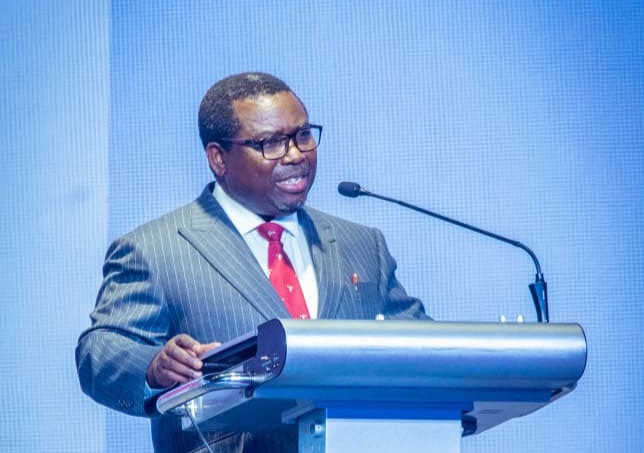
INEC Chairman, Prof. Joash Amupitan, raised the issue on Wednesday in Owerri, Imo State, during a conference and retreat for senior police officers.
He said election security could not be treated separately from the money needed to deploy personnel and materials to polling locations across the country.
Amupitan said INEC’s constitutional funding arrangement does not remove the need for sustained financial support, given the size of its responsibilities.


He spoke at the sixth edition of the Conference and Retreat for Senior Police Officers, which focused on developing a Nigeria Police roadmap for election security.
Amupitan said INEC handles presidential, National Assembly, governorship and state House of Assembly elections.
READ RELATED NEWS
Its duties also include voter registration and registration of political parties. The commission can request security agencies for elections and voter registration, making security part of its operational planning.
He said the scale of these duties places demands on INEC’s finances.
“Sometimes, it is not what you would like to do that you are able to do because of financial constraints. The system does make allocations of what is available and what is affordable at a particular time for the expenses and appropriation of the agencies, including the police and also including INEC,” he said.
The chairman said funds were needed to deploy electoral personnel and materials to local government areas, wards, registration areas and polling units.
He also warned that peaceful polling could still be affected by poor logistics.
Amupitan said voter registration was another important part of the process, since an inaccurate or outdated voters’ register could affect participation.
He said election spending, including security costs, should be treated as a national responsibility because INEC conducts elections at the federal and state levels.
The chairman said security and logistics had been made priorities under his leadership. He said INEC was working with government and security agencies on operational issues ahead of 2027.
He also pointed to the Inter-Agency Consultative Committee on Election Security (ICCES) as a platform for coordination between INEC, security agencies and other government institutions.
ICCES began as a coordinating arrangement after the 2011 general elections, following concerns over post-election violence. It now operates at federal, state and local government levels.
At the national level, the Inspector-General of Police participates in the committee. Commissioners of police represent the police at state level, with divisional police leadership represented at local government level.
Amupitan said the experience of recent off-cycle elections showed the importance of security coordination and adequate resources.
He said intelligence gathering, logistics and cooperation between agencies should receive attention in preparations for 2027.
Nigeria’s official election calendar lists January 16, 2027, for the presidential and National Assembly elections and February 6, 2027, for governorship and state House of Assembly elections.
Amupitan said Nigerians expect a highly effective electoral system, but achieving that standard requires adequate resources.
“In Nigeria, we want the best. We want our electoral system to be 100 per cent. But sometimes we don’t ask ourselves the question: if we want the nation to be perfect, there must be a cost for it,” he said.
At the retreat, NBA President Oyinkansola Badejo-Okusanya also asked the police leadership and operational personnel to support INEC in carrying out its mandate.
She said policing support was necessary to protect the electoral process and help deliver free, fair, credible and transparent elections.
For More News Details, Visit New Daily Prime.