Akinbode Oluwafemi: The Activist Taking the Fight for Environmental and Social Justice to the Corridors of Power

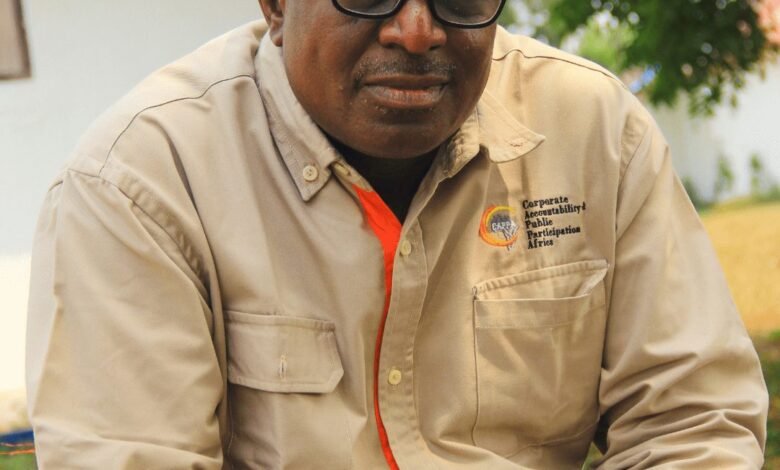
For more than two decades, Akinbode Matthew Oluwafemi has stood at the intersection of journalism, environmental justice, public health and citizens’ rights, building a career around one defining idea: that communities should have a voice in decisions that affect their lives.
From his early years as a journalist to his emergence as one of Nigeria’s prominent environmental and social justice campaigners, Oluwafemi has consistently used advocacy, public mobilisation and policy engagement to challenge powerful interests and push issues affecting ordinary Nigerians to the centre of national conversation.
Today, he serves as the Executive Director of Corporate Accountability and Public Participation Africa (CAPPA), where he leads efforts around corporate accountability, public participation, environmental justice and public health.
His journey into activism was significantly shaped by his experience in journalism. As a reporter with The Guardian, one of Nigeria’s leading newspapers, Oluwafemi worked during one of the country’s most difficult periods for press freedom—the military dictatorship of General Sani Abacha.
That experience exposed him to the realities of censorship, repression and the struggle for democratic space, helping to shape an advocacy career that would later extend beyond the newsroom.
Oluwafemi subsequently became deeply involved with Environmental Rights Action/Friends of the Earth Nigeria (ERA/FoEN), where he rose to the position of Deputy Director.
At ERA/FoEN, he became particularly prominent in campaigns on tobacco control and water rights, while also participating in broader environmental and social justice struggles.
His tobacco-control advocacy eventually earned international recognition. In 2009, Oluwafemi received the Bloomberg Awards for Global Tobacco Control at the 14th World Conference on Tobacco or Health in Mumbai, India.
The recognition placed his work within a wider international movement challenging the influence of the tobacco industry and promoting stronger public-health policies.
But tobacco control was only one part of his activism.
Oluwafemi also invested considerable energy in the campaign for access to safe and affordable water. He was instrumental in building the Our Water, Our Right Coalition, which challenged water privatisation and advocated for public access to water in Lagos and across Nigeria.
The campaign reflected a recurring theme in his work: that essential resources and public-health decisions should not be determined solely by commercial interests without meaningful participation from the communities affected.
His advocacy also took him into regional and international networks. He became a member of the steering committee of the Network for Accountability of Tobacco Transnationals (NATT), further expanding his involvement in campaigns aimed at holding multinational tobacco companies accountable.
Over the years, Oluwafemi’s professional experience has therefore evolved from journalism into a broader model of public-interest advocacy—combining grassroots organising, strategic communications, policy engagement, coalition building and public mobilisation.
At CAPPA, he has continued this trajectory, working with civil-society organisations, community groups, researchers, policymakers and other stakeholders on issues that connect corporate power with public welfare.
His career is particularly notable for the consistency of the issues he has pursued. Whether the subject is tobacco, water, environmental degradation, corporate accountability or citizens’ participation, the underlying question remains the same: who bears the consequences of decisions made by institutions and powerful interests, and who gets a seat at the table when those decisions are made?
That question has defined much of Akinbode Oluwafemi’s public life.
From the newsroom of The Guardian during Nigeria’s struggle for press freedom, through the environmental-rights movement and international tobacco-control campaigns, to the leadership of CAPPA, Oluwafemi has built a reputation around organising people, challenging entrenched interests and placing public-interest concerns at the heart of policy debates.
His story is, ultimately, one of a journalist who moved beyond reporting society’s problems to becoming an active participant in the struggle to change them.