For the trader who counts every naira spent getting goods to Wurukum Market, the commercial driver whose earnings disappear into fuel costs, the mechanic waiting for the next customer, and the farmer whose harvest loses value before reaching the market, the question of energy is not an abstract policy issue. It is a daily economic reality.
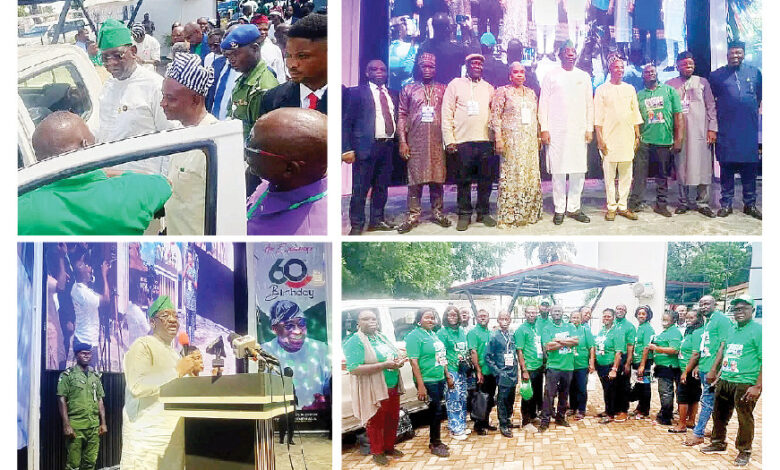
In Makurdi, Benue State, that reality took centre stage this week as the State Government convened a three-day workshop on Compressed Natural Gas (CNG), opening a new conversation about cheaper transportation, alternative energy, technical skills and the possibilities of a new economic value chain.


Held from Monday, September 21 to Wednesday, September 23, 2026, at the Rev. Fr. Alia Conference Hall of the Benue State Emergency Management Agency (SEMA), the workshop, themed “Presidential CNG Initiative – The Game Changer,” was designed to move CNG beyond public discussion and into practical application.
The message from the organisers was clear: Benue does not intend to remain a spectator as Nigeria’s energy and transportation landscape changes.
From fuel pressure to opportunity
Declaring the workshop open on behalf of Governor Hyacinth Iormem Alia, Deputy Governor Barr. Dr. Sam Ode, Mni, presented CNG as an opportunity to address some of the economic pressures facing households and businesses while opening new areas for employment and investment.
The State Government, he explained, is looking beyond fuel substitution. Its ambition is to develop an ecosystem around CNG—one that includes vehicle conversion, refuelling infrastructure, technical training, maintenance, logistics and private-sector participation.
For ordinary residents, the immediate attraction is straightforward: lower energy and transportation costs.
Benue State Commissioner for Power, Renewable Energy and Transport, Hon. Jir Joseph Ter, described the Presidential CNG Initiative as a potential game changer, particularly at a time when households and businesses are under pressure from rising transportation and operating costs.
He identified public enlightenment, vocational and technical training, vehicle conversion, access to conversion kits, deployment of CNG-powered buses and tricycles, engagement with transport unions and private-sector investment as key components of the State’s programme.
His message to young people and investors was equally significant: CNG should not be regarded merely as another type of fuel, but as the foundation of an emerging industry.
That distinction could prove important.
A new industry for young people.
Every new technology creates demand for people who understand how to install, operate, maintain and regulate it.
That is where Benue’s young people, mechanics, technicians and entrepreneurs could find an important opening.
The Benue State CNG Project Coordinator and Technical Adviser to the Governor on CNG and Renewable Energy, Engr. Ashir Jonathan Terkosu, outlined opportunities stretching across the value chain.
These include vehicle conversion, station operations, cylinder inspection, gas logistics, equipment maintenance, fabrication, technical training and related services.
The State is also looking at technical and vocational training, conversion-centre development, competency certification, access to conversion kits, CNG buses and tricycles, mobile refuelling units and daughter stations.
For a mechanic, that could mean acquiring a new technical skill. For a young graduate or entrepreneur, it could mean entering an emerging market. For an investor, it could represent an opportunity to build infrastructure around a growing demand.
The workshop therefore sought to connect policy with people—to ensure that Benue citizens are not merely consumers of a new energy technology but participants in its development.