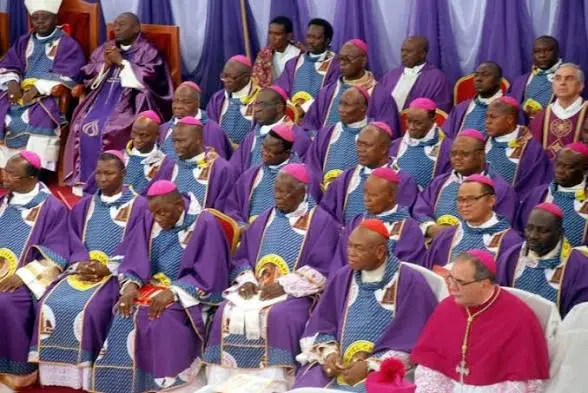
The Catholic Bishops Conference of Nigeria, CBCN, has asked the National Assembly to halt the Foreign Aids (Regulation, Transparency and Disclosure) Bill 2026, warning that it will negatively impact churches, mosques, schools and humanitarian groups.
The Bishops made their position known in a communique issued at the end of their Second Plenary Meeting held at Our Lady and St. Kizito Pastoral Centre, Oke-Gada, Ede, in Osogbo Diocese, Osun State, from September 10 to 18, 2026.
The communique was signed by the President of CBCN, Archbishop Matthew Man-Oso Ndagoso and Secretary, Bishop Peter Olukayode Odetoyinbo.
According to the Bishops, although the Bill, which has passed first and second readings, seeks registration of foreign aid resources and supervision of its use, it has potentials to adversely affect critical aid in conflict-affected areas.

They noted that the provision allowing authorities to deny registration or refuse renewal if an organisation’s work is deemed “not in the national interest” gives broad and undue discretionary powers to government officials.
The Bishops argued that the Bill will create unnecessary bureaucracy, duplicate existing laws and stifle independent civic space, adding that non-profit organisations and Incorporated Trustees, including Churches and Mosques, are already regulated by the Corporate Affairs Commission under CAMA and other extant laws.
“We therefore request the National Assembly and the federal government not to proceed with the processes of making this Bill into law in the interest of fundamental rights of association and freedom of religion, thought and conscience,” the communique read.
On the state of the nation, the Bishops lamented that insecurity, poverty, poor infrastructure, bad governance and assault on human dignity have continued to ravage the country despite its human and natural resources.
While recognising the government’s move to decentralise the police system, they cautioned that it must be deployed for the common good rather than personal, ethnic, political and religious interests.
They expressed concern over widespread violence, kidnapping, banditry, illegal mining and stealing of natural resources, as well as invasion of schools and places of worship and the displacement of millions of people into IDP camps.
The Conference demanded that the government stop banditry, recover vast portions of land used for criminal activities and intensify efforts to enable displaced persons return to their ancestral homes.
On poverty, the Bishops said hardship has been used as “a despicable instrument of control”, leaving families struggling despite national wealth, and called on federal and state governments to create jobs, support local businesses and ease policies that burden the poor.
They also charged the government to transparently invest in roads, power, water and railway transport facilities across the nation, while urging citizens to protect public property and reject ethnic and religious divisions.
Olamilekan Adigun is a graduate of Mass Communication with years of experience in journalism embedded in uncovering human interest stories. He also prioritises accuracy and factual reportage of issues.
What do you think about this?
Drop your opinion in the comment section.
FOLLOW US & Share this with someone who needs to see this.