The Democratic Republic of Congo (DRC) is moving to strengthen government control over geological information used by mining companies, in a strategy aimed at giving the country greater influence over the exploration and development of its vast mineral resources, according to Reuters.
The initiative involves expanding geological mapping, conducting airborne surveys and digitising historical records to create a comprehensive national geological databank. The database is expected to become fully operational by the end of 2026, according to Raoul Wazenga Vitima, director general of the National Geological Survey of Congo.
The project is being developed as the DRC seeks to better understand its mineral wealth and reduce the risks faced by companies searching for new deposits. A $180 million contract with Spanish geodata mapping company Xcalibur began in January as part of the country’s wider geological mapping programme.
READ RELATED STORY
DR Congo reopens schools in ebola-hit areas despite rising death toll
Fans react as DR Congo hold Portugal in historic World Cup result
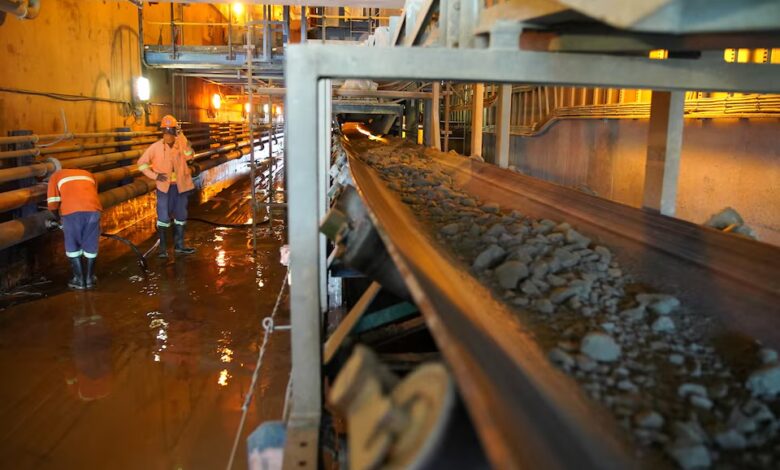
The DRC is one of the world’s most important sources of critical minerals, particularly cobalt and copper. However, officials estimate that systematic geological exploration has covered only about 20% of the country, leaving large areas relatively unexplored.

Under the planned system, access to geological information will be divided into different levels. Some basic geological information will be available free of charge, while access to other data will attract fees. Vitima said requests for information would be assessed based on investors’ needs and the protection of Congo’s strategic interests.
The project is one of several ongoing mapping programmes in the country, funded by the government, mining revenues and international partners. Results from these programmes will be incorporated into the national geological databank, which is expected to be fully operational by the end of 2026, Vitima said.
The move comes as competition between the United States and China for access to critical minerals intensifies. Both countries have reached separate agreements with Kinshasa aimed at expanding cooperation in the mining sector.
Congo says its geological database will not favour either country and that the same rules will apply to investors regardless of where they come from. Officials believe greater control over geological information could also help the government attract a wider range of investors and strengthen its negotiating position in mining agreements.
The DRC is the world’s largest cobalt producer and a major copper producer. It also has deposits of other critical minerals, including lithium, tantalum and gold. Yet much of the country remains poorly explored, particularly outside the established copper and cobalt mining belt in Lualaba and Haut-Katanga.
The Xcalibur project is surveying more than 700,000 square kilometres using airborne geophysics, digitised data and advanced analytical techniques to identify potential exploration targets and improve knowledge of the country’s largely unexplored areas.
The government says the geological information generated through these programmes constitutes a strategic asset of the Congolese state. It argues that charging for some data will help support continued exploration and geological mapping while maintaining state control over strategically important information.
However, some participants in the mining industry favour greater openness in access to geological information, arguing that freely available data could encourage exploration and investment.
The DRC’s new approach is therefore aimed at balancing greater state control over its geological resources with the need to provide investors with enough information to encourage further exploration and development of the country’s mineral wealth.