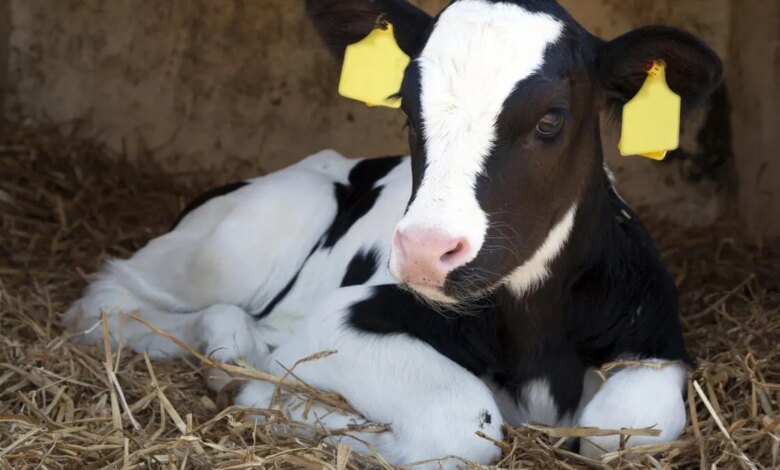
The Dutch Food and Consumer Product Safety Authority has taken action against four Irish companies transporting young calves to the Netherlands.
The regulator said the calves receive very little fluid during journeys that can last several days.
The four transporters have one year to change their working methods. They could face financial penalties if they fail to comply.
The case involves calves aged two months or younger. Many are male calves sold by Ireland’s dairy industry to veal farms in the Netherlands.


An investigation traced 330,000 calves transported from Ireland. It found that 98.9 percent were younger than two months when they arrived in the Netherlands.
The animals travel by truck from Ireland and board a ferry to France. The ferry crossing takes about 19 hours.
After arriving in France, the calves leave the trucks to rest and drink before continuing to the Netherlands.
The complete journey takes at least 50 hours. Scientific research suggests that some journeys can last up to 80 hours.
The Dutch regulator said the calves currently receive fluids only once during the trip.
European rules require animals to receive food when necessary during transport. The European Commission and the Dutch regulator use a scientifically supported feeding interval of 12 hours.
Young calves need milk and often require assistance while drinking. However, the trucks do not have feeding systems suitable for milk.
The Irish government previously said helping calves drink while aboard the ferry was difficult to carry out.
Dutch authorities believe the current transport method may have to stop. Companies could use a different route, provide more rest stops or transport the calves when they are older.
Calves older than eight weeks can obtain nutrients from roughage and other solid feed. Authorities said their feeding needs would still require careful attention.
Animal-welfare organisations Eyes on Animals and Dier&Recht requested enforcement after years of research and legal action.
The Dutch veal industry previously said it wanted imports of Irish calves to end in 2026 because of welfare concerns. However, the transports have continued.