The European Centre for Disease Prevention and Control (ECDC) is deploying two epidemiologists to the Democratic Republic of the Congo (DRC) to strengthen the response to an ongoing Ebola outbreak, the agency announced on Monday, September 21, 2026.
The experts will be deployed to the epicentre of the outbreak this week to reinforce disease surveillance and support the wider response under the leadership of the DRC Ministry of Health and the World Health Organization (WHO).
“ECDC is increasing its presence on the ground to contribute to an effective response to this outbreak, which has already cost so many lives,” ECDC Director Pamela Rendi-Wagner said.
“This week ECDC is deploying two epidemiologists to DRC to reinforce surveillance and overall outbreak response,” she added.


The current outbreak is caused by the Bundibugyo virus, a form of Ebola disease that has continued to spread across several provinces in the DRC. Ituri remains the most affected area.
READ RELATED NEWS
DR Congo Ebola: Outbreak slows, but North Kivu cases double
Tinubu approves N10bn emergency fund to boost Nigeria’s Ebola preparedness
FG considers flight restrictions over Ebola outbreak in East Africa
According to the latest figures published by ECDC on September 18, the DRC had reported 7,475 confirmed cases and 3,605 related deaths, based on data available up to September 16. ECDC said the figures remain subject to continuous review and harmonisation.
ECDC said the new deployment is part of its continuing support to the DRC and African health authorities. The agency has provided direct assistance since the outbreak began, with experts previously working alongside the Africa Centres for Disease Control and Prevention.
In June, ECDC led an assessment of exit screening arrangements at airports in the DRC and Uganda. The agency has also deployed experts to South Sudan as part of wider regional preparedness efforts.
The latest deployment comes as health authorities continue to strengthen surveillance, contact monitoring and other measures designed to limit further transmission.
The WHO has described the outbreak as a serious public-health concern. In its latest detailed disease-outbreak report, the organisation said the DRC had recorded 6,757 confirmed cases and 3,267 deaths as of September 7, while warning that transmission remained significant and that insecurity and population displacement were complicating the response.
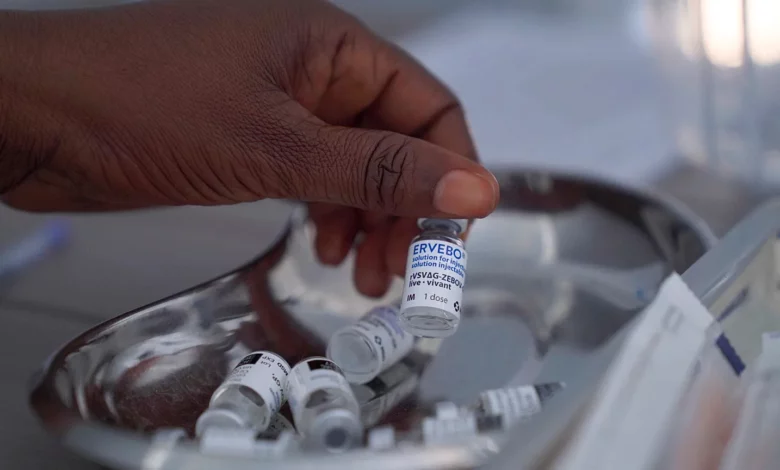
WHO has also recommended that the Ervebo Ebola vaccine be used against the Bundibugyo virus only within a research protocol because its effectiveness against this particular virus in humans remains unknown.
Despite the continuing outbreak, ECDC said its latest modelling indicates that the risk of Ebola being imported into the European Union and European Economic Area remains very low. The agency said sporadic imported cases cannot be ruled out, but multiple independent importations remain unlikely even if cases continue to rise in affected areas.
ECDC said the deployment of its two epidemiologists is being coordinated through the EU Health Task Force and carried out in cooperation with the DRC authorities, WHO and other international partners.
The latest deployment highlights the continued international effort to strengthen surveillance and contain the Ebola outbreak in the DRC.