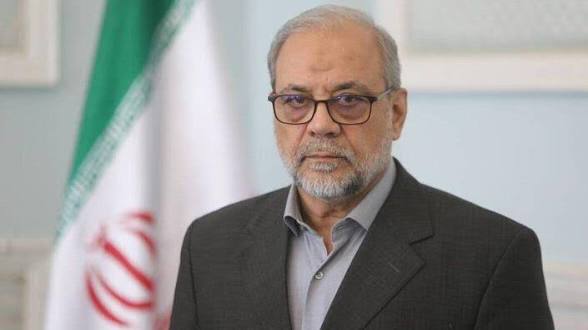
A political adviser to Iran’s Supreme Leader has said the Strait of Hormuz will remain closed until US President Donald Trump and Israeli Prime Minister Benjamin Netanyahu are removed from power.
Mohammad Bagher Zolghadr, a political adviser to Iran’s Supreme Leader, made the remarks on Thursday while marking what he described as 200 days of Iranian resistance against its enemies.
“Our fighters will not open the Strait of Hormuz until criminal Trump and bloodthirsty Netanyahu are brought down from their seats of power,” Zolghadr said, according to Iran’s semi-official Tasnim News Agency.
Zolghadr also described the continued closure of the waterway as the first stage of what he called Iran’s revenge, while referring to Iranians who had been killed during the conflict.

His remarks add a new condition to Tehran’s position on the strategically important waterway, through which a significant share of global oil shipments normally passes.
READ RELATED STORY
Trump to seize Iranian oil as Middle East tensions escalate
Hormuz vessel attack deepens concerns over global oil supplies
The statement comes as diplomatic efforts continue to address tensions between Iran and the United States. On Wednesday, Chinese Foreign Minister Wang Yi urged Tehran and Washington to exercise restraint and called for the Strait of Hormuz to be reopened as soon as possible to protect international energy supplies and trade.
Iranian Foreign Minister Abbas Araghchi, who met Wang in Beijing, said Tehran remained prepared to defend its sovereignty while also expressing openness to diplomatic solutions that protect the rights of the Iranian people.
Trump has meanwhile said he believes the conflict could be approaching an end and has claimed that Iran wants to reach a deal. However, there has been no public confirmation that direct negotiations between Tehran and Washington have resumed.
The Strait of Hormuz remains a major pressure point because of its importance to international energy transportation. Reuters reported on Thursday that only three commercial vessels transited the waterway on Wednesday, down from 12 the previous day and well below the 10-day average of 17.
The reduced shipping activity has heightened concerns about global energy supplies as tensions continue across the region.
Zolghadr’s remarks underline the difficulties facing diplomatic efforts to restore normal navigation through the strait, as Iran continues to link its position on the waterway to the broader conflict involving the United States and Israel.