Japan has moved a pioneering stem-cell treatment from clinical trials into real-world medical care after doctors performed the world’s first surgery using an induced pluripotent stem cell (iPS) heart-muscle sheet under the country’s public health insurance system.
The operation was performed on Tuesday, September 29, at Osaka Keisatsu Hospital on a woman in her 50s suffering from severe heart failure linked to ischemic heart disease. The procedure lasted about an hour and was completed successfully, according to the hospital.
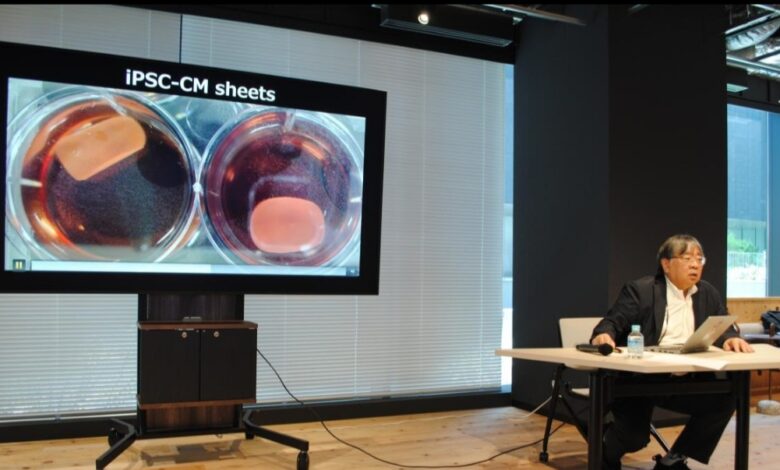
The treatment, known as RiHEART, uses heart-muscle cells created from iPS cells. Rather than replacing the damaged heart, surgeons attach sheets containing the laboratory-grown cells directly to its surface.
The aim is to improve the condition of the heart muscle and encourage the formation of new blood vessels, potentially helping the heart pump more effectively. The treatment is intended for patients with severe heart failure caused by ischemic cardiomyopathy whose condition has not improved sufficiently with standard drug or invasive treatments.


Surgeon Yoshiki Sawa, who heads Osaka Keisatsu Hospital and helped develop the technology, described the operation as a step towards improving the patient’s quality of life.
“Our hope is that this will improve the patient’s quality of life,” Sawa told reporters after the surgery.
The significance of the procedure goes beyond the operating theatre. Japan approved RiHEART in March under a conditional and time-limited system for regenerative medicine. The Ministry of Health, Labour and Welfare authorised the product for seven years, during which additional evidence will be collected before a decision on full approval.
READ RELATED NEWS UPDATES
Japan’s Agency for Medical Research and Development described the March approvals of RiHEART and a separate iPS-based Parkinson’s treatment as the world’s first practical applications of iPS cell-based therapeutic products.
The treatment is also significant because iPS cells can be produced by taking mature cells and reprogramming them into a stem-cell-like state. These cells can then be directed to develop into specialised cells such as heart-muscle cells. The technology was pioneered by Japanese scientist Shinya Yamanaka, who received the 2012 Nobel Prize in Physiology or Medicine for the discovery.
However, the breakthrough comes with important scientific caution.
Before approval, RiHEART was tested in only eight patients in an open-label, uncontrolled clinical study. Japan’s health ministry recorded improvement in the primary outcome in two of the eight participants, although individual patients showed improvement or maintenance across some secondary measures.
Earlier clinical follow-up also reported improved exercise tolerance among the participants, with no tumours detected during the reported follow-up period. Researchers, however, have stressed the need for further investigation.
The financial scale of the treatment is another striking part of the development. Japan set RiHEART’s reimbursement price at ¥53.2 million, about $326,000, although the country’s high-cost medical care system can substantially limit what eligible patients pay from their own pockets.
The developer plans to collect post-marketing data from 75 patients. That evidence will help determine whether the treatment’s benefits and safety are strong enough to support full approval.
In other words, Japan has not declared the therapy a finished medical solution. It has opened the door to a new form of heart treatment while placing the technology under continued scrutiny.
That distinction matters. The operation marks a remarkable transition from stem-cell discovery to bedside treatment, but the next seven years will determine whether that scientific promise can withstand the much larger test of routine medical use.