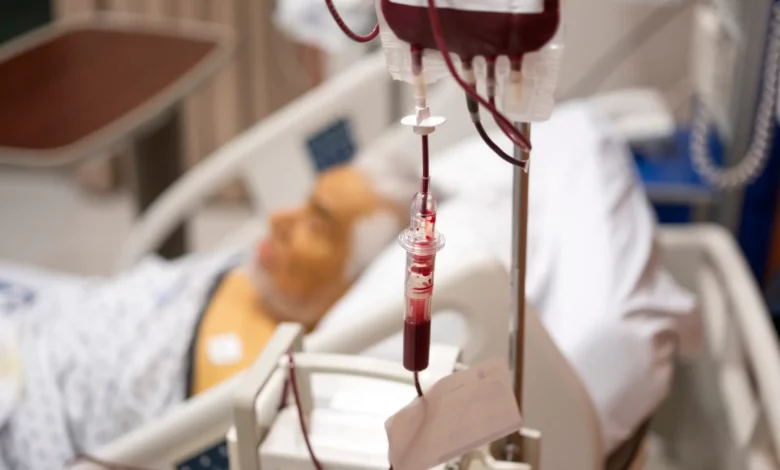
Jehovah’s Witnesses have changed their long-standing policy on blood transfusions, allowing members to decide for themselves whether to accept red blood cells, white blood cells, plasma or platelets. The change, announced on 18 September 2026, gives members greater choice over medical treatment while the religion’s restriction on receiving whole blood remains in place.
The decision could affect Jehovah’s Witnesses around the world, including Nigerians living in Britain and other countries where blood products are routinely used during surgery, childbirth, cancer treatment and medical emergencies.
Under the new policy, the four main components of blood are now a matter of individual conscience. This means one member may choose to accept a particular component while another may refuse it based on personal religious beliefs.
Geoffrey W. Jackson, a member of the organisation’s Governing Body, said: “Each Christian must make his own personal decision.”

What has changed for Jehovah’s Witnesses?
Jehovah’s Witnesses have traditionally rejected blood transfusions because of their interpretation of biblical instructions to “abstain from blood”.
Until now, that position generally covered whole blood and its four main components — red cells, white cells, plasma and platelets. Members were already allowed to make personal decisions about some smaller substances derived from blood.
The latest change extends that freedom of choice to the four principal components.
This is significant because modern medicine often relies on individual blood components rather than whole blood.
Red blood cells may be used to treat severe blood loss and certain forms of anaemia. Platelets help blood to clot and can be important for patients with serious bleeding or some cancers.
Plasma contains proteins involved in clotting and other functions, while white blood cells form part of the body’s immune system.
Jehovah’s Witnesses have also said members may decide whether to donate blood where it will be separated into components or fractions for medical use.
Whole blood remains restricted
The new policy does not amount to a complete removal of the religion’s rules on blood.
Jehovah’s Witnesses continue to reject transfusions of whole blood. The organisation says blood remains sacred under its interpretation of the Bible, but decisions involving individual components will now be left to members.
That distinction is important for patients and healthcare professionals.
Rather than assuming that all Jehovah’s Witnesses will refuse the same treatment, doctors may now need to discuss individual blood products with each patient and record their choices clearly.
The September announcement follows another change made earlier in 2026, when members were allowed to decide whether their own blood could be collected, stored and later returned to them during medical treatment.
Together, the changes mark a wider shift towards personal decision-making in areas that were previously governed by stricter religious rules.
Read related news:
Jehovah’s Witnesses make U-turn on blood doctrine, permits personal choice on own blood use
Jehovah’s witnesses accused of hiding child abuse database
RSG pledges quality healthcare for gas explosion survivors
What the change means for patients in the UK
For Jehovah’s Witnesses living in Britain, the new position could affect discussions with NHS doctors before surgery and other treatment where blood products may be required.
Under UK medical law, adults who have the mental capacity to make their own healthcare decisions can refuse treatment, including blood transfusions, even where doctors believe refusing treatment could carry serious risks.
Religious belief alone does not mean a patient lacks the capacity to make that decision.
The latest policy means doctors should not assume that every Jehovah’s Witness patient will take the same position.
One person may accept red blood cells but reject plasma. Another may decide against all blood components. The important issue is that the patient understands the treatment and communicates their choice to medical staff.
This may be particularly relevant before planned operations, childbirth or treatment for conditions that could involve significant blood loss.
Long-running medical debate
The Jehovah’s Witness position on blood transfusion has been debated for decades by doctors, ethicists, religious scholars and former members.
Critics have argued that refusing blood can increase medical risks in some emergencies and major procedures. Jehovah’s Witnesses, however, have maintained that their position reflects sincerely held religious beliefs and have promoted medical techniques designed to reduce the need for donor blood.
The new policy does not end that debate, but it gives members more flexibility when considering medical treatment.
For Nigerians in the diaspora who are Jehovah’s Witnesses, the practical change is clear: membership of the faith no longer means an automatic refusal of the four main blood components.