LAGOS FINANCIAL CENTRE: TINUBU GOVT MOVES TO BUILD NIGERIA’S GATEWAY FOR GLOBAL CAPITAL, SETS 2027 LAUNCH TARGET

The Federal Government has formally thrown its weight behind the proposed Lagos International Financial Centre (LIFC), bringing federal institutions, the Lagos State Government and the private sector under a single implementation structure in what could become one of Nigeria’s most ambitious attempts to reposition the country in the global financial market.
The move became official on Wednesday, September 2, 2026, when Secretary to the Government of the Federation, Senator George Akume, inaugurated the LIFC National Steering Committee in Abuja, effectively moving the project from years of planning and consultation into the more difficult phase of implementation.
The committee brings together key Federal Government institutions responsible for finance, justice, foreign affairs, immigration, trade and investment, taxation and digital infrastructure, alongside the Central Bank of Nigeria, the Securities and Exchange Commission, Lagos State and the private sector, represented by EnterpriseNGR.
The development is significant because the proposed financial centre is no longer being treated solely as a Lagos initiative.
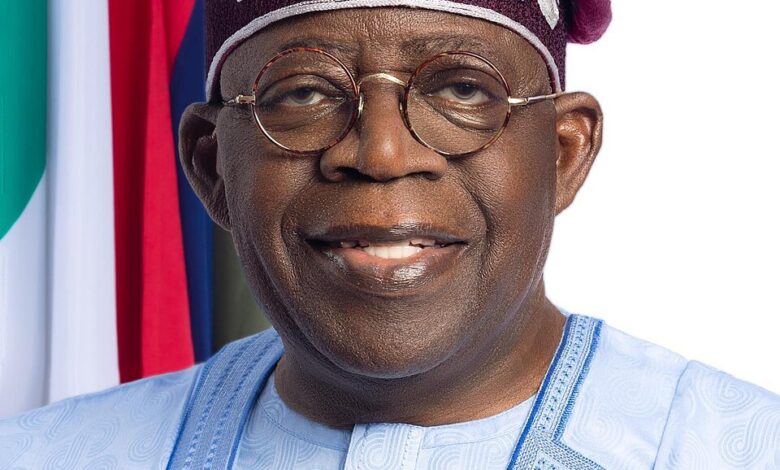
The Tinubu administration has now formally classified it as a strategic national economic project, with President Bola Ahmed Tinubu directing the Office of the SGF to coordinate Federal Government support.
But beneath the ambitious rhetoric about making Lagos a global financial hub lies a much bigger question:
Can Nigeria build the legal certainty, regulatory credibility, infrastructure and investor confidence required to compete with established financial centres such as Dubai, Abu Dhabi, Hong Kong, Mauritius and Casablanca?
That is the challenge the newly inaugurated committee must confront.
The LIFC was initiated by the Lagos State Government in partnership with EnterpriseNGR and has undergone extensive consultations with regulators, government agencies, private-sector operators and international partners over the past two years.
Governor Babajide Sanwo-Olu, who chairs the LIFC Council, described the proposed centre as “strategic national infrastructure”, arguing that it should not be viewed simply as another Lagos development project.
His argument is straightforward: if Nigeria intends to build a US$1 trillion economy, it will need far greater access to domestic and international capital.
The proposed centre is therefore being positioned as a mechanism for attracting international investors, deepening Nigeria’s capital markets, expanding financial and professional services and connecting global capital with investment opportunities across the country.
However, attracting capital is easier said than done.
International investors are not compelled by slogans.
They look for predictable regulations, enforceable contracts, credible institutions, efficient dispute resolution, transparent taxation, stable policies and confidence that their investments can move in and out of the country without arbitrary restrictions.
That is precisely where the LIFC’s success or failure could ultimately be determined.
Sanwo-Olu has sought to draw a line between the LIFC and jurisdictions commonly criticised for enabling aggressive tax avoidance or regulatory arbitrage.
According to him, the proposed centre will neither operate as a tax haven nor provide a platform for illicit financial activities.
Instead, the competitiveness of the LIFC is expected to be built around institutional credibility, regulatory quality, transparency, legal certainty and international connectivity.
That position will be tested by implementation.
The Federal Government will have to determine which existing laws and regulations require amendment, repeal or strengthening, while regulators will have to develop rules capable of attracting sophisticated international investors without creating loopholes that could undermine Nigeria’s financial system.
EnterpriseNGR has been involved in the project from its early stages and is expected to provide the private-sector perspective as the LIFC moves towards implementation.
The organisation brings together interests across Nigeria’s financial and professional services sectors, including banking, insurance, capital markets, asset management and professional services.
Aigboje Aig-Imoukhuede, Chairman of EnterpriseNGR and Co-Chairman of the LIFC Council, described the Federal-Lagos-private sector partnership as evidence of what Nigeria can accomplish when institutions work towards a common economic objective.
His central argument was blunt:
Capital goes where it feels safe and where investors believe it can grow.
That reality may ultimately prove more important than the physical infrastructure of the proposed centre.
Nigeria already has a large financial market.
The challenge is convincing international capital that the country can provide the institutional stability and predictability required for long-term investment.
One of the most critical components of the LIFC will therefore be legal reform.
Attorney-General of the Federation and Minister of Justice, Lateef Fagbemi, SAN, has pledged Federal Government support for creating the legal certainty required by investors.
This includes identifying Federal and sub-national legislation that may need to be amended, strengthened or repealed.
That task could prove enormous.
An international financial centre cannot function effectively if investors face uncertainty over taxation, contracts, dispute resolution, licensing, immigration, capital movement or regulatory enforcement.
The LIFC’s success will consequently depend heavily on whether government agencies can move beyond policy declarations and actually deliver the legal and administrative reforms required.
The Nigeria Revenue Service is also expected to play a major role.
Its Executive Chairman, Zacch Adedeji, urged stakeholders to move quickly from steering to implementation, warning against simply copying models developed in other jurisdictions.
That caution is significant.
Nigeria’s financial centre cannot simply become a Nigerian version of Dubai, Singapore or Mauritius.
It will have to operate within Nigeria’s constitutional, legal, fiscal and economic realities while still offering the competitiveness expected by global investors.
Immigration is another critical component.
If Lagos is to become a genuine international financial centre, it will need to attract not only money but also highly skilled professionals, investment managers, lawyers, accountants, technology specialists and other international talent.
The Federal Government’s immigration architecture will therefore become part of the project’s competitiveness.
The economic argument behind the LIFC is enormous.
Nigeria wants to attract significantly more foreign and domestic capital into productive sectors, including infrastructure, technology, manufacturing, agriculture and other areas capable of generating jobs and economic growth.
But the ultimate test will not be the number of conferences held or memoranda signed.
It will be whether the centre can generate actual transactions, attract credible international institutions, deepen the capital market and channel long-term financing into the Nigerian economy.
If successful, the LIFC could create high-value employment, strengthen professional services, expand the tax base, increase financial-market activity and provide Nigerian businesses with greater access to regional and international capital.
If poorly implemented, however, it risks becoming another grand economic project whose ambitions exceed its institutional foundations.
According to EnterpriseNGR, the project is approaching its final development phase, with promoters targeting a soft launch in the first quarter of 2027.
Preparatory work already undertaken includes a strategic blueprint, legal and regulatory gap assessments, a business plan, institutional operating model and implementation economics.
KPMG is supporting the Project Office, while TheCityUK is providing international technical support funded by the UK Government.
The Ministry of Foreign Affairs has also committed to using Nigeria’s diplomatic network to promote the initiative, support investment diplomacy and develop international partnerships.


The inauguration of the National Steering Committee may therefore be more important than another government announcement.
For the first time, the Federal Government, Lagos State and the private sector are being placed within a coordinated implementation framework.
But coordination alone will not create an international financial centre.
The committee must now confront the difficult issues — legal reform, taxation, regulation, immigration, infrastructure, digital systems, investor protection, international credibility and institutional accountability.
The stakes are high.
Africa is already witnessing an increasingly aggressive competition among cities and jurisdictions seeking to attract global capital, financial institutions, businesses and skilled professionals.
Lagos has the population, commercial activity, financial institutions and entrepreneurial ecosystem to compete.
What it has yet to demonstrate fully is whether Nigeria’s institutions can provide the level of certainty and confidence that global capital demands.
That is the real test of the Lagos International Financial Centre.
The blueprint may have been drawn. The committee may now be in place. The 2027 target may be on the table.
But the world will ultimately judge the LIFC not by the ambition of its promoters, but by whether investors are willing to put their money on the line and stay.