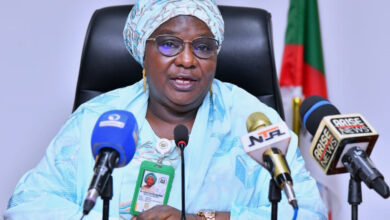
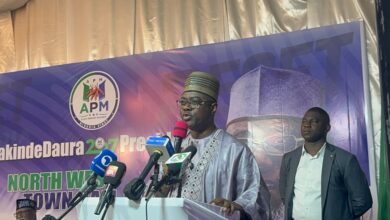
For her exceptional performance in disaster management and her commitment to public service through responsive, compassionate, and forward-looking leadership in disaster management, humanitarian coordination, and national preparedness, Mrs Zubaida Umar is the Public Service Person of the Year 2026.
Mrs Zubaida Umar, Director-General of the National Emergency Management Agency (NEMA), has distinguished herself through purposeful, responsive leadership, championing a significant shift in Nigeria’s approach to disaster management. Since assuming leadership of the Agency, she has pursued a deliberate transition from a predominantly reactive emergency response to a more proactive model centred on disaster risk reduction, preparedness, early warning and anticipatory action.


Her leadership has strengthened NEMA’s capacity to identify emerging risks, mobilise stakeholders and coordinate interventions before, during and after disasters, with particular attention to communities vulnerable to flooding, conflict and other emergencies. At the heart of this approach is the recognition that effective disaster management must focus not only on responding after tragedy strikes, but also on preventing or mitigating its impact through timely information, preparedness and coordinated action.
A major hallmark of her administration has been the strengthening of Nigeria’s early warning and disaster preparedness architecture. Recognising the growing frequency and severity of climate-induced emergencies, Mrs Umar has prioritised collaboration with key technical and operational institutions, including the Nigerian Meteorological Agency (NiMet), Nigeria Hydrological Services Agency (NIHSA), Nigerian Communications Commission (NCC), National Space Research and Development Agency (NASRDA), the Armed Forces, State Emergency Management Agencies, and development partners.
Under her leadership, NEMA has played a central coordinating role in advancing the Early Warnings for All (EW4All) Initiative in Nigeria. The initiative brings together relevant institutions to strengthen risk knowledge, forecasting, warning dissemination, communication and preparedness for early action. This whole-of-government approach is helping to ensure that early warning information is translated into practical measures that protect lives, livelihoods and communities.
Mrs Umar has also strengthened flood preparedness and anticipatory action through sustained engagement with states and local authorities. Guided by seasonal climate predictions and annual flood outlooks, NEMA has intensified nationwide sensitisation campaigns, stakeholder engagement, preparedness exercises, and the early deployment of response capabilities to areas identified as at risk. She has consistently encouraged communities in vulnerable locations to heed official warnings, relocate where necessary, and adopt preventive measures before emergencies occur.
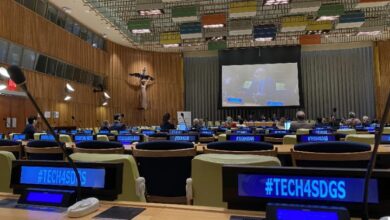
Another important feature of her leadership is the growing use of technology, data and scientific information in disaster management. NEMA has strengthened its collaboration with NASRDA and the United Nations Office for Outer Space Affairs to apply space-based technologies, remote sensing and emerging digital tools for disaster-risk monitoring and emergency planning. The Agency has also supported initiatives to improve access to real-time information and communication during emergencies, including the deployment of satellite connectivity solutions to enhance operational coordination.
To strengthen evidence-based emergency management, Mrs Umar activated the National Emergency Operations Centre to coordinate, process and analyse reliable information on flooding and other climate-induced disasters. This has enhanced situational awareness, information management and decision-making, and provided a stronger platform for coordinating national response operations.
Her tenure has also seen renewed emphasis on institutional capacity building and the professionalisation of emergency response. NEMA personnel and relevant stakeholders have participated in specialised training and simulation exercises covering Emergency Operations Centre management, Incident Command Systems, search and rescue, flood response and other critical areas. Partnerships with security agencies, academic institutions and international organisations have further expanded opportunities for knowledge transfer, skills development and improved operational readiness.
Beyond preparedness and institutional reform, Mrs Umar has demonstrated compassionate humanitarian leadership. Under her direction, NEMA has coordinated humanitarian assistance to thousands of households affected by floods, windstorms, fires, conflicts and other emergencies across the country. She has consistently emphasised that humanitarian interventions must be timely, transparent, accountable and responsive to the actual needs of affected populations.
Her administration has also strengthened international humanitarian partnerships, recognising that Nigeria’s increasingly complex disaster environment requires sustained collaboration with development agencies, humanitarian organisations and other international partners.
Mrs Umar has further demonstrated leadership in the Rehabilitation Scheme for Persons Impacted by Conflict (RSPIC), an initiative designed to support the recovery and resettlement of conflict-affected communities. Through NEMA’s coordinating role, the programme reflects a broader understanding of disaster management—one that extends beyond immediate relief to rehabilitation, recovery, the restoration of dignity and the rebuilding of livelihoods.
Her leadership has also strengthened civil-military and inter-agency cooperation. Engagements with the Nigerian Army, Nigerian Air Force and other security and response organisations have focused on leveraging specialised personnel, engineering capabilities, logistics and Disaster Response Units to improve search-and-rescue and emergency operations. This collaborative philosophy recognises that effective disaster management requires the collective capabilities of government institutions, humanitarian partners, communities and the private sector.
Another defining feature of Mrs Umar’s leadership is her commitment to institutional reform and strategic planning. The development of NEMA’s strategic direction, the review of key national disaster-management frameworks, and efforts to strengthen State and Local Emergency Management structures demonstrate her determination to build sustainable systems rather than rely solely on emergency interventions.
Through these initiatives, Mrs Zubaida Umar has brought a leadership approach to public service defined by preparedness, innovation, partnership, compassion and accountability. She has continued to reposition NEMA as a more proactive, technology-driven and people-centred institution, better equipped to respond to Nigeria’s increasingly complex disaster-risk environment.
In recognition of her responsive leadership and unwavering commitment to vulnerable Nigerians, Mrs Zubaida Umar is worthy of the LEADERSHIP Public Service Person of the Year award.