Making Innovation And Grassroots Impact: How NASENI Is Turning Skills Into Sustainable Livelihoods

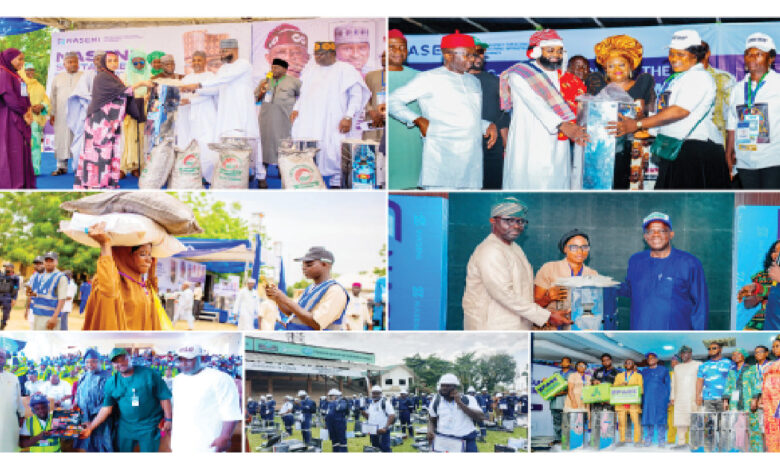
For years, one of Nigeria’s persistent development challenges has been the gap between technological innovation and its practical application in everyday life. Ideas may emerge from laboratories and research institutions, but translating those ideas into productive skills, viable enterprises and solutions that reach communities remains critical to building a self-reliant economy.
Under the leadership of the Executive Vice Chairman and Chief Executive Officer, National Agency for Science and Engineering Infrastructure (NASENI), Mr. Khalil Suleiman Halilu, the Agency is increasingly positioning its interventions around closing that gap, connecting technical skills development with access to tools, clean technologies and opportunities for enterprise creation.


Through programmes such as the NASENI Skills Acquisition Programme (NSAP) and the NASENI Sustainable Empowerment Programme (NSEP), its recent interventions across Anambra, Benue, Kano and Oyo States illustrate how this approach is taking technology and practical skills beyond institutional facilities and into communities.
The EVC/CEO of NASENI represented by the Acting Coordinating Director, Engineering Infrastructure, Engr. Dr. Rasheed Abdullahi Agava, speaking in Wannune, Benue State said the objective of the two initiatives was to empower beneficiaries to become employers of labour and achieve economic resilience.
From Learning to Earning
At the heart of NASENI’s skills development interventions is a simple principle: training is more meaningful when beneficiaries have the means to apply what they have learnt. In Onitsha, Anambra State, NASENI concluded a five-day skills acquisition programme for 100 youths in modern electrical installation and maintenance.
The intervention went beyond classroom instruction, with participants receiving practical equipment and safety gear, including electrical toolboxes, multi-meters, screwdrivers, safety boots, helmets and cordless drilling machines.
The intervention was welcomed by the Obi of Onitsha, His Majesty Igwe Nnaemeka Alfred Achebe, who commended the initiative and pledged traditional oversight to encourage effective use of the starter tools for enterprise development.
In Wannune, Benue State, NASENI combined technical training with household-level economic and clean-energy interventions. The programme trained 100 men in solar installation and 120 women in the production of household essentials such as soap and petroleum jelly. A further 250 beneficiaries received clean-energy solutions, broadening the intervention from skills acquisition to practical support for household productivity.
Dr. Agava said the skills acquired by the solar installation trainees placed them in one of the fastest-growing areas of Nigeria’s economy, as households, businesses, farms, schools and public institutions are increasingly adopting renewable energy solutions. “Across the country, households, businesses, farms, schools and public institutions are increasingly adopting renewable-energy solutions.
“NASENI itself is supporting the development of Nigeria’s domestic renewable-energy ecosystem because we believe that Nigeria must progressively build the capacity to produce, deploy and maintain the technologies required for its energy future. “We also need skilled Nigerians who can install these systems safely, maintain them professionally and build sustainable businesses around them.
In Gaya, Kano State, the Agency concluded a six-week hands-on tailoring programme for 100 young men and women. With industrial sewing machines and start-up materials provided alongside the training, beneficiaries were equipped with the basic resources required to begin translating their skills into income-generating activities.
Mr. Halilu represented at the ceremony by the Acting Director of Finance and Accounts, NASENI, Mr. Muhammed Alhassan, said the practical skills acquired by the men and women who participated in the training will change the trajectory of their lives.
He noted that tailoring is not merely a craft; it is an enterprise. “It is a pathway to self-employment, to income generation, and to economic independence, particularly for our youth and women who continue to face significant barriers to formal employment.”
In Oyo State, the EVC/CEO of NASENI, represented by the Director, Information, New Media and Protocol Mr. Olusegun Ayeoyenikan, said noted that the Agency’s “Our mandate goes beyond research, laboratories, and technology development. It includes ensuring these technologies reach households, entrepreneurs, and communities, where they can reduce hardship, improve productivity, and create sustainable economic opportunities.”
Across these interventions, the emphasis is clear: technical knowledge is being paired with practical tools and equipment so that beneficiaries can move from learning to application and, ultimately, enterprise.
Bringing Clean Energy to the Grassroots
While NSAP focuses strongly on building technical capacity, the NASENI Sustainable Empowerment Programme addresses another important part of grassroots productivity: access to appropriate and affordable technology.
In communities across Oyo, Anambra and Benue States, NSEP interventions have included clean Cookstoves, Home Solar Solutions and other support packages designed to improve energy access and productivity.
For households and small-scale businesses, access to reliable energy can influence how long people are able to work, the cost of running an enterprise and the quality of everyday life.