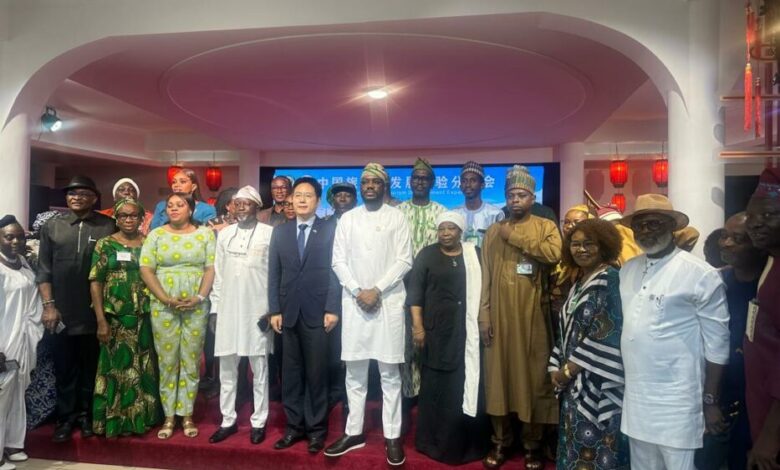
Nigeria and China are seeking to deepen cooperation in tourism through skills development, destination management, digital innovation, cultural exchange and investment, as both countries explore ways of adapting China’s tourism development experience to Nigeria’s realities.
The call was made yesterday at a seminar on “China’s Tourism Development Experience” organised by the Chinese Embassy in Nigeria in collaboration with the National Institute for Hospitality and Tourism (NIHOTOUR) and the Nigerian Tourism Development Authority (NTDA) in Abuja.
Speaking at the event, Counselor Yang Jianxing of the Chinese Embassy said China’s experience in public tourism services, destination development, cultural tourism, smart tourism, market promotion and talent development could provide useful lessons for Nigeria.
He, however, stressed that the engagement should not be a one-way transfer of knowledge, noting that Nigeria also had experiences and strengths from which China could learn.
According to him, both countries could strengthen cooperation in tourism education, vocational training, hotel management, eco-tourism, cultural heritage preservation, digitalisation, destination marketing and business partnerships.
Yang noted that tourism could serve as a bridge between both countries, particularly as Nigeria and China mark 55 years of diplomatic relations and the China-Africa Year of People-to-People Exchanges.
He said tourism was capable of creating jobs, promoting economic growth and strengthening understanding among peoples and cultures.
Also speaking, the Director-General of NIHOTOUR, Dr Abisoye Fagade, said Nigeria could learn from China’s deliberate use of tourism for economic development, cultural preservation, rural revitalisation and skills development.
Fagade, who said his recent participation in a tourism development programme in Beijing exposed him to China’s tourism model, noted that Nigeria was not lacking in tourism resources but needed stronger systems to convert its assets into sustainable economic value.
He identified tourism training, curriculum development, research, digital transformation, rural and cultural tourism and destination management as areas where Nigeria-China cooperation could be expanded.