Nigerian oil palm exports could soon face severe trade restrictions in European markets if local farmers fail to adopt eco-friendly cultivation standards.
Solidaridad Nigeria, a development group, highlighted this commercial risk on Friday in Uyo, Akwa Ibom State, during a stakeholders’ workshop organised under its National Initiatives for Sustainable and Climate-Smart Oil Palm Smallholders project.
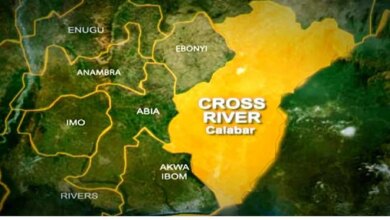
To address the challenge, the organisation introduced a sustainable management strategy to help government authorities and smallholder farmers modernise production across Akwa Ibom, Cross River, Enugu, and Kogi states.
The initiative directly addresses strict international trade rules, including the European Union Deforestation Regulation, which bars agricultural products connected to forest destruction.


Environmental obstacles and yield deficits
Research across 24 Nigerian states, alongside climate and gender assessments, revealed widespread practices that damage land and release greenhouse gases.
Solidaridad Nigeria Programme Manager Ernest Ita stated that many local growers mistakenly believe clearing new forests is necessary to increase crop output. He noted that old palm trees, land disputes, deforestation, improper fertiliser use, continuous cropping, and heavy chemical usage continue to hurt the sector. He added that farmer isolation and weak official policy coordination further hinder growth, while women and youth struggle to gain access to farmland.
“Solidaridad in Nigeria has developed a sustainable management plan, which is a framework and strategy in order to ensure that oil palm production in the four states: Akwa Ibom, Cross River, Enugu, and Kogi where we implement the NISCOPs project, applies. This is to ensure that oil palm production is done sustainably,” Ita said.
READ RELATED NEWS
FG pledges support for N85m C’River palm oil mill
China tariff waiver puts Nigerian exports to test
Nigeria records N4.82trn African exports as regional trade gains momentum
To fix these problems, the organisation trains farmers to maximise output on existing farmlands rather than clearing trees.
“Farmers believe that until you clear forest, you cannot have better yield. So we came up with Best Management Practices, BMP, to train farmers to intensify yield within their existing farms rather than expansion,” Ita explained.
Project Coordinator Samson Shaibu stated that the strategy focuses on environmental protection, social inclusion, economic growth, and proper governance.
Training programmes and financial support
The organisation created the management roadmap through direct talks with local communities, council areas, and state officials so government leaders can integrate the guidelines into official farming policies.
So far, the programme has reached over 10,000 smallholder farmers and nearly 5,000 local millers. The group provided harvesting tools to 7,000 farmers and supplied 600 farmer groups with quality seedlings from the Nigerian Institute for Oil Palm Research.
These measures have yielded measurable improvements in farm production. In Akwa Ibom State, where the programme supports 120 farmer groups of 25 members each, growers using the new methods increased their output from a baseline of 2.7 tonnes per hectare yearly to over six tonnes.
“In Akwa Ibom alone, we have supported up to 120 farmer groups of 25 members each. Baseline yield was 2.7 tonnes per hectare per year, but those who applied BMP now do over six tonnes,” Ita said.
To tackle ongoing funding shortages, poor technology, and weak policy execution, the group established village savings schemes and connects registered farmer groups directly with commercial banks.
For More News Details, Visit New Daily Prime.