Former Vice President Atiku Abubakar has challenged President Bola Tinubu over the worsening cost of living in Nigeria, saying the central issue confronting the country is not opposition politics but the inability of millions of Nigerians to afford basic necessities.
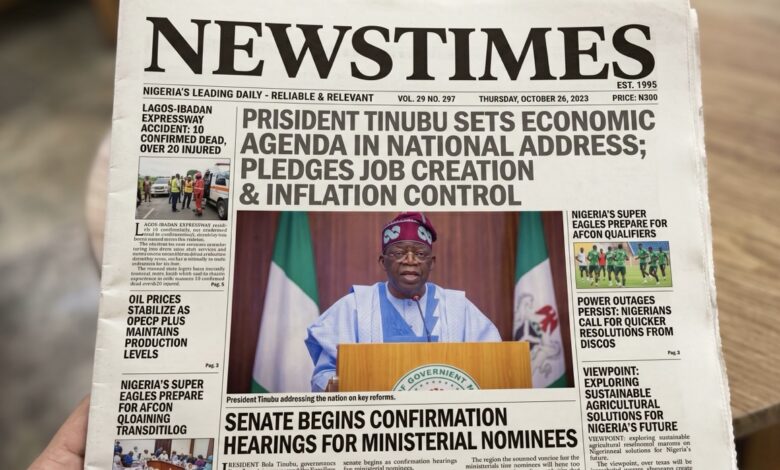
Atiku’s Senior Special Assistant on Public Communication, Phrank Shaibu, stated this yesterday in a response to Tinubu’s latest statement on the economy, in which the president criticised the economic position of opposition leaders without naming them.


Shaibu said Tinubu’s comments were clearly directed at Atiku, who, according to him, had continued to advocate policies aimed at reducing the cost of living, particularly the prices of energy and transportation.
He said Atiku was more concerned about Nigerians struggling to feed their families, pay transport fares, access healthcare and keep their children in school than engaging in a personal exchange with the president.
Shaibu questioned Tinubu’s promise to introduce cheaper transportation, increase food production and provide relief to vulnerable Nigerians “in the next few weeks,” asking why such interventions were only becoming urgent after more than three years of economic hardship.
“Why did Nigerians have to suffer for more than three years before your government discovered that economic growth must reach ‘the dining table and the pocket’?” he asked.
The Atiku aide argued that the government could not condemn cheaper living when proposed by the opposition while adopting similar measures under its Renewed Hope agenda.
He also faulted the government’s handling of petrol pricing, comparing Nigeria’s pump price with those of other oil-producing countries.
According to him, petrol sells at about N778 per litre in Saudi Arabia, N872 in Kuwait, N475 in Algeria, N441 in Angola and below Nigeria’s roughly N1,400 per litre in the United Arab Emirates.
He further cited Libya, where petrol reportedly sells at about N34 per litre, arguing that Nigeria’s high fuel price was placing an excessive burden on citizens despite the country’s status as a major oil producer.
Shaibu said a worker earning the N70,000 minimum wage would require about N56,000 to purchase 40 litres of petrol at N1,400 per litre, representing 80 per cent of the monthly wage.
He argued that the high cost of fuel was affecting transportation, agriculture, food distribution, manufacturing and household incomes.
According to him, Atiku’s proposed Atiku Economic Recovery Plan (AERP) would seek to reduce the cost of energy at source rather than allow living costs to rise before introducing palliatives.
He said the plan would support Nigerian crude supplied for domestic refining within a capped and transparently budgeted framework, with monitoring mechanisms and a consumer pass-through requirement to ensure that the benefits reached consumers.
Shaibu maintained that reducing fuel costs would lower transportation expenses and, consequently, reduce the cost of moving agricultural produce and manufactured goods across the country.
He also rejected Tinubu’s criticism of the proposal in relation to the Nigeria Education Loan Fund (NELFUND), describing the argument that cheaper fuel could threaten student loans, workers’ salaries or the minimum wage as “fearmongering dressed up as economics.”