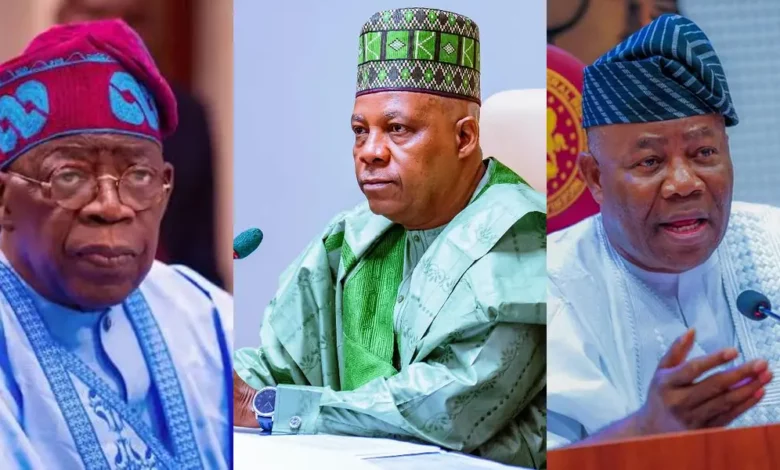
Who is leading Nigeria? Senate President Godswill Akpabio has said he is not Nigeria’s acting president amid questions over the simultaneous absence of President Bola Tinubu and Vice-President Kashim Shettima. The debate intensified after Tinubu remained abroad while Shettima travelled to New York to represent Nigeria at the United Nations General Assembly.
Akpabio’s clarification is important because some Nigerians had questioned who was formally exercising presidential powers while the country’s two highest-ranking elected officials were overseas.
However, travelling outside Nigeria does not automatically remove a president or vice-president from office. It also does not automatically transfer presidential authority to the Senate president.
Tinubu left Nigeria on 30 August for a working holiday in Europe, initially spending time in France and the United Kingdom. The Presidency later said he had extended the trip by a few days and was expected to return at the weekend.
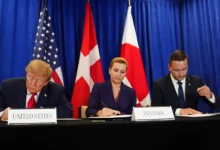

Shettima left Abuja on 20 September for New York, where he was assigned to represent the president at the 81st session of the United Nations General Assembly.
The President’s Special Adviser on Policy Communication, Daniel Bwala, has argued that Tinubu can continue carrying out his duties from abroad because presidential authority is not limited by physical location.
That position has not ended the controversy. Opposition figures and some lawyers have called for greater transparency over whether the constitutional procedure for transferring presidential duties was followed.
What Nigeria’s Constitution says
Section 145 of the 1999 Constitution allows the president to send a written declaration to the Senate president and the Speaker of the House of Representatives when going on holiday or when temporarily unable to perform the duties of the office.
Once that declaration is transmitted, the vice-president takes over those duties as acting president until the president sends another declaration confirming his return.
If the president does not transmit such a letter within 21 days, the National Assembly may, through a resolution supported by a majority in each chamber, authorise the vice-president to perform the functions of acting president.
NewDailyPrime did not establish that Tinubu had sent such a declaration before travelling. This does not, by itself, prove that the Constitution has been breached, because the precise nature of the president’s trip, his ability to perform his duties and any communication with the National Assembly would all be relevant.
Human rights lawyer Inibehe Effiong has argued that the National Assembly should examine the matter under Section 145. His position is a legal interpretation and has not been determined by a court.
Why Akpabio does not automatically take over
The Senate president is not next in line simply because the president and vice-president are outside Nigeria.
Section 146 deals with a much more serious situation in which both the offices of president and vice-president become vacant through death, resignation, impeachment, permanent incapacity or removal from office.
Being abroad does not create such a vacancy. On that narrow constitutional point, Akpabio’s statement that he is not acting president is consistent with the succession rules.
The Presidency has maintained that Tinubu remains in contact with officials and continues to direct government affairs while abroad. Critics, however, say the government should disclose any formal arrangements so Nigerians know who is authorised to make urgent decisions.
For Nigerians in the diaspora, the dispute is less about where the president works and more about accountability. Digital communications make it possible for senior officials to work from another country, but constitutional requirements still apply where a formal transfer of authority is necessary.
What readers should know
Akpabio is not acting president merely because Tinubu and Shettima are abroad. The key unanswered question is whether the circumstances required Tinubu to transfer power formally under Section 145 and, if so, whether the proper notice was sent to the National Assembly. Until credible evidence or an official announcement says otherwise, claims that the Senate president has taken control should be treated as incorrect.
For continuing coverage, visit Newdailyprime.news
Related news