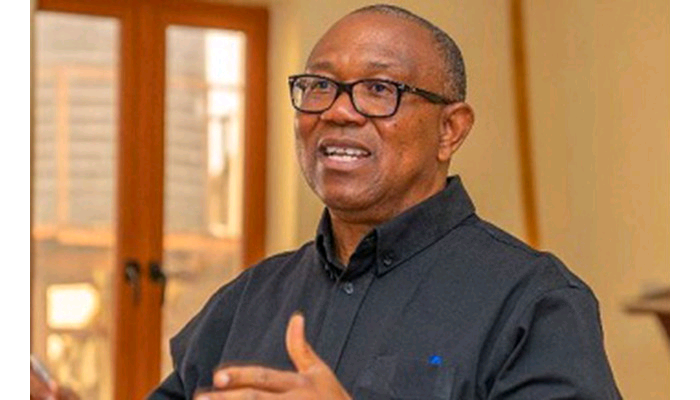
Peter Obi’s blocked visit to Benue State has raised questions over whether political candidates can freely travel and hold legitimate activities anywhere in Nigeria without prior permission.
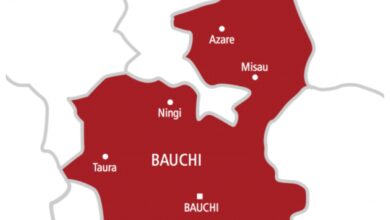
Obi, the presidential candidate of the Nigeria Democratic Congress (NDC), was prevented from continuing his journey to Yelwata on Tuesday, 8 September, 2026, during a visit to families affected by killings in the area.
The Benue State Police Command said 46 people had been arrested over the incident. Commissioner of Police Cletus Nwadiogbu said the arrests came from an intelligence-led operation to identify people connected with the obstruction.
READ RELATED NEWS:
Benue Govt: We knew nothing about Obi’s visit
Kwankwaso condemns attack on Obi’s convoy, demands prosecution
Keyamo demands media consistency over Obi’s Benue blockade
The police commissioner said officers avoided a confrontation because it could have caused deaths and destruction of property. Obi was later escorted safely to the airport and left the state.

The incident has since drawn criticism from political groups and rights organisations, which say Nigerians have constitutional rights to movement, assembly and political participation.
Constitution cited over Obi’s visit
The campaign team of Allied People’s Movement presidential candidate Seyi Makinde said Obi did not need permission from the Benue State Government to enter the state for a legitimate activity.
The position was contained in a statement signed by Anthony Ehilebo, Makinde’s Special Adviser on Media and Digital Communication.
The team cited Section 41(1) of the 1999 Constitution, which guarantees freedom of movement throughout Nigeria. It also cited Section 40, which guarantees freedom to assemble and associate.
The team said Obi was travelling to Yelwata to visit families affected by the killings when his convoy was obstructed by suspected state-sponsored thugs.
It said, “every Nigerian, presidential candidate or otherwise, has a constitutionally guaranteed right to enter, live, and move freely within any state in Nigeria to conduct legitimate activities without prior permission or notice.”
The team also said roadblocks and the use of thugs against opposition candidates had no place in a constitutional democracy.
A faction of the All Progressives Congress in Benue State shared the criticism.
Daniel Ihomun, publicity secretary of the faction led by Austin Agada and loyal to Secretary to the Government of the Federation George Akume, said the incident was not representative of Benue or the APC.
“This is not Benue. This is not our culture. And this is not the APC,” Ihomun said.
He said Obi had gone to Benue to identify with victims of killings and should have been received with civility and respect.
“Political differences are legitimate; political violence is not. Benue deserves better,” he said.
The faction also asked Governor Hyacinth Alia to apologise to Obi, President Bola Tinubu, Benue people and the APC.
Rights groups demand answers
The constitutional issue has also featured prominently in demands from civil society organisations.
The Kwankwaso National Network, South-East zone, said no political disagreement should expose a presidential candidate to violence.
Its South-East Zonal Coordinator, Dr Ukpai Iro Ukpai, demanded an immediate and transparent investigation and said security agencies should identify and prosecute those responsible.
The group rejected the explanation attributed to Alia that Obi had not notified the state government before his visit.
It said such a failure, even if established, could not justify blocking or attacking a presidential candidate.
The group also asked the Federal Government and security agencies to protect Obi and other presidential, governorship and legislative candidates as political campaigns intensify.
The Socio-Economic Rights and Accountability Project, SERAP, asked President Bola Tinubu to direct Inspector-General of Police Olatunji Disu to take over the investigation.
SERAP said the investigation should establish whether public officials, political actors or other people sponsored, facilitated or allowed the reported attack.
It said the incident affected political participation, civic space and Nigeria’s democratic process.
“The authorities must ensure that politicians, candidates, journalists, civil society actors and other citizens can freely exercise their rights to freedom of expression, peaceful assembly, association, and political participation without fear of intimidation or attack,” SERAP said.
Amnesty International Nigeria also demanded an impartial, independent and timely investigation.
“The Nigerian authorities must ensure an impartial, independent and timely investigation of the incident yesterday in Benue State in which the presidential candidate of NDC, Peter Obi, and his entourage were blocked and attacked by armed youth,” the organisation said.
Amnesty said no part of Nigeria should become a no-go area for anyone and that people should not face violence for taking part in peaceful political activities.
The police have already arrested 46 people, but the command said its investigation is continuing to identify others connected with the incident.
For More News Details, Visit the New Daily Prime.