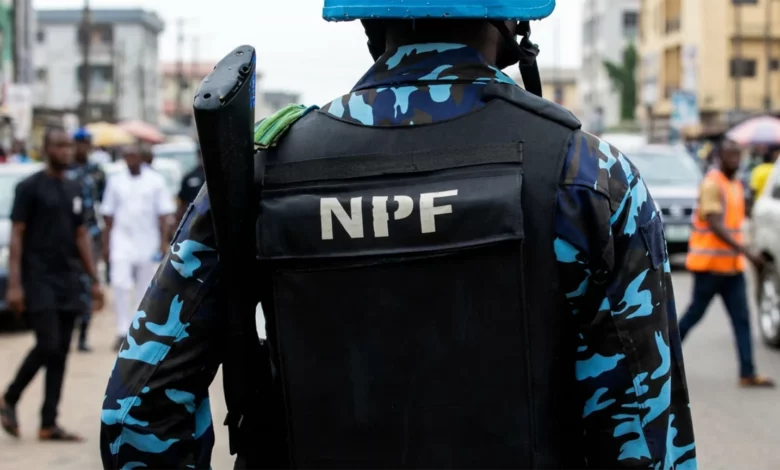
Parents are confronting renewed anxiety over school resumption after the Nigeria Police Force (NPF) warned of suspected terrorist mobilisation and reconnaissance around schools, NYSC orientation camps, places of worship and other vulnerable locations.
The security alert, circulated to police formations nationwide, identified the possible movement of armed elements from Katsina through Kaduna towards Plateau State and disclosed intelligence pointing to surveillance of potential targets by suspected Islamic State West Africa Province (ISWAP) operatives and local collaborators.
The warning has prompted security agencies to intensify monitoring around learning institutions as the 2026/2027 academic session gets underway.
The police Department of Operations said intelligence indicated an “increased mobilisation of terrorist elements for possible coordinated attacks on places of worship, schools, NYSC orientation camps, and other vulnerable locations.”


The communication was distributed to Assistant Inspectors-General of Police overseeing Zones 1 to 17, Commissioners of Police, Mobile Police units, counter-terrorism formations and other specialised commands.
Police authorities subsequently instructed commanders to strengthen intelligence-led surveillance, patrols, stop-and-search operations, access control, and rapid-response arrangements around locations considered vulnerable.
State commands were also directed to tighten security at borders, entry, and exit routes and other strategic approaches to frustrate the movement of armed groups.
The warning is particularly significant for schools because of the timing. The police said the suspected attacks could coincide with the resumption of the academic session, and this has therefore raised fears among parents who have already witnessed the consequences of attacks on educational institutions.
Security agencies step up surveillance
The Defence Headquarters said it was monitoring the situation.
“We are monitoring the situation,” the Director of Defence Media Operations, Maj. Gen. Michael Onoja, said.
The Nigeria Security and Civil Defence Corps (NSCDC) also disclosed that it had expanded its intelligence network across its state commands to protect schools and other learning centres.
The NSCDC spokesperson, Babafemi Afolabi, said the Commandant-General had briefed state commandants and directed personnel to intensify vigilance.
He said intelligence-driven operations involving federal and tactical squads had prevented more than 100 attempted attacks on schools.
“All tactical squads, officers, and men of the Corps in different state commands, the Commandant General has already briefed them through their commandants. So, now that schools have resumed, they’ve doubled their intelligence network,” Afolabi said.
He added that the corps was working with other security agencies, community leaders, and private security personnel to gather information that could expose threats before they materialise.
Afolabi also asked parents not to keep their children away from school solely because of the alert. He emphasised that security agencies were taking preventive measures.
Parents say fear is legitimate
However, the reassurance has not eliminated parental anxiety.
The National Secretary of the Uche Onyia-led faction of the National Parent-Teacher Association of Nigeria (NPTAN), Ibrahim Nabayi, told journalists that parents were frightened by the prospect of sending their children into environments they consider inadequately protected.
“Parents are worried now, parents are scared of sending children back to school,” Nabayi said.
He called for stronger security around schools and proposed technology capable of detecting suspicious activity within a five-kilometre radius of educational institutions.
Nabayi said many schools were vulnerable because their existing security arrangements could not withstand attacks involving heavily armed terrorists.
“All our schools are porous. The kind of ammunition these guys move around with is more than what the security guards in the schools have,” he said.
He also renewed calls for the proper implementation of the Safe School Initiative, a security framework introduced to map vulnerable schools and facilitate surveillance and rapid intervention.
According to him, the initiative needs renewed government attention rather than intermittent policy announcements.
Experts call for public vigilance
Former Assistant Inspector-General of Police, Ali Amodu, described the alert as part of the intelligence and preventive duties of security agencies.
He said Nigerians should treat such warnings seriously and pay attention to unusual movements around their communities.
“Citizens can always be ready. They cannot take things for granted. When such an alert is given, from experience, you discover that everybody will sit up,” Amodu said.
He identified worship centres and other public gathering points as locations requiring particular attention, especially with the 2027 general elections approaching.
Former Director of the Department of State Services, Mike Ejiofor, similarly said intelligence warnings should trigger preventive action rather than panic.
“If you get such an advisory, we should take it seriously so that people are not caught unawares,” he said.
Ejiofor stressed that security information from residents could help agencies identify threats before attackers strike.
“The people must be security conscious, and they must also report back to the security agencies. That’s what this ‘see something, say something’ is important for,” he said.
The warning comes against the backdrop of previous attacks on educational institutions. In May 2026, armed men reportedly attacked three schools in Oriire Local Government Area of Oyo State and abducted 49 pupils, teachers, and a toddler. A mathematics teacher was also killed while in captivity.
On the part of parents, the question is no longer about whether schools should reopen. It is whether children can enter classrooms with sufficient protection against threats that security agencies themselves have identified.
Nabayi said vulnerable pupils should, where necessary, be moved temporarily to safer schools rather than subjected to avoidable danger.
“I cannot send my child where he is not safe,” he said.
He also called for closer cooperation between government, security agencies, communities, and parent-teacher associations, arguing that intelligence gathered at neighbourhood level could provide the first warning of an impending attack.
“Once the government can create a safe environment, education thrives. When there is fear, nothing can be learned,” Nabayi said.
READ RELATED NEWS UPDATES