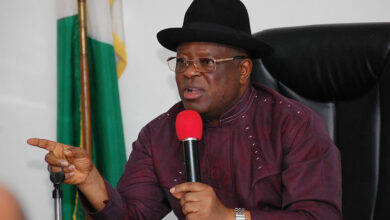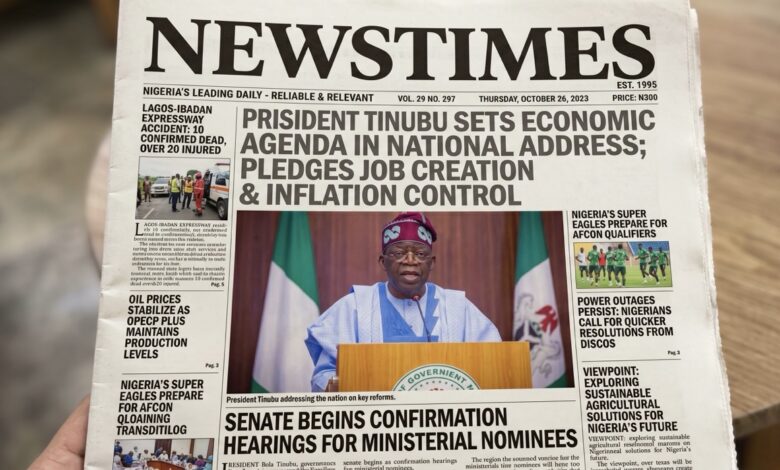
President Bola Tinubu and former Vice-President Atiku Abubakar have opened a fresh battle over Nigeria’s economic direction: the President defending his reforms as the foundation for a $1tn economy while the opposition candidate questioned why Nigerians must endure prolonged hardship before receiving relief.
The dispute centres on the impact of fuel subsidy removal, foreign exchange reforms, food prices, transport costs, and access to affordable education. It also gives a sharper political edge to the economic debate ahead of the 2027 general elections.
READ RELATED STORY:
15 NYSC members, 6 others rescued as Tinubu orders pursuit of abductors
Dare attacks Atiku’s $1.2m US lobbying deal over political claims
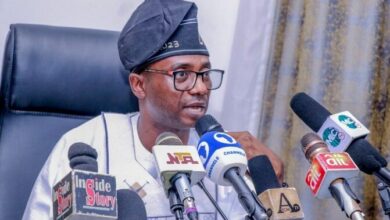
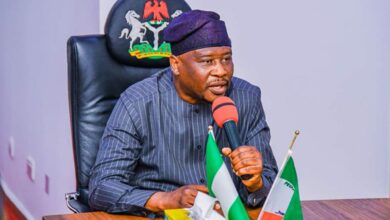
Tinubu, represented by the National Chairman of the All Progressives Congress (APC), Prof Nentawe Yilwatda, told the second Asiwaju Scorecard Series and Policy Roundtable in Abuja on Tuesday that the government’s policies had begun to produce measurable gains.
Yilwatda, speaking on the President’s behalf, cited gross external reserves of about $52.7bn as of August 2026. He also noted that consolidated non-oil revenue rose from approximately N13.63tn in 2023 to N16.4tn during the first two quarters of 2026.

Nigeria’s merchandise trade position, he added, moved from a surplus of about N44.8bn in 2023 to roughly N7.54tn in the first quarter of 2026. Real GDP also expanded by 4.43 per cent in the second quarter, while inflation fell to about 15.4 per cent from its earlier peak.
“These figures do not mean that our economic challenges have disappeared, but they demonstrate that the direction of travel has changed,” Yilwatda quoted Tinubu as saying.
The President said the removal of petrol subsidy and changes to the foreign exchange market were necessary responses to what he described as an inherited economy marked by subsidy distortions, multiple exchange-rate windows, weak revenue collection, and foreign exchange shortages.
He presented the $1tn target as a plan centred on production, exports, investment, and employment as infrastructure plays a central role. Tinubu proposed an integrated network linking five deep-sea ports in Lagos, Ondo, Ibom, Port Harcourt, and Calabar to rail, roads, industrial parks, logistics hubs, and production centres.
But Atiku’s camp rejected the government’s assessment of its economic record, shifting attention from macroeconomic indicators to household expenses.
In a statement issued through his Senior Special Assistant on Public Communication, Phrank Shaibu, Atiku questioned why the administration was only promising cheaper transport, increased food production, and assistance for vulnerable Nigerians after more than three years of hardship.
“Why did Nigerians have to suffer for more than three years before your government discovered that economic growth must reach ‘the dining table and the pocket’?” Shaibu asked.
The former vice-president also challenged the government’s position on subsidy removal. He cited the Federal Government’s claim that the policy generated about N15.8tn between June 2023 and December 2025 and asked what tangible benefits ordinary Nigerians had received from the sacrifice.
Atiku’s camp proposed lower energy costs as a route to reducing transport and production expenses. It said his Economic Recovery Plan would support domestically refined petrol through a capped and transparently budgeted crude supply arrangement.
The opposition campaign also criticised the student loan scheme. It said borrowing for education does not amount to making education affordable. Atiku said any future administration led by him would seek to reduce the underlying cost of education and consider forgiveness for qualifying student debts.
The exchange has placed competing interpretations of Nigeria’s economic data at the centre of the emerging 2027 contest: Tinubu is presenting fiscal and macroeconomic indicators as evidence that his reforms are working, while Atiku is measuring their success against what households pay for food, transport and education.