ADC Candidate Promises Economic Reset, Challenges FG Over N3.84trn Raw-Material Exports, N2.14trn Unsold Goods
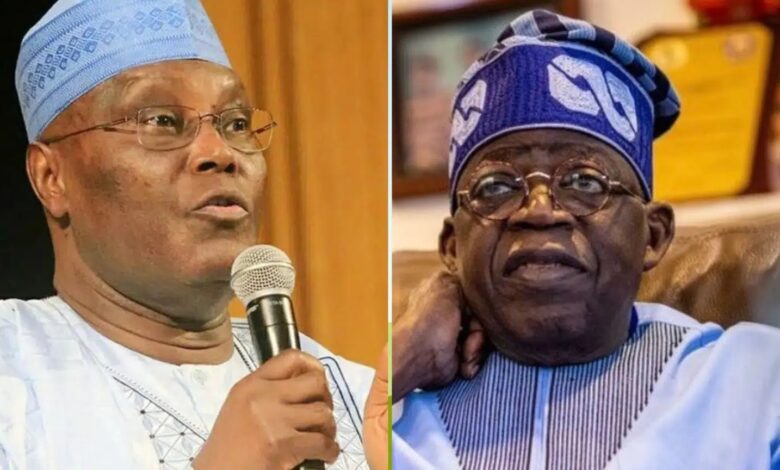
Former Vice-President and African Democratic Congress (ADC) presidential candidate, Atiku Abubakar, has launched a fresh assault on President Bola Ahmed Tinubu’s economic policies, accusing the administration of making Nigeria increasingly expensive for ordinary citizens, manufacturers and businesses.
Atiku said the country was witnessing a troubling economic contradiction: Nigeria is exporting increasing volumes of raw materials while Nigerian manufacturers struggle with unsold products and households battle declining purchasing power.
His criticism came as Nigeria’s raw-material exports surged by 106 per cent, rising from N1.86 trillion in the first half of 2025 to N3.84 trillion in the first half of 2026, according to an analysis of National Bureau of Statistics (NBS) foreign-trade data.

But for Atiku, the headline export growth does not tell the whole story.
In a statement issued by his Senior Special Assistant on Public Communication, Phrank Shaibu, Atiku argued that Nigeria continues to surrender much of the economic value embedded in its natural resources by exporting them largely in raw form.
“There is nothing wrong with exporting. The problem is exporting the cheapest part of the value chain and buying back the expensive part,” he said.
He cited cocoa, hides, cotton and solid minerals as commodities that could generate significantly greater economic value if processed locally before being exported.
His argument comes against the backdrop of the sharp increase in raw-material exports recorded in the first half of 2026, with agricultural commodities accounting for a significant portion of the export performance.
Atiku said Nigeria should move beyond being a supplier of raw materials and develop the industrial capacity to export chocolate, leather products, textiles, pharmaceuticals, petrochemicals and processed food.
The ADC candidate also raised questions over the reported accumulation of about N2.14 trillion worth of unsold manufactured goods, linking the situation to weakening consumer purchasing power and rising production costs. His figure and interpretation have also been reported by Nigerian media.
Atiku said manufacturers were being squeezed from one side by rising operating costs while consumers were being squeezed from the other by falling purchasing power.
“Fuel is more expensive. Electricity is more expensive. Credit is expensive. Transportation costs have risen. The naira is weaker.
Manufacturers pay more to produce, and families have less money to buy,” he said.
“That is why factory shelves are full while kitchen cupboards are empty.”
The former vice-president’s central argument is that economic growth and export earnings should ultimately translate into stronger domestic production, employment, incomes and purchasing power rather than remain largely visible in macroeconomic statistics.
The intervention effectively turns the cost of living into a major political battleground ahead of the 2027 presidential election.
Atiku’s criticism is not merely about the price of individual commodities. He is challenging the broader direction of the administration’s economic management, particularly the relationship between reforms, production costs, industrial competitiveness and household welfare.
He contends that higher fuel, electricity, transportation and financing costs have combined with naira weakness to increase the cost of producing goods in Nigeria.
The former vice-president says the government must therefore answer a fundamental question: if the economy is expanding and exports are rising, why are many households and businesses still struggling to afford basic goods and sustain operations?
Atiku said an ADC administration would pursue policies designed to reduce production costs and increase domestic value addition.
His proposals include:
• Affordable long-term financing for manufacturers and businesses;
• Industrial clusters to reduce production and logistics costs;
• Greater investment in agro-processing;
• Mineral beneficiation before export;
• Incentives for businesses that create value locally;
• A production-linked fuel subsidy tied to petroleum products refined in Nigeria;
• And a proposed $10 billion financing programme for young entrepreneurs and start-ups.
Under his proposed fuel-support model, Atiku said subsidy would be linked to actual domestic production and measurable benefits.
“No production, no subsidy. No domestic supply, no subsidy. No measurable benefit to Nigerians, no subsidy,” he said.
Atiku’s intervention places the economy firmly at the centre of the emerging 2027 political contest.
The Tinubu administration has pursued major economic reforms, while critics have focused on their effects on inflation, household purchasing power, businesses and the cost of production. Atiku is now presenting himself as the candidate who would shift the emphasis from macroeconomic adjustment to production, affordability and industrial expansion.
His proposed strategy is built around a simple proposition: Nigeria must process more of what it produces, manufacture more of what it consumes and create more value before sending its resources abroad.
But the political promise also raises a critical question for voters: can the proposed policies deliver lower production costs and greater purchasing power without recreating the fiscal pressures associated with past subsidies and government intervention?
For Atiku, however, the message is direct.
“You cannot build a $1 trillion economy by making your own people poorer,” he said.
“Our promise is simple: we will make it cheaper to produce, easier to do business, more rewarding to manufacture and more affordable to live.”
Then came the campaign line that is likely to define his economic pitch going into the 2027 contest:
“Tinubu made Nigeria expensive. Atiku will make Nigeria affordable again.”