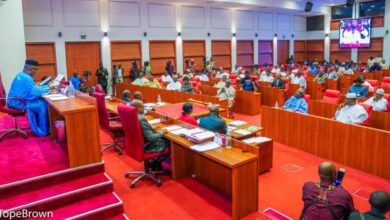
President Bola Tinubu has forwarded three major proposals to the House of Representatives, including the 2026 Niger Delta Development Commission (NDDC) budget and bills seeking changes to postgraduate medical training and research financing.
The submissions place regional development, advanced medical education and national research funding before lawmakers at the same time, with the proposed research fund potentially changing how government-backed research is financed.
In a letter dated August 20, Tinubu transmitted the NDDC’s 2026 statutory budget proposal to the House for consideration.
The proposal is built around youth empowerment, electricity, education, industrial development, healthcare, security and agricultural productivity in the Niger Delta.

The NDDC has previously presented budgets running into trillions of naira. Its 2025 proposal stood at ₦1.75 trillion, with ₦1.631 trillion earmarked for project execution across the region.
That history gives the 2026 submission significance beyond its passage through the legislature. The commission manages interventions across the nine Niger Delta states, covering infrastructure and social development projects. Its own records have also highlighted the need for stronger project monitoring, needs assessment and measurable outcomes.
READ RELATED NEWS UPDATES
The President also sent the National Postgraduate Medical College (Amendment) Bill, 2026 to the House.
The proposal seeks to update the college’s institutional name and expand its powers to award Doctor of Philosophy degrees in Clinical Medicine, Dentistry and related disciplines.
If enacted, the change would give the institution a clearer legislative basis for doctoral-level academic work alongside its existing role in specialist medical training.
The third proposal is the National Research Development Fund (Establishment) Bill, 2026, which seeks to tackle a different problem: fragmented public funding for research.
Under the proposed framework, research and development funds currently spread across ministries, departments and agencies would be consolidated into a central funding mechanism.
The fund would operate competitively, allowing research agencies and academic institutions to seek support while encouraging collaboration with the private sector. The proposal also targets innovation, commercialisation of locally developed technology and allocation of resources according to national priorities.
Tinubu said the fund would operate under the supervision of the Federal Ministry of Innovation, Science and Technology, with funding from the Nigeria Content Development Fund.
The proposal comes against a longstanding concern over duplication among development and research institutions. The NDDC, for instance, has previously acknowledged the need to avoid overlapping projects and strengthen coordination among government agencies.
For universities and researchers, the proposed arrangement could mean that access to public research money is increasingly tied to competitive applications and clearly defined national priorities.
The central question, on the part of government, will be whether pooling resources produces better research outcomes than scattered allocations across separate institutions.
The bills are not yet laws. They must pass through legislative scrutiny before either proposal can take effect.
Tinubu has asked the House to consider the measures and pass them into law, setting the stage for lawmakers to examine their financial, institutional and administrative implications.