BY ABDULLAHI OLESIN, ACHOR ABIMAJE, NNAMDI MBAWIKE, FELIX IGBEKOYI, BABAJI USMAN BABAJI, DAMILOLA ORIGBEMISUYI and ANAYO ONUKWUGHA
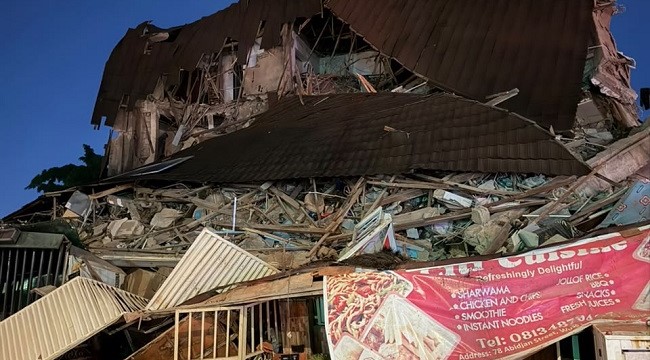
Buildings have continued to collapse across the country despite repeated warnings and regulatory guidelines, prompting reactions from professionals.


Speaking on the reasons for the frequent occurrences, the chairman of the Technical Committee of the Council for the Regulation of Engineering in Nigeria (COREN) in Kwara State, Engr Bashir Lawal, attributed incidences to inadequate structural integrity auditing of buildings, especially the old ones.
He urged the concerned authorities to ensure periodic and regular structural integrity auditing of buildings across the country.
Lawal recalled the recent collapse of a two-storey building at the Popo-Giwa area of Ilorin where which five members of a family lost their lives.
He emphasised the need for the state government to carry out a general structural integrity audit of all buildings in the state to avert a recurrence of the Ilorin incident.
In Plateau State, 24 deaths and 104 injuries were recorded in 2024 when school buildings collapsed.
The first was the collapse of the two-storey building of Saint Academy School. The students were said to be writing their promotional examinations when the incident occurred, resulting to the death of 24 students. Over 100 sustained injuries while many others were rescued from the debris.
The former president of the Nigerian Institute of Building (NIOB), Bldr (Prof) Yohana Izam expressed concern at the poor state of regulation of building sites, noting that the combined effect of quackery and the prevalence of substandard materials was responsible for cases of building collapse in the country.
In the same vein, the director-general of the Nigerian Building and Road Research Institute (NBRRI), Prof Samson Duna, attributed the use of substandard materials in construction as a major cause of building collapse.
He called for collaboration among stakeholders, including government agencies, professionals and the public, for the purpose of sharing knowledge on global best practices. He also called for refresher training among the professionals.
He challenged organs of government and professional bodies responsible for building construction to enforce strict compliance with building codes, regulations, and standards.
Prof Duna added that the country has continued to experience building collapse because there have been no regular inspections and penalties for non-compliance, saying people are not always sanctioned for negligence in relation to building collapse.
Following the collapse of the Saints Academy building, Plateau State Governor Barr Caleb Mutfwang, signed Executive Order 003 aimed at regulating urban development.
The Executive Order further introduced stringent measures aimed at regularising building constructions and preserving public infrastructure in the state.
A parent of one of the survivors of building collapse named Mercy appealed to the state government to always carry out integrity test on public buildings to avoid future occurrences.
Also, the general manager of Jos Metropolitan Development Board (JMDB), Arc Hart Bankat, emphasised the need for strict enforcement of urban planning rules to improve structural safety across the Jos-Bukuru metropolis.
In Enugu, investigations revealed that despite warning from relevant government agencies, some quack developers have continued to use substandard materials resulting to building collapse and death.
It was gathered that officials from the Enugu Capital Territory Development Authority (ECTDA) often visit approved ongoing building sites and when they notice any compromise, they usually tell the developers to stop work immediately.
But it was observed that even after the ‘stop work’ notice, developers continue to work on the buildings, a development that many attributed to compromise by some government officials.