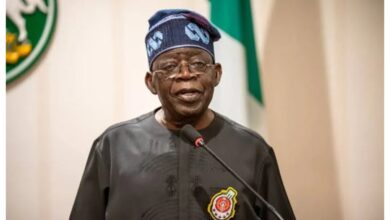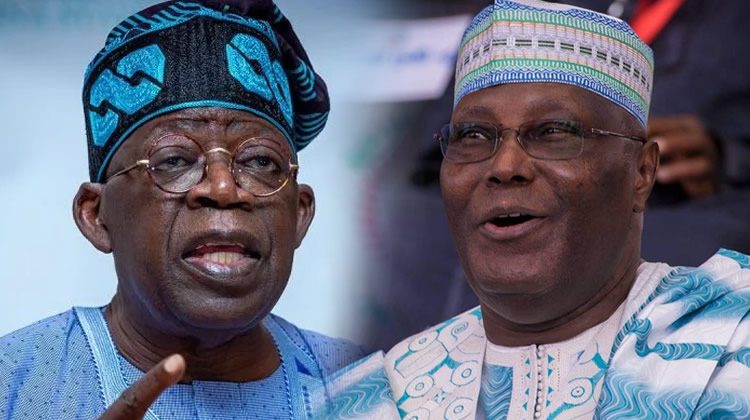
Former Vice-President Atiku Abubakar has challenged President Bola Tinubu to explain why millions of Nigerians are struggling with rising living costs, rejecting the President’s claim that opposition politicians created the hunger and poverty confronting the country.
Atiku, the African Democratic Congress (ADC) presidential candidate for the 2027 election, issued the response after Tinubu accused opposition parties of creating economic hardship during the All Progressives Congress (APC) campaign flag-off in Kaduna on Saturday.
In a statement issued by his Director of Strategic Communication, Phrank Shaibu, Atiku accused the President of evading responsibility for his administration’s economic decisions.
He described Tinubu’s remarks as “either delusion or a staggering case of political amnesia”.
“The APC governed Nigeria for eight years before you took office. You have added another three and a half years. Nigerians know who has been in power, and hardship did not begin when the opposition started talking about it,” Atiku said.
The exchange places the cost of living at the centre of the political contest ahead of the 2027 presidential election, with both camps facing pressure to explain their records to voters dealing with expensive food, transport and other essentials.
RELATED NEWS:
Subsidy removal and naira depreciation under scrutiny
Atiku questioned the consequences of Tinubu’s decision to remove the petrol subsidy in May 2023 and the subsequent depreciation of the naira.
He cited an exchange rate movement from about ₦471 to ₦1,329 against the dollar to support his criticism. The figures reflect rates at particular points and should not be treated as a complete account of exchange-rate movements across different markets and periods.
The former Vice-President also referenced a World Bank estimate that 63 per cent of Nigerians would be living below the national poverty line in 2026. The precise estimate, poverty measure and underlying report require verification before the figure can be treated as an established current statistic.
Atiku further questioned the extension of the 2024 budget into 2025 alongside a separate 2025 spending plan. He demanded explanations for figures he attributed to energy security expenditure and NNPC pipeline-related spending, including ₦7.13 trillion and ₦11.2 trillion respectively.
He also raised questions about an alleged $12.4 billion gap in Nigeria’s external accounts in the first half of 2026 and $22.5 million in charges associated with an Abu Dhabi financing facility.
The claims require examination against official budget documents, audited accounts and Central Bank records. The figures, as presented in Atiku’s statement, do not by themselves establish misappropriation or wrongdoing.
Security and infrastructure enter the dispute
Atiku also criticised the administration’s handling of killings, kidnappings and displacement, arguing that economic recovery cannot be separated from the safety of communities and livelihoods.
He questioned the planned inauguration of a section of the Abuja-Kaduna Expressway, saying a ceremony could not substitute for completed infrastructure.
“A road cannot be completed with a speech or a ribbon cutting ceremony,” he said.
2027 election takes shape around hardship
The former Vice-President portrayed the next presidential election as a judgement on Tinubu’s performance, saying voters would assess the government through their experiences in homes, markets and communities.
The political dispute, however, raises a question that neither accusation nor campaign rhetoric can settle: whether government policies are easing hardship and what measurable results they have produced.
Tinubu’s administration has defended its economic reforms as necessary, while critics have focused on their immediate costs to households and businesses. A fair assessment requires evidence on inflation, real incomes, employment, poverty, public spending and the benefits of government interventions.
As the 2027 contest approaches, Nigerians will need more than competing claims about who created the crisis. They will need credible figures, clear explanations of policy choices and verifiable evidence of what each political camp proposes to change.
For More News Updates, Visit New Daily Prime News