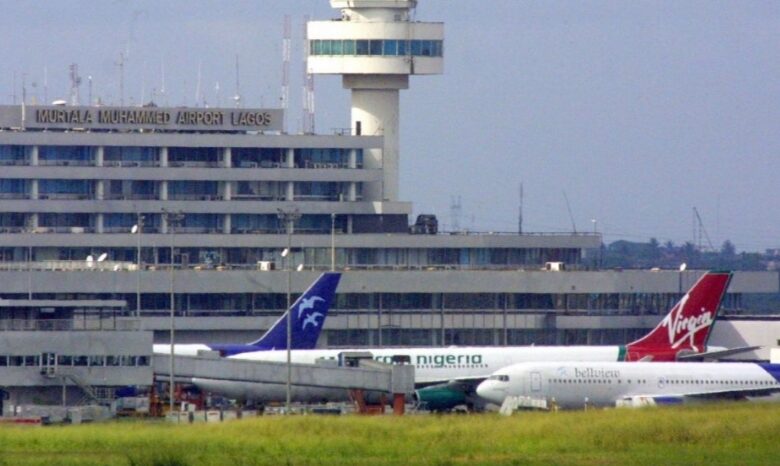
Travelling to Murtala Muhammed International Airport could become easier if plans to extend Lagos’ Red Line railway to the airport are completed, with the proposed connection designed to serve its three terminals and cargo facilities through five stops.
The Federal Airports Authority of Nigeria (FAAN) says discussions on financing the project have reached an advanced stage. Its Managing Director, Olubunmi Onabanjo-Kuku, disclosed this while speaking at the World Aviation Festival in Lisbon, Portugal.
“We are actually working on completing the financing of the capital structure for that project,” Kuku said.
The proposed link is a joint effort involving the Federal Government, FAAN and the Lagos State Government. It forms part of the wider modernisation of Murtala Muhammed International Airport (MMIA), one of Nigeria’s busiest aviation gateways.


Kuku said the railway would connect the city to the airport and provide five stops within the facility, linking passenger terminals and cargo operations.
However, advanced financing discussions do not mean construction is ready to begin. FAAN has not disclosed the project’s total cost, the proposed funding sources, a construction timetable or an opening date. Those details will help determine when passengers can expect to use the service.
RELATED NEWS:
Why the rail connection matters
Airport access is a major part of the passenger experience. Travellers heading to MMIA often have to factor road congestion, transport costs and unpredictable journey times into their plans. A rail connection could provide another option, particularly for passengers travelling between the airport and parts of Lagos served by the Red Line.
The potential benefit extends to airport workers, visitors and businesses moving cargo through the facility. More predictable access could also help passengers plan connections and reduce uncertainty before departure.
The actual impact, however, will depend on the railway’s final route, service frequency, fares, operating hours and connections with other transport services. The five proposed airport stops could improve movement within the complex, but their usefulness will depend on how conveniently they serve each terminal and cargo facility.
Passenger upgrades take centre stage
Kuku said MMIA’s ongoing modernisation is intended to improve efficiency, safety and passenger comfort through upgraded infrastructure and technology.
She disclosed that Terminal 1 is undergoing a comprehensive overhaul, although the work will not expand its physical size. Instead, FAAN plans to redesign areas used for immigration and customs, improve service-counter arrangements and introduce modern systems to make passenger processing smoother.
The distinction matters because a terminal can function more efficiently without adding floor space. Better layouts and technology may reduce bottlenecks, although the results will depend on implementation and staffing.
Kuku said Lagos accounts for 68 per cent of Nigeria’s air traffic. Lagos, Abuja and Kano together handle about 80 per cent of passenger traffic, according to her presentation.
FAAN therefore faces the challenge of improving high-traffic airports while funding safety and infrastructure needs across its other facilities. Kuku said recent investment had prioritised runway rehabilitation and improved airfield lighting at major airports.
The airport railway could become a significant improvement in Lagos transport, but its success will depend on more than financing. Passengers will ultimately judge the project by whether it delivers reliable connections, reasonable fares and less stressful journeys to and from Nigeria’s busiest international airport.
For More Details, Visit New Daily Prime News