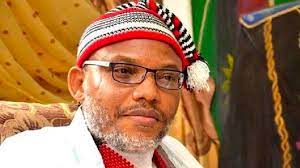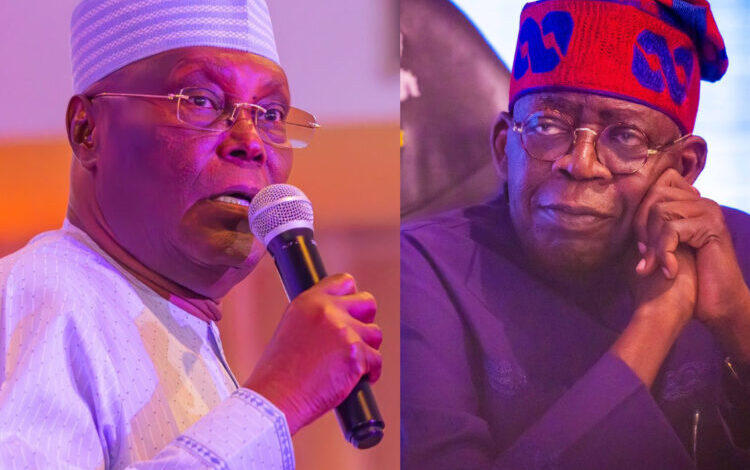
Former Vice-President Atiku Abubakar has challenged President Bola Tinubu’s claim that Nigeria is moving from economic reforms into an era of prosperity; he contended that the government’s policies have instead deepened hardship across the country.
Atiku, the presidential candidate of the African Democratic Congress (ADC), made the assessment on Thursday in Abuja during a state-of-the-nation broadcast issued to mark Nigeria’s 66th Independence anniversary.
His intervention came hours after Tinubu delivered his Independence Day address, in which the President declared that the difficult phase of his economic reforms had passed and that the country had entered what he called an “age of prosperity.”
Atiku presented a sharply different reading of the country’s economic condition, linking the administration’s record to insecurity and the rising cost of living.


“At 66, the All Progressives Congress (APC) administration has brought Nigeria deeper into poverty, far from the dreams of the founding fathers,” he said.
The former Vice-President also challenged the President’s presentation of economic stability, pointing to the gap between headline indicators and the experience of households dealing with food, transport and other daily expenses.
That contrast is central to the economic debate surrounding the administration.
READ RELATED NEWS UPDATES
Tinubu said the economy has grown by more than four per cent in 2026, while inflation has fallen from its peak, foreign reserves have been rebuilt and the foreign exchange market has stabilised. He also cited more than $6 billion in non-oil export revenue recorded in 2025.
Official statistics show that Nigeria’s headline inflation rate currently stands at 15.39 per cent, while food inflation is 19.57 per cent. These figures indicate that although the pace of price increases has eased from earlier levels, food prices are still rising at a significantly higher rate than the headline measure.
That distinction gives context to Atiku’s criticism.
His position is that economic growth must eventually show up in household purchasing power and living conditions, rather than exist mainly as national statistics.
He also raised concerns about insecurity and called for the release of people he described as being “unlawfully” detained.
With the 2027 general election approaching, Atiku further directed Nigerians’ attention to the ballot box. He called on voters to participate and protect their votes, while cautioning against claims that the election outcome had already been predetermined.
The remarks place economic hardship at the centre of the political contest that is already taking shape ahead of 2027.
Tinubu’s Independence Day speech, meanwhile, acknowledged that millions of Nigerians still struggle with food, school fees, medical bills and transportation.
The President maintained that these difficulties accumulated over decades and said his administration’s next phase would focus on production, jobs, agriculture, infrastructure and poverty reduction.
The competing narratives therefore present two different measures of progress.
The administration points to growth, inflation, reserves, production and investment. Atiku’s critique centres on what those figures mean inside homes and communities.
At this juncture, for Nigerians: the decisive question is about whether improvements recorded in national accounts can translate into cheaper food, stronger purchasing power, safer communities and more secure livelihoods.
That household test is likely to feature prominently as the country moves from the Independence anniversary into the political road to 2027.
For More Details, Visit New Daily Prime News