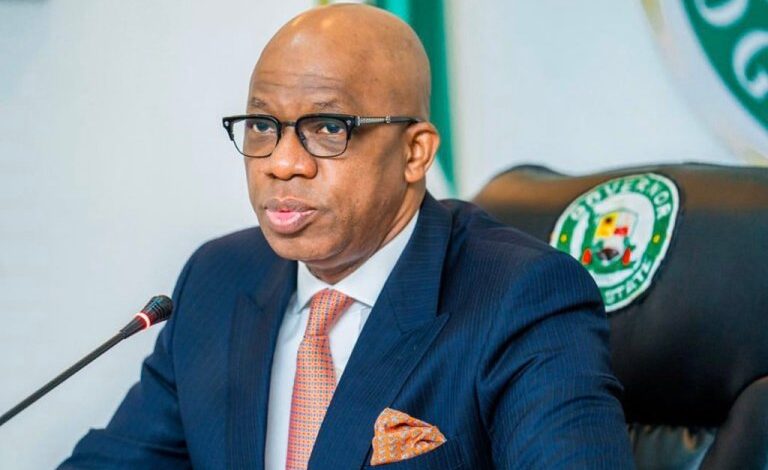
The proposed establishment of state police in Nigeria could create at least 554,353 direct employment opportunities if the Federal Government and states proceed with the recruitment requirements outlined by Ogun State Governor Dapo Abiodun.
Abiodun, who chairs the Southern Governors’ Forum, disclosed on Thursday, 8 October 2026, that Nigeria would need an additional 554,353 police personnel to operate an effective state policing system across the country.
Speaking at a colloquium marking the posthumous 70th birthday of former Ondo State Governor Oluwarotimi Akeredolu at the University of Ibadan, Oyo State, the governor said the proposed reform had become necessary to address Nigeria’s security challenges.
According to him, findings from the Nigeria Governors’ Forum indicate that the country needs 554,353 additional police officers, based on a planning benchmark of one officer for every 414 citizens.


If implemented over three years, the proposal would require the recruitment of approximately 184,784 personnel annually.
The figures suggest that state policing could become one of Nigeria’s significant sources of public-sector employment while strengthening security at the community level.
However, the projected positions are not confirmed job vacancies. Recruitment would depend on constitutional approval, funding, implementation plans and decisions by individual states.
Read related news:
State police key to preventing future school abductions — Omokri
Kogi state hails Tinubu’s commitment to state police as “generational reform”
Tinubu urges Senate to amend constitution for creation of state police
State police could open employment opportunities
Beyond improving security, establishing state police could provide employment opportunities for Nigerians seeking careers in law enforcement.
The proposed recruitment exercise would potentially benefit qualified young Nigerians across the federation, particularly those interested in community policing, criminal investigations and public safety.
The recruitment of 554,353 officers could also create demand for additional workers in police administration, information technology, communications, logistics, training and equipment maintenance.
These supporting roles could increase the overall employment impact, although no official estimate has been provided for the number of indirect jobs.
Unlike the existing centralised policing structure, state police would enable states to develop security services that respond more directly to local challenges.
Officers familiar with local languages, communities and geographical conditions could be better positioned to gather intelligence and respond to security threats.
Abiodun argued that Nigeria needed a policing system capable of addressing security problems closer to where they occur.
Funding remains a major challenge
Despite the potential employment benefits, Abiodun warned that differences in the financial capacity of Nigerian states could undermine the proposed reform.
He said Lagos, Rivers, the Federal Capital Territory, Ogun and Enugu accounted for 61.6 per cent of internally generated revenue, while many states continued to struggle with limited resources.
The governor expressed concern that poorer states might find it difficult to recruit, train, equip and regularly pay police personnel.
To address this challenge, he proposed establishing a dedicated State Police Take-Off Fund that would provide financial support to states based on their needs and compliance with agreed standards.
Such an arrangement, he argued, would help ensure that residents of less wealthy states were not denied adequate police protection.
The governor also emphasised the importance of transparent recruitment, professional training, regular salaries, medical support and insurance for officers.
Safeguards against political interference
Abiodun warned that state police must not become an instrument for political intimidation or the suppression of opposing views.
He called for legal safeguards to protect journalists, peaceful protesters, political opponents and minority communities.
The governor disclosed that the Presidential Working Group was developing proposals covering recruitment, training, financing, accountability and legislative oversight.
These arrangements would be essential to ensuring that officers operate professionally and remain accountable to the public.
Ondo State Governor Lucky Aiyedatiwa also supported the reform, describing the late Akeredolu’s contribution to community security as an important part of the continuing national debate.
Akeredolu played a leading role in establishing the Western Nigeria Security Network, commonly known as Amotekun, in 2020.
Former Ekiti State Governor Kayode Fayemi similarly praised Akeredolu’s commitment to decentralised security.
For Nigeria, the proposed state police system presents two potential benefits: strengthening local security and expanding employment opportunities.
Nevertheless, the creation of 554,353 jobs remains a projection based on estimated staffing requirements, rather than an approved nationwide recruitment programme.
Whether those opportunities become available will depend on the passage of the necessary laws, sustainable financing and the willingness of states to establish and maintain their own police services.