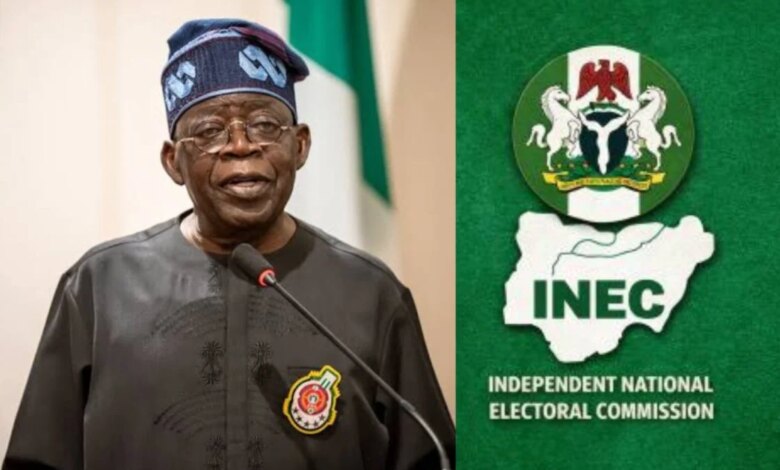
The Presidency has dismissed allegations that the Federal Government is considering postponing the January 16 election, describing the claims as fake news amid growing political tension over preparations for the 2027 general elections.
Minister of Information and National Orientation, Mohammed Idris, said the government had no plan to alter the election date.
His response followed an allegation by the African Democratic Congress Presidential Campaign Council (ADC-PCC) that there was an attempt to pressure the Independent National Electoral Commission (INEC) into changing the timetable.
Idris maintained that the Federal Government was not aware of any such arrangement and rejected suggestions that a postponement was being considered.
“The federal government is not planning to shift the date of the election or postpone any election. This is not in the works; the federal government is unaware of this, and this is just fake news as far as we are concerned.”
The minister’s statement came after the ADC Presidential Campaign Council raised concerns about an alleged plan to summon INEC Chairman, Professor Joash Amupitan, to the Presidential Villa and direct him to change the election timetable.
The council claimed it had received information suggesting that the alleged meeting could take place with only 80 days remaining before the scheduled poll.
It warned that any attempt to interfere with the electoral calendar would undermine public confidence in the country’s democratic process.
In a statement issued by its Director of Strategic Communication, Phrank Shaibu, the council called on President Bola Tinubu to distance himself from any move to postpone the election.
It also urged the INEC chairman to reject any directive to alter the date and make any such approach public.
“The election date belongs to Nigerians. It must not be rewritten behind closed doors at the Villa,” the council said.
The ADC campaign council argued that Nigerians should be allowed to decide the fate of the Tinubu administration through the ballot box.
It pointed to the economic difficulties experienced by citizens, including rising prices, declining purchasing power and the pressure on household incomes.
According to the council, the scheduled election represents an opportunity for voters to assess the administration’s performance and determine whether it deserves another mandate.
“A government that has made life this difficult for Nigerians must not be allowed to postpone its day of judgment,” it said.
The council also addressed concerns surrounding Ebola, acknowledging that a public health emergency would require appropriate measures from the authorities.
However, it insisted that the disease should not be used as a reason to interfere with the election timetable without clear medical justification.
It called on health officials to continue efforts to contain the disease while urging INEC to put measures in place to protect voters, electoral workers and other participants during the exercise.
The campaign council further referred to the position attributed to the Director-General of the Nigeria Centre for Disease Control (NCDC), which it said indicated that there was no current reason to postpone the election.
It maintained that any decision to change the timetable on public health grounds should be supported by verifiable medical evidence and communicated openly to Nigerians.
“The Presidency must not use a health emergency to escape an electoral verdict,” it added.
The council also called on INEC, local election observers and international monitoring organisations to pay close attention to any development that could affect the scheduled poll.
It said any proposal to alter the date should be made public and subjected to scrutiny rather than handled through private discussions.

As of the time of the report, INEC had yet to issue an official response to the allegation.
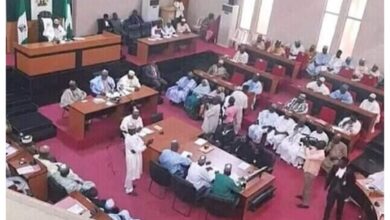
Meanwhile, the House of Representatives has resolved to invite INEC to brief the relevant committee on its level of preparedness for the 2027 general elections.
The resolution followed a motion sponsored by Mansur Manu Soro and Abdussamad Dasuki, who drew attention to operational challenges reportedly affecting the commission’s activities across the country.
The lawmakers initially sought to have INEC appear before the House for a briefing.
However, the motion was amended to require the commission to present a comprehensive assessment of its preparations before the relevant committee.
Under the resolution, INEC is expected to appear within seven legislative days and provide details of its readiness for the elections.