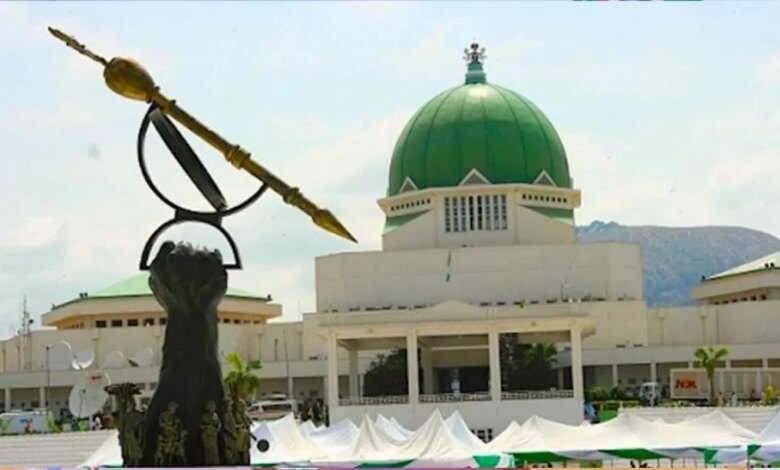
The Senate has rejected calls for an immediate review of the Electoral Act 2026, insisting that the legislation will remain in force for the 2027 general elections.
Yemi Adaramodu, Chairman of the Senate Committee on Media and Public Affairs, said the National Assembly had completed the electoral reform process and would not alter the law while preparations for the elections were already in progress.
He made the position known in a recent interview with The Punch.
Adaramodu was reacting to questions on whether lawmakers would reconsider some provisions of the Act after the Supreme Court recently restored sections previously invalidated by the Court of Appeal.

According to Adaramodu, the legislation was enacted specifically to regulate the 2027 elections, making any immediate amendment impractical.
“The electoral reform has already been completed and the law passed. It is meant for the 2027 elections. If there is any need for amendments or adjustments, that can be considered after the elections,” he said.
The senator, however, said individuals and organisations with objections could forward petitions to the Senate. He maintained that such complaints would not lead to the suspension or replacement of a law that had already received presidential assent and was being implemented.
Adaramodu noted that the law had already guided the nomination of candidates by political parties ahead of the forthcoming elections.
“Parties have used the Electoral Act to produce the candidates who will contest in January and February. Are you going to change the rules in the middle of the game? Are you going to ask people to move backwards instead of forward?” he asked.
He added, “How do you stop an Electoral Act that is already being applied and replace it with another one? We are not going to do that.”
The senator’s comments followed a Supreme Court judgment that reinstated provisions of the Electoral Act 2026 earlier nullified by the Court of Appeal.
A seven-member panel of the apex court unanimously overturned the appellate court’s decision, ruling that Sections 77(5), 77(6), 77(7) and 84(2) were consistent with the Constitution.
The provisions concern party membership records, participation in primaries and the procedures for selecting candidates. While Sections 77(5), 77(6) and 77(7) address membership registers and eligibility to participate in party primaries, Section 84(2) recognises direct primaries and consensus arrangements.
The case arose from a challenge to the constitutionality of the provisions. The Court of Appeal had declared them invalid in July, prompting the Independent National Electoral Commission to approach the Supreme Court.
The apex court’s decision has since raised questions about candidates whose party membership status, waivers or nomination procedures could be contested.
The Peoples Democratic Party, Allied People’s Movement and Labour Party are among the parties that have rejected claims that the judgment automatically affects their candidates.
The Nigeria Democratic Congress also dismissed concerns about the eligibility of its presidential candidate, Peter Obi, his running mate, Rabiu Kwankwaso, and former Deputy Senate President, Ovie Omo-Agege.