Nigeria’s proposed state police system has crossed a major constitutional threshold, with 24 state assemblies approving the amendment. But the next test is whether lawmakers and the Presidency can turn that milestone into a policing framework with clear powers, accountability and safeguards against political abuse.
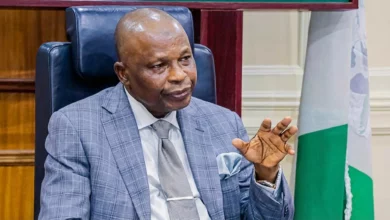
Nigeria’s plan to establish state police has moved closer to constitutional approval after 24 of the country’s 36 State Houses of Assembly endorsed the proposed amendment, according to President Bola Tinubu’s Chief of Staff, Femi Gbajabiamila.
Gbajabiamila, who chairs the Presidential Working Group on the National Policing Bill, disclosed the development in a statement on Friday, October 23, describing the approvals as sufficient to meet the constitutional threshold for altering the country’s supreme law.
The Constitution (Sixth Alteration) Bill, 2026, proposes a dual policing structure comprising the Federal Police Service and state police services. The arrangement would give states a constitutional basis to establish their own police institutions alongside the federal force.


Under Section 9 of the 1999 Constitution, an amendment generally requires support from at least two-thirds of the 36 state assemblies, equivalent to 24 states, after passage by the National Assembly. Gbajabiamila said the bill could now return to the federal legislature for transmission to President Tinubu for assent.
However, the announcement marks a legislative milestone, not the completion of the entire reform process. The amendment must proceed through the required constitutional steps, while the operational framework for establishing and managing state police still needs to be finalised.
The Presidential Working Group said the draft National Policing Bill, 2026, was undergoing legislative drafting review and validation at the Federal Ministry of Justice. The document was expected to return to the group on or before October 30 for final consideration before presentation to the President.
The distinction matters because constitutional approval would establish the legal foundation, while the accompanying legislation would determine how the system operates. This, thus, begs some key questions: how will state police commands be funde? Who will supervise their officers? How will misconduct be investigated? And how will federal and state forces coordinate across jurisdictional boundaries?
RELATED NEWS:
State policing could bring law enforcement closer to local communities and improve responses to crimes that require detailed knowledge of particular areas. Even so, without credible oversight, it could also expose officers to pressure from powerful state officials or turn policing into an instrument of political rivalry.
The approval process gathered momentum in October. Five states—Edo, Osun, Oyo, Rivers and Zamfara—had reportedly approved the amendment by October 16. Further approvals subsequently increased the tally, culminating in the 24-state figure announced by Gbajabiamila.
The immediate challenge is to ensure that the new structure improves public safety rather than simply creates additional police institutions. Funding arrangements, recruitment standards, human-rights protections and independent complaint mechanisms will be central to that outcome.
Crossing the constitutional threshold opens the door to state police; the quality of the legislation and safeguards will determine whether Nigerians ultimately benefit from the reform.
For More News Updates, Visit New Daily Prime News