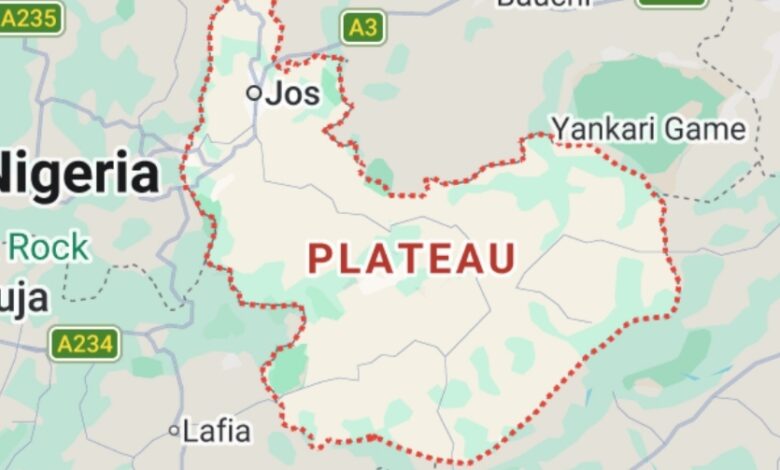
Plateau State has taken a step towards decentralised policing as the House of Assembly endorses a proposed constitutional amendment that would allow states to establish their own police services alongside the Federal Police Service.
The lawmakers adopted the recommendations of an ad-hoc committee during Monday’s plenary session, presided over by Speaker Naanlong Daniel. The decision adds Plateau to the legislative process that will determine whether the proposed reform can advance towards implementation.
The proposal, contained in the Constitution of the Federal Republic of Nigeria (Sixth Alteration) Bill, 2026, was transmitted to all 36 state assemblies on September 16 by the Clerk to the National Assembly, Kamoru Ogunlana.
However, Plateau’s endorsement does not establish state police. The amendment must secure approval from at least 24 state assemblies before it can proceed to the next stage of the constitutional process.


RELATED NEWS:
Why Plateau supports the change
Presenting the committee’s report, its chairman, Theodore Maiyaki, who represents Qua’an-Pan South Constituency, cited Nigeria’s persistent security challenges, manpower shortages within the Nigeria Police Force and the need to strengthen policing at the grassroots.
The proposed framework would introduce state police services while retaining federal policing responsibilities. Its supporters see decentralisation as a way to bring security operations closer to communities, where local authorities may have better knowledge of criminal networks, terrain and emerging threats.
For Plateau, where security concerns have affected communities and livelihoods, the debate carries practical consequences. More responsive local policing could improve intelligence gathering and reduce delays in responding to threats. However, those benefits would depend on adequate funding, professional training, effective oversight and cooperation between federal and state authorities.
The committee also highlighted the relationship between security and economic development, recommending the amendment as a measure to strengthen public safety.
The safeguards will matter as much as approval
Creating state police would raise difficult questions about recruitment, funding, command structures and accountability. State governments would need sufficient resources to maintain properly equipped forces without weakening other public services.
There would also need to be credible safeguards against political interference, selective enforcement and abuses of power. Without independent oversight and clear operational rules, decentralisation could expose police institutions to pressure from state political authorities.
The committee said the proposed framework would include safeguards for human rights, operational standards, accountability and coordination. The effectiveness of those protections will depend on the final constitutional provisions and the institutions responsible for enforcing them.
What happens next?
The requirement for approval by at least 24 of the 36 state assemblies makes the reform a test of national consensus, rather than a decision that any single state can settle.
Plateau’s vote advances the proposal, but the pace and outcome will depend on deliberations in the other assemblies and the remaining constitutional procedures.
Meanwhile, the Plateau Assembly passed two other bills for first reading: the Plateau State Right of Patients and Medical Institutions Bill, and legislation addressing jungle justice, mob action and other forms of unlawful violence.
The House also announced a recess from October 19 to November 10.
And, as for Nigerians, the central issue is no longer whether state police should exist or not. It is whether the proposed system can deliver faster, fairer and more accountable protection without creating new avenues for political control or human rights violations.
For More Details, Visit New Daily Prime News